
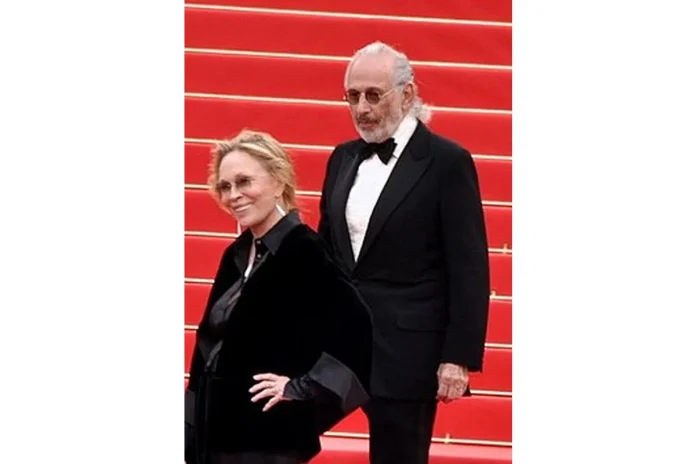
Jerry Schatzberg Bio
Jerrold Schatzberg, known professionally as Jerry Schatzberg, is an American photographer and film director born on June 26, 1927, in the Bronx, New York City. He first built a reputation as a celebrated fashion and celebrity photographer before moving into feature filmmaking as a key figure in the New Hollywood movement of the late 1960s and 1970s. Schatzberg is best known for directing The Panic in Needle Park (1971) and Scarecrow (1973), the latter of which shared the Palme d’Or at the 1973 Cannes Film Festival. His career has bridged the visual languages of fashion photography and intimate, character-driven cinema, producing a body of work that remains influential in American film history.
Early Life and Background
Jerrold Schatzberg was born to a Jewish family of furriers and raised in the Bronx. His parents were not artistic, and his only real exposure to the arts during childhood came from weekend trips to the movies with his father. When he was thirteen, his family moved to Rego Park, Queens, where he attended Forest Hills High School. After the end of World War II, he enlisted in the U.S. Navy, later continuing his service as a hospital corpsman for two years.
Following his discharge, Schatzberg spent a year at the University of Miami before returning to New York City to work for his family’s fur business. Although his father expected him to take over his part of the family enterprise, Schatzberg had no interest in the trade. Instead, he joined his uncle’s diaper rental business, where a promotion offering customers free baby pictures led him to his first role as a photographer, shooting portraits of clients’ babies for two dollars a sitting. His first camera was a Rolleicord medium-format twin-lens reflex.
Path to Director
Schatzberg began his photography career as an assistant to photographer William “Bill” Helburn. While working for Helburn, he enrolled in a photography course taught by designer and photographer Alexey Brodovich, whose other students included Diane Arbus, Richard Avedon, and Garry Winogrand. At age 28, he left Helburn to start his own studio on 25th Street and Park Avenue South in Manhattan, and within a year he was working for Vogue on assignments for editor-in-chief Alexander Liberman.
Throughout the 1950s and into the early 1960s, Schatzberg photographed for Vogue, Esquire, Glamour, Town and Country, and McCall’s, capturing top models of the era such as Anne St. Marie, Peggy Moffitt, Sara Thom, and Nico. In 1959, he was commissioned to travel to Havana to photograph Fidel Castro shortly after the Cuban Revolution, and in 1962 he shot behind-the-scenes images at Yves Saint Laurent’s debut show in Paris. Among his most famous images was the cover photograph of Bob Dylan’s album Blonde on Blonde, released in 1966, a body of Dylan work later published as the book Thin Wild Mercury in 2006.
Jerry Schatzberg Career
Early Career (1970)
Schatzberg made his debut as a feature film director with Puzzle of a Downfall Child in 1970, starring Faye Dunaway. The film marked his transition from the world of fashion photography to narrative cinema and signaled his entry into the New Hollywood movement. Although the film received modest commercial attention, it established his visual style and his interest in psychologically complex characters.
Breakthrough (1971-1973)
In 1971, Schatzberg directed The Panic in Needle Park, starring Al Pacino in one of his earliest leading film roles. The film earned a Palme d’Or nomination at the 1971 Cannes Film Festival, and its lead actress, Kitty Winn, won the Best Actress award at the same festival. The picture was widely praised for its raw, intimate portrayal of heroin addiction in New York City.
Two years later, Schatzberg directed Scarecrow (1973), a road movie that shared the Palme d’Or at the 1973 Cannes Film Festival. The film starred Al Pacino and Gene Hackman and is widely regarded as one of the defining American films of the early 1970s. Its recognition at Cannes cemented Schatzberg’s place among the leading American directors of the New Hollywood era.
Notable Works and Milestones
Beyond The Panic in Needle Park and Scarecrow, Schatzberg directed The Seduction of Joe Tynan with Alan Alda and Meryl Streep, Honeysuckle Rose with Willie Nelson and Dyan Cannon, Misunderstood starring Gene Hackman, No Small Affair starring Demi Moore, and Street Smart (1987), which earned Morgan Freeman his first Oscar nomination. In 2013, he was developing a Scarecrow sequel with writer Seth Cohen that was not produced, and in 2021 he revealed his intention to make one last film, considering an adaptation of Atticus Lish’s novel The War for Gloria.
Jerry Schatzberg Award Nominations
Jerry Schatzberg received a major international nomination early in his film career when his 1971 feature The Panic in Needle Park was nominated for the Palme d’Or at the 1971 Cannes Film Festival. Although the film did not take the top prize, the recognition helped establish his standing among the most promising American filmmakers of the New Hollywood era. Beyond his Cannes nomination, his broader body of work has continued to attract critical attention, even when individual titles were not formally honored on the major festival circuit.
Jerry Schatzberg Awards Won
Jerry Schatzberg has collected major prizes at the Cannes Film Festival, both as a director and through the performances of his leading actors. His films have earned Best Actress and shared Palme d’Or honors, marking him as one of the most awarded American directors of the early 1970s.
| Award | Wins | Year |
|---|---|---|
| Cannes Film Festival Best Actress (Kitty Winn, The Panic in Needle Park) | 1 | 1971 |
| Palme d’Or (Scarecrow, shared) | 1 | 1973 |
Jerry Schatzberg Family
Jerry Schatzberg was born into a Jewish family of furriers in the Bronx, the same trade his father expected him to continue. He ultimately chose a different path, leaving the family business to pursue photography and later filmmaking. In 1983, he married French American actress Maureen Kerwin, a union that lasted until their divorce in 1998.
Personal Life
Schatzberg was previously married to a woman named Corinne, from whom he was divorced in Ciudad Juárez, Mexico in 1968 after eleven years of separation; the couple had two children. At the time of that divorce, he was widely known as Faye Dunaway’s fiancé, but Dunaway left him for actor Marcello Mastroianni later in 1968. His 1983 marriage to Maureen Kerwin ended in divorce in 1998.