
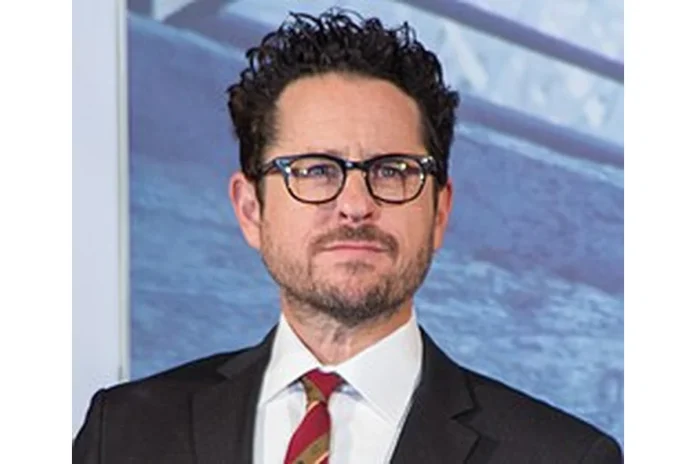
J.J. Abrams Bio
Jeffrey Jacob Abrams, known professionally as J.J. Abrams, is an American filmmaker, producer, screenwriter, and composer whose work has shaped contemporary action, drama, and science fiction across film and television. Born on June 27, 1966, in New York City, he has built a career spanning more than four decades, marked by the creation of long-running television series and the direction of some of the most commercially successful films of the twenty-first century. His feature films have collectively grossed more than $4 billion worldwide, placing him among the highest-grossing directors in cinema history.
Abrams is the founder of Bad Robot, the production company behind a wide slate of television shows and theatrical releases. He is widely recognized for directing Star Trek (2009), Super 8 (2011), and the Star Wars films The Force Awakens (2015) and The Rise of Skywalker (2019), as well as for co-creating television series including Felicity, Lost, and Fringe. His projects are frequently noted for their serialized storytelling, mystery-driven plots, and memorable musical scores, many of which he composes himself.
Early Life and Background
Jeffrey Jacob Abrams was born on June 27, 1966, in New York City to television producer Gerald W. Abrams and Carol Ann Abrams, a Peabody Award-winning executive producer, author, and law academic. His sister, Tracy Rosen, later became a screenwriter, reflecting a household deeply connected to the entertainment industry. In 1971, when Abrams was five years old, the family relocated from New York to Los Angeles, where his father continued his work in television production.
Abrams attended Palisades High School in Los Angeles, where he developed an early interest in music and storytelling. After graduation, he initially considered attending art school, but he ultimately enrolled at Sarah Lawrence College in Bronxville, New York. At Sarah Lawrence, he studied alongside future collaborators and began experimenting with screenplays and computer animation. His time at the college proved formative, as it was there that he connected with classmates who would later join him in early professional projects.
Path to Celebrity
Abrams entered the film industry at the age of fifteen, composing music for the 1982 horror film Nightbeast. During his senior year at Sarah Lawrence College, he partnered with Jill Mazursky, daughter of writer-director Paul Mazursky, to write a feature film treatment. The treatment was purchased by Touchstone Pictures and became the basis for Taking Care of Business (1990), his first produced screenplay, which starred Charles Grodin and James Belushi and was directed by Academy Award winner Arthur Hiller.
Following his debut, Abrams continued to write screenplays, including Regarding Henry (1991) starring Harrison Ford, Forever Young (1992) starring Mel Gibson, and the comedy Gone Fishin’. In 1994, he joined a group of Sarah Lawrence alumni known as the Propellerheads, who were contracted by Jeffrey Katzenberg to develop computer animation technology for what would become the film Shrek. That same period, Abrams collaborated with producer Jerry Bruckheimer and director Michael Bay on the blockbuster Armageddon (1998), establishing his reputation as a sought-after writer in mainstream Hollywood.
J.J. Abrams Career
Early Career (1982–1998)
Abrams’s early career was defined by his dual passions for music and screenwriting. His first professional job came at age fifteen when he scored the 1982 horror film Nightbeast, and he continued to compose music for his own projects throughout his career. By the early 1990s, he had become a reliable screenwriter in Hollywood, contributing to studio features such as Regarding Henry, Forever Young, and Gone Fishin’.
In 1998, Abrams expanded into television by co-creating the drama series Felicity for The WB Network, alongside collaborator Matt Reeves. The series ran for four seasons and earned Abrams recognition as both an executive producer and a composer, as he wrote its opening theme music. The success of Felicity laid the groundwork for his transition into the world of prestige television and the creation of his production company, Bad Robot, which he founded in 2001.
Breakthrough (2001–2010)
The early 2000s marked a turning point in Abrams’s career. Under Bad Robot, he created and executive-produced the ABC series Alias (2001–2006) and co-created the cultural phenomenon Lost (2004–2010) with Damon Lindelof and Jeffrey Lieber. Both series showcased his signature blend of serialized mystery and emotional character work, and Lost earned him two Emmy Awards: Outstanding Directing for a Drama Series and Outstanding Drama Series.
In 2006, Abrams made his feature directorial debut with Mission: Impossible III, starring Tom Cruise, which demonstrated his ability to handle large-scale action filmmaking. He followed this with the monster movie Cloverfield (2008), produced under Bad Robot, and the science fiction reboot Star Trek (2009), which he directed and produced. He also co-created the FOX science fiction series Fringe in 2008, further expanding his television portfolio and composing the show’s theme music.
Continued Success (2011–2019)
Abrams continued to build on his momentum with the science fiction film Super 8 (2011), a collaboration with producer Steven Spielberg that blended his love of mystery and coming-of-age storytelling. He then returned to the Star Trek franchise to direct Star Trek Into Darkness (2013), which, despite critical debate over its handling of classic characters, performed strongly at the global box office.
In 2013, Disney and Lucasfilm announced Abrams as the director and producer of Star Wars: The Force Awakens, the seventh chapter in the Star Wars saga. Released on December 18, 2015, the film became his highest-grossing directorial effort and one of the highest-grossing films of all time. He later returned to executive produce Star Wars: The Last Jedi (2017) and directed, co-produced, and co-wrote Star Wars: The Rise of Skywalker (2019). Beyond Star Wars, he produced Star Trek Beyond (2016), The Cloverfield Paradox (2018), and Overlord (2018), and served as a producer on the fourth, fifth, and sixth Mission: Impossible films.
Notable Works and Milestones
Abrams’s signature works include the Star Wars sequel trilogy, the rebooted Star Trek film series, and the mystery-driven television series Lost. His films have collectively grossed more than $4 billion worldwide, and he has won two Emmy Awards for his work on Lost. His frequent collaborations with composers Michael Giacchino and John Williams, as well as writers Alex Kurtzman and Roberto Orci, have produced a distinctive style recognized across the industry.
J.J. Abrams Award Nominations
J.J. Abrams has earned multiple nominations throughout his career in both film and television, reflecting his consistent presence in major industry awards conversations. His television work on Lost, Alias, and Fringe brought recognition from the Television Academy, while his feature films generated attention across directing and producing categories. The full scope of his nominations reflects a career that spans writing, directing, composing, and producing across multiple genres and formats.
J.J. Abrams Awards Won
Abrams has received notable recognition for his television work, most prominently winning two Primetime Emmy Awards for the series Lost. He earned the Emmy for Outstanding Directing for a Drama Series and shared in the win for Outstanding Drama Series as an executive producer. These wins cemented his reputation as one of the most influential writer-producers of his generation in American television.
J.J. Abrams Family
J.J. Abrams was raised in a family deeply embedded in the entertainment industry. His father, Gerald W. Abrams, was a veteran television producer who worked at CBS in Midtown Manhattan before the family relocated to Los Angeles in 1971. His mother, Carol Ann Abrams, was a Peabody Award-winning executive producer, author, and law academic whose influence on his career was significant.
Abrams’s sister, Tracy Rosen, followed the family tradition by becoming a screenwriter. He is married to public relations executive Katie McGrath, whom he wed in 1996, and the couple has three children, including daughter Gracie Abrams, a pop singer-songwriter who has built her own career in music. The family resides in Pacific Palisades, Los Angeles, California.
Personal Life
Abrams married Katie McGrath in 1996, and the couple has three children. Their daughter Gracie Abrams has emerged as a notable singer-songwriter in contemporary pop music. The family makes their home in Pacific Palisades, a neighborhood in Los Angeles, California.
Beyond his creative work, Abrams is active in civic and industry causes. He serves on the Creative Council of Represent.Us, a nonpartisan anti-corruption organization, and sits on the board of the Motion Picture and Television Fund. He is Jewish, while his wife is Catholic, and the family observes both traditions. In 2024, he joined more than 125 Hollywood professionals in urging California Governor Gavin Newsom to sign artificial intelligence safety legislation.