
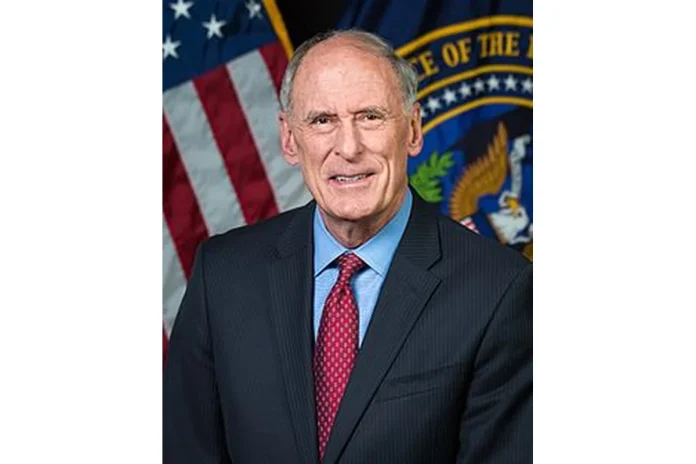
Dan Coats Bio
Daniel Ray Coats (born May 16, 1943) is an American politician, attorney, and diplomat from Indiana whose career has spanned the United States House of Representatives, the United States Senate, the post of United States Ambassador to Germany, and the Cabinet-level role of Director of National Intelligence. A lifelong member of the Republican Party, Coats has shaped policy on foreign affairs, national security, intelligence oversight, gun rights, and federal tax and spending matters across four decades in public life.
Born in Jackson, Michigan, and raised in the Midwest, Coats built his career on a foundation of military service, legal training, and steady work in Indiana politics before moving into some of the most senior national security positions in the federal government.
Early Life and Background
Daniel Ray Coats was born in Jackson, Michigan, the son of Vera (Nora) Elisabeth (née Swanlund) and Edward Raymond Coats. His father was of English and German descent, and his maternal grandparents emigrated from Sweden, giving Coats a mixed European heritage that he has spoken about in interviews over the years. He attended local public schools and graduated from Jackson High School in 1961, completing his secondary education in his hometown.
After high school, Coats continued his studies at Wheaton College in Wheaton, Illinois, where he earned a Bachelor of Arts degree in political science. He later received a Juris Doctor from the Indiana University School of Law in Indianapolis in 1971, preparing him for a legal career that would later run alongside his political work.
Coats also served in the United States Army Corps of Engineers from 1966 to 1968, completing his military obligation before settling into civilian professional life. His combination of military service, Midwestern roots, and legal training shaped the practical, defense-oriented outlook that would mark his later career.
Path to US Politics
After law school, Coats moved into the private sector and Indiana political circles in the 1970s. He worked as a staffer for then-U.S. Representative Dan Quayle, a Republican from Indiana, gaining firsthand experience with the operations of a congressional office. He also served as assistant vice president of a Fort Wayne life insurance company, building connections in the Indiana business community.
When Dan Quayle ran for the United States Senate in 1980, Coats stepped forward to run for Quayle’s Fort Wayne-based seat in the United States House of Representatives. He won that race and went on to be reelected four times from Indiana’s 4th congressional district, usually without serious difficulty, earning a reputation as a reliable conservative voice on fiscal and social issues.
That long apprenticeship in the House prepared Coats for the jump to the upper chamber. In 1988, when Quayle resigned from the Senate after being elected Vice President of the United States, Coats, who had just been elected to a fifth term in the House, was appointed to fill Quayle’s former Senate seat.
Dan Coats Career
Early Career (1981-1989)
Dan Coats began his time in Congress in 1981, representing Indiana’s 4th congressional district in the U.S. House of Representatives. The Fort Wayne-based seat had previously been held by Dan Quayle, and Coats kept it firmly in Republican hands through five consecutive victories. During this period he built a record focused on tax policy, social issues, and a strong national defense.
He also used these years to deepen his ties to Indiana’s Republican establishment, working closely with state party leaders and laying the groundwork for a future statewide race. The relationships he built in the House would pay off just a few years later when Quayle’s elevation to the vice presidency opened a Senate seat.
Breakthrough (1988-1998)
Coats’s appointment to the United States Senate in 1988 marked his first major breakthrough on the national stage. He won a 1990 special election to serve out the remainder of Quayle’s unexpired term and then won a full six-year term in 1992, securing a stable seat from which to influence federal policy.
During his first Senate stretch, Coats took on several high-profile legislative efforts. In 1995, he introduced S. 568, the Family, Investment, Retirement, Savings, and Tax Fairness Act, a wide-ranging tax package that did not become law. In 1996, he co-sponsored the Line Item Veto Act of 1996, which President Bill Clinton signed into law before the Supreme Court struck it down in Clinton v. City of New York in 1998. He later co-sponsored S.2206, the Coats Human Services Reauthorization Act of 1998, which amended the Head Start Act, the Low-Income Home Energy Assistance Act of 1981, and the Community Services Block Grant Act.
On gun policy, Coats supported the Brady Handgun Violence Prevention Act signed by President Clinton in 1993 and backed the Feinstein Amendment to the Violent Crime Control and Law Enforcement Act of 1993. He also drew national attention in August 1998 when he publicly questioned the timing of President Clinton’s cruise missile strikes on Afghanistan and Sudan, suggesting the action might be linked to the ongoing Lewinsky scandal.
Republican Era (1988-1998; 2011-2016)
After declining to seek reelection in 1998, Coats spent several years in the private sector. He worked as special counsel at the firm Verner, Liipfert, Bernhard, McPherson and Hand in 2000 and 2001. From August 15, 2001, to February 28, 2005, he served as United States Ambassador to Germany under President George W. Bush, a role in which he worked to manage tensions over the Iraq War and helped build ties with opposition leader Angela Merkel. He later served as co-chairman of the Washington government relations office of King & Spalding and worked on lobbying matters for corporate clients.
Coats returned to the Senate in 2011 after winning the 2010 race to succeed retiring Democrat Evan Bayh. He defeated Democratic U.S. Representative Brad Ellsworth by a 15-point margin, and after Republican Richard Lugar lost his 2012 primary, Coats became the senior senator from Indiana. In March 2015, he announced he would not seek reelection in 2016, and he was succeeded by Todd Young.
Notable Events and Milestones
One of the defining moments of Coats’s later career came on January 5, 2017, when then-President-elect Donald Trump named him as his nominee for Director of National Intelligence. The Senate confirmed him by an 85-12 vote on March 15, 2017, and he was sworn in on March 16, 2017, succeeding James R. Clapper and beginning a tenure that ended on August 15, 2019.
Dan Coats Career Wins
Dan Coats has compiled a long record of electoral and professional victories, including five House wins in Indiana’s 4th congressional district, a 1990 Senate special election win, a 1992 Senate reelection, and a decisive 2010 Senate comeback. He also won Senate confirmation as Director of National Intelligence in 2017.
Electoral Highlights
Coats first won his Fort Wayne-based U.S. House seat in 1980 and was reelected four times, building a reputation as a durable incumbent. He then captured the Senate seat vacated by Dan Quayle, first through appointment in 1988 and then through the 1990 special election. His 1992 victory secured a full six-year term, and his 2010 return to the Senate by a 15-point margin over Brad Ellsworth cemented his standing as one of Indiana’s most successful Republican candidates of his era.
Other Wins & Achievements
Beyond electoral success, Coats earned the Charles G. Berwind Lifetime Achievement Award from Big Brothers Big Sisters of America in 2012, recognizing his long service to mentoring and youth causes.
| Position | Wins | Year |
|---|---|---|
| U.S. House, Indiana’s 4th District | 5 | 1980, 1982, 1984, 1986, 1988 |
| U.S. Senate special election (Indiana) | 1 | 1990 |
| U.S. Senate full term (Indiana) | 1 | 1992 |
| U.S. Senate return (Indiana) | 1 | 2010 |
Dan Coats Family
Family Background and Political Lineage
Coats is the son of Vera (Nora) Elisabeth (née Swanlund) and Edward Raymond Coats. His father was of English and German descent, and his maternal grandparents emigrated from Sweden, giving Coats a broad European family background. He is also closely tied to Dan Quayle through his early career, having worked as a staffer for the future vice president before succeeding him in both the U.S. House and the U.S. Senate.
Personal Life
Coats married Marsha Coats in 1965, and she has served as Indiana’s woman representative to the Republican National Committee. The couple attended a Chicago Cubs game the day after their wedding, reflecting Coats’s well-known status as a die-hard Chicago Cubs fan.