

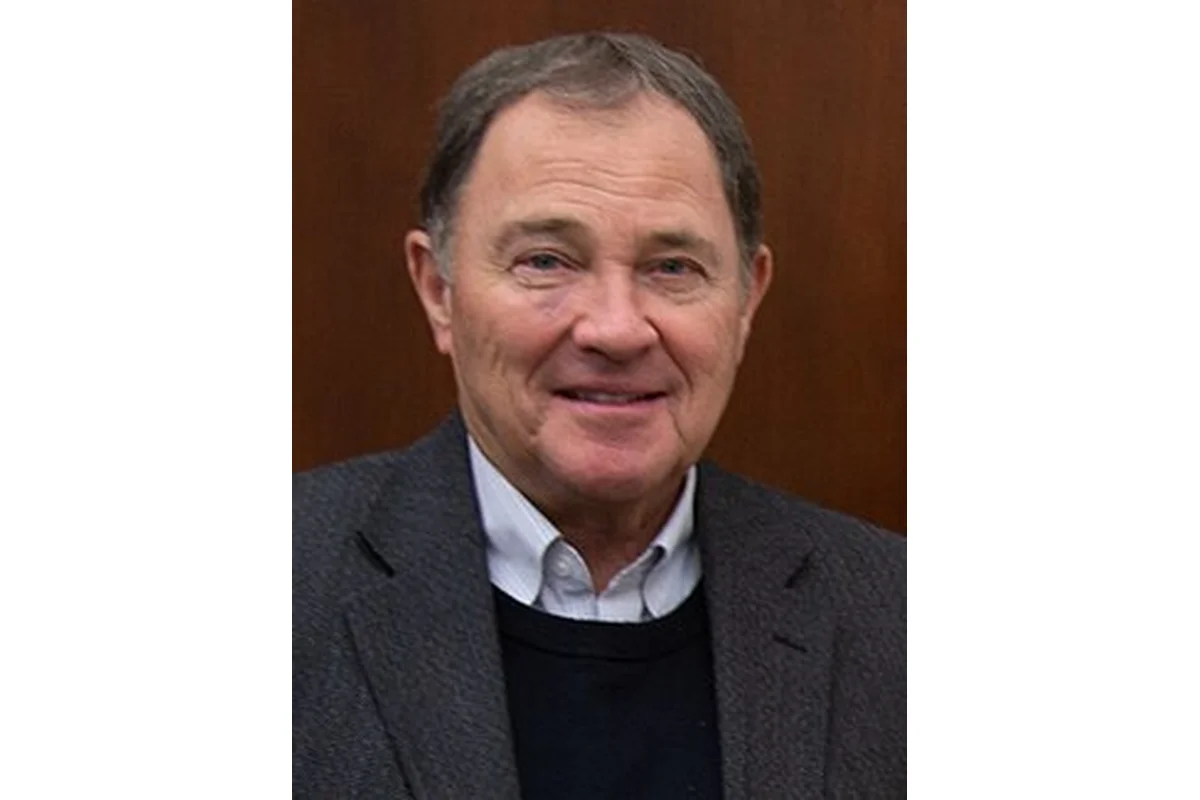
Gary Herbert Bio
Gary Richard Herbert (born May 7, 1947) is an American politician who served as the 17th Governor of Utah from 2009 to 2021. A member of the Republican Party, he became one of the longest-serving chief executives in state history, with a tenure of eleven years and five months. He also chaired the National Governors Association during the 2015–2016 cycle. Beyond politics, Herbert built a career in real estate and served in the Utah Army National Guard.
Herbert is widely regarded as a pragmatic conservative who guided Utah through the post-2008 economic recovery and major social-policy debates. He is the longest-serving Republican governor of Utah and the second-longest-serving governor in state history, trailing only Cal Rampton.
Early Life and Background
Herbert was born in American Fork, Utah, the son of Carol (Boley) and Paul Richard Peters. His parents divorced when he was still a toddler, and his mother soon remarried Duane Barlow Herbert, who legally adopted him and gave him his surname. His biological father later remarried as well, and Herbert grew up largely apart from his paternal half-siblings.
Herbert was raised in Orem, Utah, where he graduated from Orem High School. As a young man, he served a two-year mission for the Church of Jesus Christ of Latter-day Saints in the Eastern States Mission. He later attended Brigham Young University, although he did not complete a degree. His early years in Utah, combined with his religious service, helped shape the community-focused outlook that would later define his political career.
Path to US Politics
After college, Herbert served six years in the Utah Army National Guard, rising to the rank of staff sergeant. He then founded a real estate brokerage, Herbert and Associates Realtors, and became active in professional and civic organizations. He served as president of both the Utah Association of Realtors and the Utah Association of Counties, gaining statewide visibility in policy and business circles.
In 1990, Herbert was appointed to the Utah County Commission, replacing Brent Morris. He held that seat for fourteen years, building a reputation as a steady, consensus-driven leader. In 2003, he launched a campaign for the Republican nomination for governor, but in April 2004 he joined forces with rival Jon Huntsman Jr. as a lieutenant governor candidate. The Huntsman-Herbert ticket won the nomination at the state convention and the general election that November.
Gary Herbert Career
Early Career (1990–2004)
Herbert’s political career began on the Utah County Commission in 1990, where he served for fourteen years. During that time, he earned respect for his work on land-use, infrastructure, and budget issues that affected one of the state’s fastest-growing counties. He also continued to lead in the private sector, running his real estate firm and serving in statewide trade associations.
As lieutenant governor beginning in 2005, Herbert managed the state electoral office and the campaign disclosure system. He also chaired several commissions, including the Commission on Volunteers, the Commission on Civic and Character Education, and the Emergency Management Administrative Council. In 2007, he oversaw Utah’s first statewide voter referendum since the lieutenant governor’s office was created.
Lieutenant Governor Era (2005–2009)
Herbert and Huntsman won re-election in 2008 with a record 77 percent of the vote, avoiding a primary after winning a strong plurality at the state Republican convention. Their second term was cut short when President Barack Obama appointed Huntsman as the United States Ambassador to China. Huntsman resigned on August 11, 2009, and Herbert was elevated to the governorship as Utah’s sixth lieutenant governor to assume the office.
Governorship and Republican Leadership (2009–2021)
Herbert became Utah’s 17th governor on August 11, 2009. Just months later, he won a 2010 special election against Democratic Salt Lake County Mayor Peter Corroon, taking 64 percent of the vote to Corroon’s 32 percent. He then won a full four-year term in 2012, defeating retired Major General Peter Cooke 69 percent to 28 percent, and a second full term in 2016 against entrepreneur Mike Weinholtz, 66.7 percent to 28.7 percent.
Among his major legislative actions, Herbert signed the Utah Transfer of Public Lands Act in March 2012, vetoed a restrictive sex-education bill that same month, and signed a 2015 measure that added sexual orientation and gender identity to Utah’s anti-discrimination protections in employment and housing. In 2018, he signed Utah’s free-range parenting bill, making the state the first in the nation to formally legalize the practice. He also led the National Governors Association as vice chair in 2014–2015 and as chair in 2015–2016.
Notable Events and Milestones
Herbert’s signature moment came with his rapid ascent from lieutenant governor to governor in 2009, followed by three convincing statewide victories. His signing of the 2015 anti-discrimination law was praised nationally for balancing civil rights with religious liberty. In January 2020, he issued an executive order banning conversion therapy on minors, and in 2019 he announced that he would not seek a third full term, instead endorsing his lieutenant governor, Spencer Cox, as his successor.
Gary Herbert Family
Family Background and Political Lineage
Herbert’s family story shaped his early life. After his parents’ divorce, he was adopted by his stepfather, Duane Barlow Herbert, whose surname he carries. He grew up in Orem alongside his mother, Carol, and has spoken about how his tight-knit, faith-centered upbringing influenced his commitment to public service and conservative values.
Personal Life
Herbert is married to Jeanette Snelson Herbert, who was born in Preston, Idaho, and raised in Springville, Utah. Together they have six children and sixteen grandchildren. Mrs. Herbert ran a childcare business, The Kids Connection, and served as Honorary Chair of the Governor’s Commission on Literacy. The couple has remained a visible team throughout Herbert’s time in public office.