

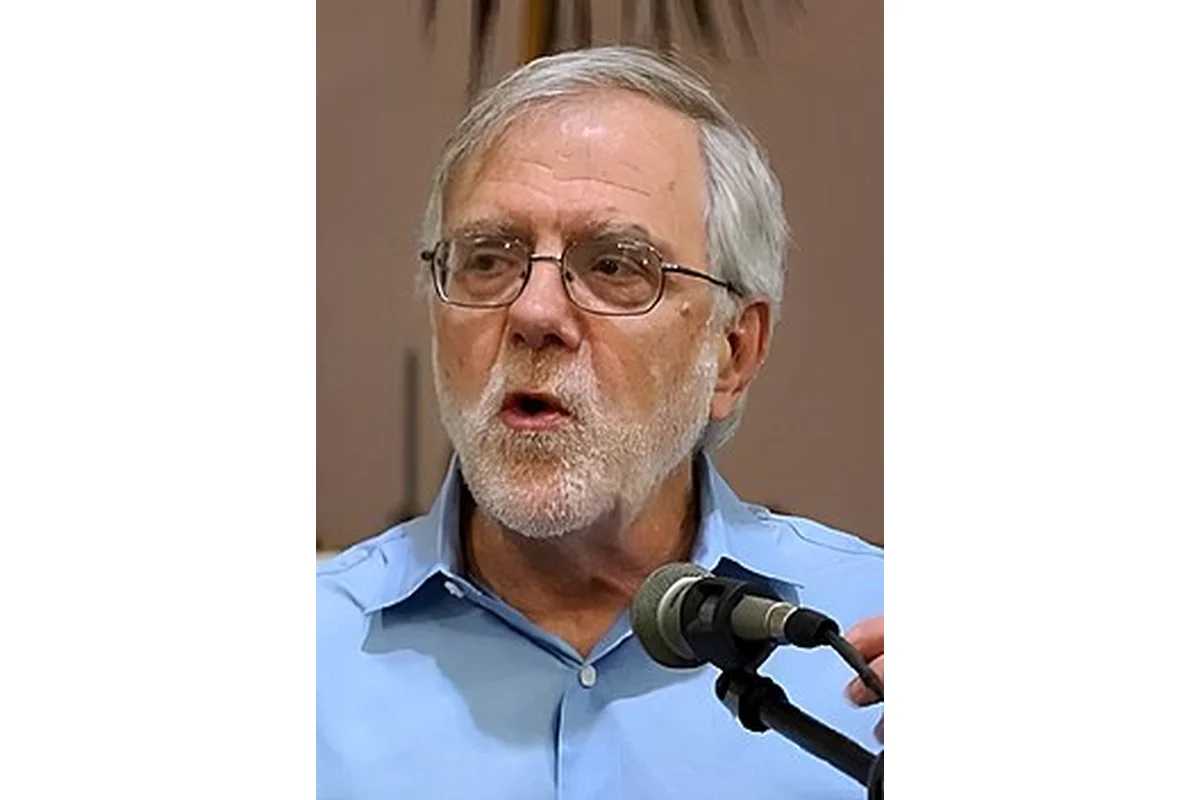
Howie Hawkins Bio
Howard Gresham Hawkins III, known publicly as Howie Hawkins, is an American trade unionist, environmental activist, and politician born on December 8, 1952, in San Francisco, California. He is best known as a co-founder of the Green Party of the United States and as the party’s presidential nominee in the 2020 election. Hawkins has built his public life around an eco-socialist Green New Deal, a rapid shift to renewable energy, a federal jobs guarantee, Medicare for All, and a carbon tax designed to fund the transition. A retired Teamster and former UPS dock worker, he has spent decades organizing against war, nuclear weapons, and corporate power while pushing for an independent working-class political movement outside the two major parties.
Howie Hawkins Early Life and Background
Early Life and Background
Howie Hawkins was raised in San Mateo, California, a community near the Bayshore Freeway in the San Francisco Bay Area. The neighborhood was diverse and had absorbed a large wave of Black and white migrants from the southern United States, an experience Hawkins has credited for his southern-inflected accent. His father was an attorney who had been a football and wrestling student-athlete at the University of Chicago and later served in the U.S. Army’s counter-intelligence unit connected to the Manhattan Project during World War II. Growing up in this environment shaped Hawkins’ sense of class and racial awareness from an early age.
Hawkins became politically active at the age of 12 after watching the multiracial Mississippi Freedom Democratic Party be denied recognition at the 1964 Democratic Convention. That experience left a lasting impression and pushed him toward a life of organizing. He went on to attend Dartmouth College in New Hampshire, where he founded the Dartmouth Radical Union, a group that challenged the college’s investments in corporations tied to apartheid in South Africa and the Vietnam War. Although he never earned a degree because he did not complete a foreign language requirement, his college years deepened his anti-war and anti-racist commitments.
Path to US Politics
Howie Hawkins entered electoral politics through the socialist and anti-nuclear movements of the 1970s. He campaigned for Bernie Sanders in Vermont when Sanders ran as a Liberty Union Party candidate for Senate and governor. In 1973, Hawkins joined the Socialist Party USA, a membership he has maintained to the present. Two years later, in 1976, he co-founded the Clamshell Alliance, a New England-based anti-nuclear power organization that targeted the proposed Seabrook Station nuclear plant.
During the 1980s, Hawkins moved into the green movement and, in 1988, co-founded the Left Green Network with the theorist Murray Bookchin, framing it as a radical alternative to U.S. Green liberals. In the early 1990s, he participated in a Washington, D.C., press conference announcing the formation of the Greens/Green Party USA. By the late 1990s, Hawkins was working with Mike Feinstein on a Plan for a Single National Green Party, which helped merge the Association of State Green Parties and GPUSA into a unified national organization. Through these efforts, he earned a reputation as a tireless organizer for independent left-wing politics.
Howie Hawkins Career
Early Career (2006-2010)
Howie Hawkins began his run for higher office in 2006 as the Green Party of New York’s candidate for the United States Senate, receiving 55,469 votes, or 1.2 percent, against the re-election of Hillary Clinton. Two years later, in 2008, he ran for the U.S. House of Representatives in New York’s 25th congressional district on the Green Populist line, drawing 9,483 votes against Democrat Dan Maffei. These early campaigns established him as a perennial candidate committed to building Green infrastructure in New York.
In 2010, Hawkins secured the Green Party nomination for Governor of New York, with backing from the Socialist Party of New York. He received nearly 60,000 votes, or 1.3 percent of the total, a strong enough result to clear the 50,000-vote threshold required to keep the Green Party on the ballot for the next four years. In December 2010, he was named co-chair of the newly recognized Green Party of New York.
New York State Races Breakthrough (2011-2018)
From 2011 onward, Howie Hawkins ran a steady stream of local and statewide campaigns in New York, including races for Syracuse Common Council in 2011 and 2013, Syracuse City Auditor in 2015, and Mayor of Syracuse in 2017. He lost each contest, but his 2017 mayoral bid proposed a plan to restore the Erie Canal through downtown Syracuse as a tool for urban revitalization, and he received roughly 4.1 percent of the vote against independent winner Ben Walsh.
Hawkins launched his second gubernatorial campaign on April 9, 2014, in Albany, running with New York City educator and union activist Brian Jones. The platform featured a Green New Deal, public financing of elections through a Clean Money system, an end to New York’s role in the Common Core standards, and a raise in the minimum wage to $15 an hour. The ticket collected 184,419 votes, or 4.8 percent, lifting the Green Party to the fourth ballot line and surpassing both the Working Families and Independence parties. He returned for a third gubernatorial run in 2018 with running mate Jia Lee, drawing 95,716 votes, or 1.7 percent, a drop that later cost the party a ballot line.
2020 Presidential Era (2019-2020)
On April 3, 2019, Howie Hawkins announced the formation of an exploratory committee for the Green Party’s 2020 presidential nomination, and on May 28, 2019, he formally launched his campaign in Brooklyn, New York. By August 2019, the campaign had met the federal matching funds threshold for California and New York, and was one of only two 2020 primary campaigns to apply for those funds. Hawkins consolidated the broader left by winning the nominations of the Socialist Party USA in October 2019 and the Solidarity Party in November 2019.
On July 11, 2020, Hawkins was formally chosen as the Green Party’s nominee for the 2020 U.S. presidential election, with Angela Walker as his running mate. His platform combined the Green New Deal, funded in part by cuts to military spending, with Medicare for All, a federal jobs guarantee, a $20 minimum wage, and a guaranteed minimum income. On November 3, 2020, he received 407,068 votes, or 0.26 percent of the popular vote, with zero electoral votes, and conceded to Joe Biden. The result was the third-best showing for a Green Party presidential candidate, behind Jill Stein in 2016 and Ralph Nader in 2000.
2022 Independent Run (2021-2022)
Hawkins returned to New York politics in 2022, mounting a fourth campaign for Governor of New York. Because the Green Party had fallen short of the 130,000-vote threshold needed for ballot access after the 2020 cycle, he ran as an Independent write-in candidate. He finished with 9,290 votes, or 0.2 percent, extending his long record as a candidate who has never won elected office but who has repeatedly used his campaigns to build third-party infrastructure.
Notable Events and Milestones
Among Howie Hawkins’ signature achievements is being the first U.S. politician to campaign on a Green New Deal platform, a position he adopted during his 2010 gubernatorial run, well before the term entered national debate. He is also a longtime member of the Industrial Workers of the World and has self-described as an eco-socialist and libertarian socialist. In 2016, he was accidentally listed on Minnesota’s general election ballot as the Green Party’s vice-presidential candidate alongside Jill Stein, a paperwork mix-up that nonetheless helped the state ticket gain nearly 37,000 votes.
Howie Hawkins Career Wins
Howie Hawkins has never won a partisan election. Across more than two dozen campaigns for offices ranging from city council to U.S. Senate to the presidency, his candidacies have served a strategic purpose: building ballot access, pushing ideas into the political mainstream, and demonstrating support for a permanent independent left in the United States.
New York State Race Highlights
His most significant statewide results came in his 2010, 2014, and 2018 gubernatorial campaigns. The 2010 result cleared the 50,000-vote threshold to keep the Green Party on the ballot. The 2014 campaign, with Brian Jones as his running mate, secured 184,419 votes and elevated the party to Row D on New York’s ballot. The 2018 run, with running mate Jia Lee, drew 95,716 votes. Each showing, whether a breakthrough or a setback, has shaped the legal and organizational standing of the Green Party in New York.
Other Wins and Achievements
Although Hawkins has never won an election, his ballot-line strategy repeatedly succeeded. His 2010 vote total preserved Green ballot access in New York. His 2014 performance moved the party up to Row D. His 2020 presidential run earned more than 407,000 votes nationwide, the third-best Green performance ever, and his earlier organizing helped unify the U.S. Green movement into a single national party.
| Position | Votes | Year |
|---|---|---|
| Governor of New York | 59,000 | 2010 |
| Governor of New York | 184,419 | 2014 |
| Governor of New York | 95,716 | 2018 |
| Governor of New York (Independent) | 9,290 | 2022 |
| U.S. President | 407,068 | 2020 |
| U.S. Senate (New York) | 55,469 | 2006 |
Howie Hawkins Family
Family Background and Political Lineage
Howie Hawkins’ family background shaped his early political formation. His father was an attorney, a former University of Chicago football and wrestling student-athlete, and a U.S. Army veteran of the Manhattan Project’s counter-intelligence unit. That blend of professional discipline and exposure to the moral complexities of mid-twentieth-century American power left its mark on Hawkins’ later anti-war and anti-nuclear commitments.
Personal Life
Howie Hawkins has lived a largely working-class life rooted in labor organizing. He worked for years on the night shift unloading trucks for UPS, a job he held from 2001 until his retirement in 2017, and is a retired member of the Teamsters. Public records about his marital status, partner, and children have not been confirmed, and he has not disclosed these details in official biographies.