

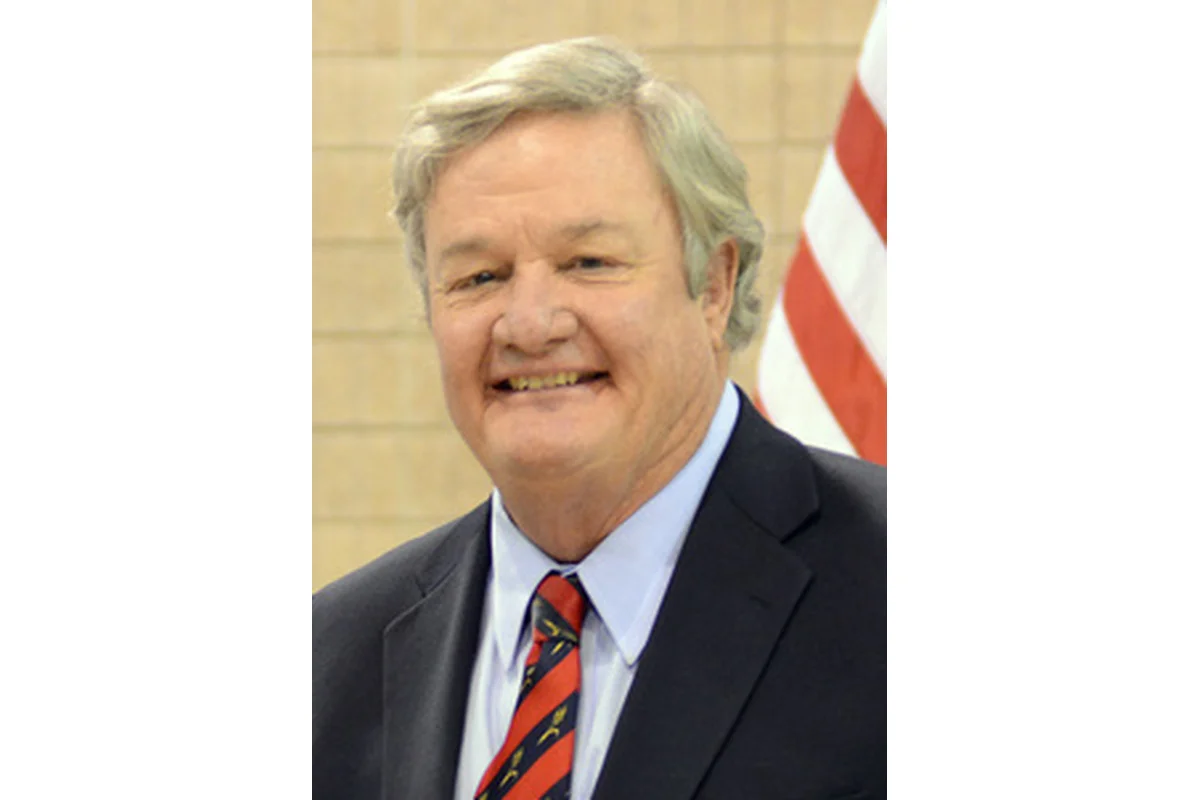
Jack Dalrymple Bio
John Stewart Dalrymple III (born October 16, 1948), widely known as Jack Dalrymple, is an American politician, businessman, and farmer. A Republican, he served as the 32nd Governor of North Dakota from 2010 to 2016. Before becoming governor, Dalrymple spent a decade as the state’s 36th Lieutenant Governor under Governor John Hoeven, and earlier built a long career in the North Dakota House of Representatives. He is also a former candidate for the United States Senate.
Beyond politics, Dalrymple managed a multi-generational wheat farm in the Red River Valley and helped establish Dakota Growers Pasta Company, an agricultural cooperative that grew into one of North America’s largest dry pasta producers. His career has blended public service, business leadership, and farm management across several decades in North Dakota.
Early Life and Background
Jack Dalrymple was born on October 16, 1948, in Minneapolis, Minnesota, to Mary Josephine Knoblauch and John Stewart Dalrymple Jr. Although he was born in Minnesota, Dalrymple spent much of his childhood in Casselton, North Dakota, on the family’s wheat farm. The farm had deep roots in the region, having been established in 1875 by his great-grandfather, Oliver Dalrymple, a notable figure in the early settlement of the northern plains.
By the time Dalrymple was seven years old, his grandfather still owned about 25,000 acres of farmland in the area. Growing up around this large family operation gave him direct experience with agricultural life and the business side of farming from an early age. The Dalrymple farm in the Red River Valley became a central part of his identity and later his livelihood.
For high school, Dalrymple attended The Blake School, a private co-educational day school, where he completed a preparatory course and graduated in 1966. He then headed east to Connecticut, enrolling at Yale College as a legacy student. In 1970, he graduated with honors from Yale, earning an A.B. in American Studies. His college years exposed him to a broader academic environment before he returned to North Dakota to work in agriculture.
Path to US Politics
After graduating from Yale, Dalrymple returned to North Dakota and began managing the family’s Dalrymple Farm in the Casselton area, where the operation produced durum wheat. His work on the farm coincided with growing involvement in local civic life. In 1975, he helped found ShareHouse Inc., a residential treatment program in Fargo for people recovering from alcohol or drug dependencies. He also served on the Casselton Jobs Development Commission during the 1980s, giving him early experience in public-facing work.
Dalrymple’s interest in broader public policy led him to chair the Board of Prairie Public Television in the 1990s, the PBS affiliate serving North Dakota and the surrounding region. His growing profile in agricultural and civic circles made him a recognizable voice on rural issues. In 1983, he was named the Outstanding Young Farmer of the United States by Outstanding Farmers of America, a national honor that reflected his standing in the farming community.
His transition into elected politics came in 1984, when he won a seat in the North Dakota House of Representatives for the 22nd district, representing rural Casselton and Cass County. The role gave him a direct platform to influence state policy on agriculture, budgeting, and rural development, setting the foundation for his later rise in state government.
Jack Dalrymple Career
Early Career (1984–2000)
Jack Dalrymple began his legislative career in 1985 after winning election to the North Dakota House of Representatives. He represented the 22nd district, a rural seat covering Casselton and Cass County, and was re-elected seven times, serving eight consecutive terms through 2000. During his time in the House, he earned a reputation for his work on fiscal matters, eventually serving as chairman of the House Appropriations Committee for four years. In the 1999–2000 interim, he also chaired the Budget Section, the legislative panel that reviews spending issues between sessions.
Alongside his legislative work, Dalrymple pursued two statewide campaigns for the United States Senate. In December 1987, he announced his first Senate bid but lost the Republican nomination to state House majority leader Earl Strinden. He tried again in 1992, winning the Republican nomination for the special election to fill the seat left vacant by the death of Senator Quentin Burdick. In that race, he was defeated by Kent Conrad, 63 to 34 percent, winning only three counties in the state.
Lieutenant Governor Era (2000–2010)
Following his time in the state House, Dalrymple joined the Republican ticket with John Hoeven in 2000 and won election as the 36th Lieutenant Governor of North Dakota. He was re-elected to the same role in 2004 and again in 2008, serving a full decade alongside Governor Hoeven. As lieutenant governor, Dalrymple continued to engage with agricultural and budget issues, drawing on his legislative background.
During this period, he also played a key role in the business world. In 1992, he had helped found Dakota Growers Pasta Company as an agricultural cooperative of more than 1,100 primarily North Dakota wheat growers, and he served as its founding board chairman. Under his leadership, the cooperative grew into North America’s third-largest manufacturer and marketer of dry pasta products. He guided its transition from a cooperative to a C corporation, and in May 2010, Dakota Growers Pasta was sold to the Canadian firm Viterra Inc. for about $240 million.
Governorship of North Dakota (2010–2016)
When Governor John Hoeven won election to the United States Senate in November 2010, Dalrymple ascended to the governorship under North Dakota’s succession provisions. He was sworn in on December 7, 2010, in a joint session of the North Dakota Legislative Assembly, with Drew Wrigley sworn in as lieutenant governor. Dalrymple’s first months in office coincided with the booming energy economy in western North Dakota, which shaped much of the state’s policy direction during his tenure.
On November 1, 2011, Dalrymple announced he would seek a full four-year term as governor, with Wrigley as his running mate. In 2012, he easily defeated Democratic challenger Ryan Taylor in the general election, winning a full term. During his governorship, he dealt with major events including the 2016 Dakota Access Pipeline protests, when he called in the North Dakota National Guard’s 191st Military Police to manage demonstrations near the Standing Rock Sioux reservation. On August 24, 2015, he announced that he would not seek re-election in 2016, bringing his time in the state’s top office to a close.
Notable Events and Milestones
Among the most significant moments of Dalrymple’s career was his role in building Dakota Growers Pasta Company from a cooperative of more than 1,100 wheat growers into a major North American pasta producer, later sold for about $240 million. His decade as Lieutenant Governor under John Hoeven and his election as the 32nd Governor of North Dakota marked the peak of his political career.
Jack Dalrymple Family
Family Background and Farming Lineage
Jack Dalrymple comes from a family with deep roots in North Dakota agriculture. His great-grandfather, Oliver Dalrymple, established the family farm in 1875, and by the mid-twentieth century, his grandfather still owned about 25,000 acres in the region. His parents, John Stewart Dalrymple Jr. and Mary Josephine Knoblauch, raised him with strong ties to the Casselton community. He later managed the family’s durum wheat operation, continuing a multi-generational farming tradition.
Personal Life
Jack Dalrymple married Betsy Wood in 1971, and the couple has four daughters. His family life has been closely tied to North Dakota, where the Dalrymple farm remains a central part of the family’s identity. His long marriage and large family have been a steady presence alongside his decades of work in politics, business, and farming.