

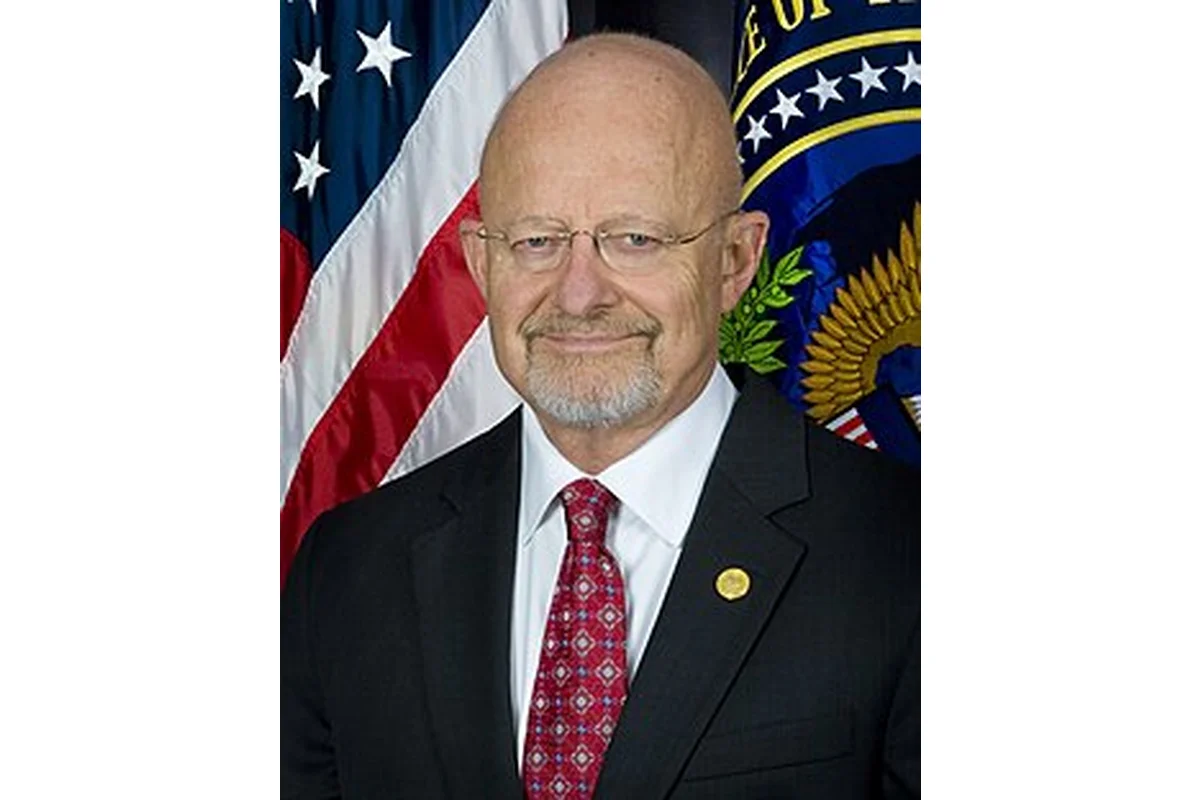
James Clapper Bio
James Robert Clapper Jr. (born 14 March 1941) is a retired lieutenant general in the United States Air Force and a former government official who served as United States Director of National Intelligence from 2010 to 2017. Over a career spanning more than three decades in uniform and additional years in senior intelligence leadership, he directed three major U.S. intelligence organizations and helped shape the country’s post-9/11 intelligence enterprise. After leaving government he became a Distinguished Senior Fellow at the Center for a New American Security and a national security analyst for CNN.
A native of Fort Wayne, Indiana, Clapper came of age in a military family and built his early reputation in signals intelligence and combat support flying. He later earned recognition for managing large organizations, integrating intelligence functions across agencies, and testifying before Congress on some of the most sensitive national security matters of his era.
Early Life and Background
James Robert Clapper Jr. was born on 14 March 1941 in Fort Wayne, Indiana, the son of First Lieutenant James Robert Clapper and Anne Elizabeth Wheatley. His father served in United States Army signals intelligence during World War II, later retiring as a colonel in 1972, and subsequently worked in security at George Mason University. His maternal grandfather, James McNeal Wheatley, was an Episcopal minister, and Clapper has cited the military discipline and civic-mindedness of his family as formative influences.
Because of his father’s military assignments, Clapper grew up partly in West Germany, where he graduated from Nurnberg American High School in 1959. He went on to earn a Bachelor of Science degree in political science from the University of Maryland, College Park, in 1963 and a Master of Science degree in political science from St. Mary’s University, Texas, in 1970. He also received an honorary doctorate in strategic intelligence from the Joint Military Intelligence College in Washington, D.C., where he later taught as an adjunct professor.
Path to US Politics and Intelligence Leadership
Clapper’s path to senior intelligence leadership began with a brief enlistment in the United States Marine Corps Reserve, where he served as a rifleman and attended the junior course of the Platoon Leader Class. He then transferred to the Air Force Reserve Officer Training Corps program and was commissioned as a second lieutenant in 1963, beginning a long career in military intelligence that would eventually draw him into the senior ranks of the United States government.
His early assignments included two tours of duty in Southeast Asia, where he commanded a signals intelligence detachment in Thailand’s Udon Thani Province and flew 73 combat support missions in EC-47 aircraft, including sorties over Laos and Cambodia. He later commanded a signals intelligence wing at Fort George G. Meade, Maryland, and the Air Force Technical Applications Center at Patrick Air Force Base, Florida. These postings gave him direct experience with the operational and technical sides of intelligence that would later define his leadership roles in Washington.
James Clapper Career
Early Career (1963–1991)
Clapper served more than three decades in uniform, with significant combat and command experience in signals intelligence. During the Persian Gulf War he served as Chief of Air Force Intelligence, coordinating air-component intelligence contributions to Operation Desert Shield and Desert Storm. His work during this period established him as a senior officer capable of leading large intelligence organizations under operational pressure.
In November 1991, under President George H. W. Bush, Clapper became Director of the Defense Intelligence Agency. In that role he oversaw the transformation of the National Military Intelligence Center into the National Military Joint Intelligence Center and launched an initiative to reorganize intelligence analysis around enemy weapons rather than regions. When that restructuring created functional stovepipes that reduced analytical coherence, he restored the original regional structure. He retired from active duty as a lieutenant general in September 1995 after thirty-two years of service and later served on the 1996 investigatory inquiry into the Khobar Towers bombing.
Senior Intelligence Leadership (2001–2010)
After six years in private industry, including work with the Security Affairs Support Association, Clapper returned to government in August 2001 as director of the National Imagery and Mapping Agency, which was later renamed the National Geospatial-Intelligence Agency. He led NGA from 2001 until June 2006, guiding the agency through the early years of the post-9/11 era and the rapid growth of geospatial intelligence as a core discipline of the Intelligence Community.
For the 2006–2007 academic year, Clapper held the Distinguished Professor in the Practice of Intelligence position at Georgetown University’s Intelligence and National Security Alliance. On 29 January 2007, President George W. Bush nominated him as Under Secretary of Defense for Intelligence, and the Senate confirmed him on 11 April 2007. As the second person ever to hold that position, he oversaw the Defense Intelligence Agency, the National Geospatial-Intelligence Agency, the National Security Agency, and the National Reconnaissance Office, working closely with Director of National Intelligence John Michael McConnell.
Director of National Intelligence Era (2010–2017)
On 5 June 2010, President Barack Obama nominated Clapper to replace Dennis C. Blair as Director of National Intelligence. After a 15–0 vote in the Senate Intelligence Committee, the full Senate unanimously confirmed him on 5 August 2010. During his confirmation hearing, Clapper pledged to advance the DNI’s authorities, exert tighter control over intelligence programming and budgeting, and provide oversight over the Central Intelligence Agency’s use of drones in Pakistan.
As DNI, Clapper made intelligence integration across the community the primary mission of the Office of the Director of National Intelligence. In August 2010 he announced a new deputy director of national intelligence for intelligence integration role, and in 2012 his office launched an initiative to create a common information-technology desktop for the entire Intelligence Community. The shared infrastructure reached operating capability in late fiscal 2013. In November 2016 Clapper resigned as Director of National Intelligence, effective at the end of President Obama’s term in January 2017.
Notable Events and Milestones
The defining controversy of Clapper’s tenure as DNI came in June 2013, after the leak of documents detailing National Security Agency collection of telephone metadata on millions of Americans. In March 2013 testimony to the Senate Select Committee on Intelligence, Clapper had answered “no” when asked whether the NSA collects any type of data on millions or hundreds of millions of Americans. On 1 July 2013 he apologized to the Senate Intelligence Committee, calling his earlier response “clearly erroneous.” A group of 26 senators also complained about his responses, and Representative Justin Amash became the first member of Congress to openly call for his resignation on perjury grounds.
James Clapper Post-Government Career
Analyst and Public Commentator (2017–Present)
In May 2017, Clapper joined the Washington, D.C.-based think tank the Center for a New American Security as a Distinguished Senior Fellow for Intelligence and National Security. In June 2017 he commenced an initial four-week term at the Australian National University National Security College in Canberra, where he delivered public lectures on key global and national security issues. In August 2017, CNN hired Clapper as a national security analyst, a role in which he has offered frequent commentary on intelligence, Russia, and counterterrorism matters.
Clapper has continued to weigh in publicly on major national security debates, including the 2018 pipe-bomb campaign that targeted several Democratic officials and critics of President Donald Trump, an episode in which an explosive device was addressed to him at CNN’s Manhattan offices. In the 2024 United States presidential election, he endorsed Kamala Harris. His 2018 memoir, Facts and Fears: Hard Truths from a Life in Intelligence, offers a fuller account of his years in intelligence and the controversies of his tenure.
James Clapper Military Awards and Decorations
Verified Decorations
Over more than three decades in uniform, Clapper received the Legion of Merit three times, the Bronze Star twice, and the Air Medal twice. These recognitions reflect his combat service in Southeast Asia, his senior leadership roles in air force and defense intelligence, and his contributions to joint intelligence operations across the Persian Gulf War era.
James Clapper Family
Family Background and Service Lineage
Clapper comes from a family with deep ties to United States military and public service. His father, First Lieutenant James Robert Clapper, served in United States Army signals intelligence during World War II, rose to the rank of colonel, and later worked in security at George Mason University. His maternal grandfather, James McNeal Wheatley, was an Episcopal minister. Clapper also has a brother, Mike Clapper of Illinois, and a sister, Chris, both of whom he introduced at his Senate confirmation hearings on 20 July 2010.
Personal Life
In 1965, Clapper married Susan Ellen Terry, a former National Security Agency employee. The couple has a daughter, Jennifer, who is a principal of an elementary school in Fairfax County, Virginia, and a son, Andrew, who is an instructional technology resource teacher for Hidden Valley High School in Roanoke, Virginia. Clapper has spoken publicly about the support of his family throughout his long career in uniform and government service.