

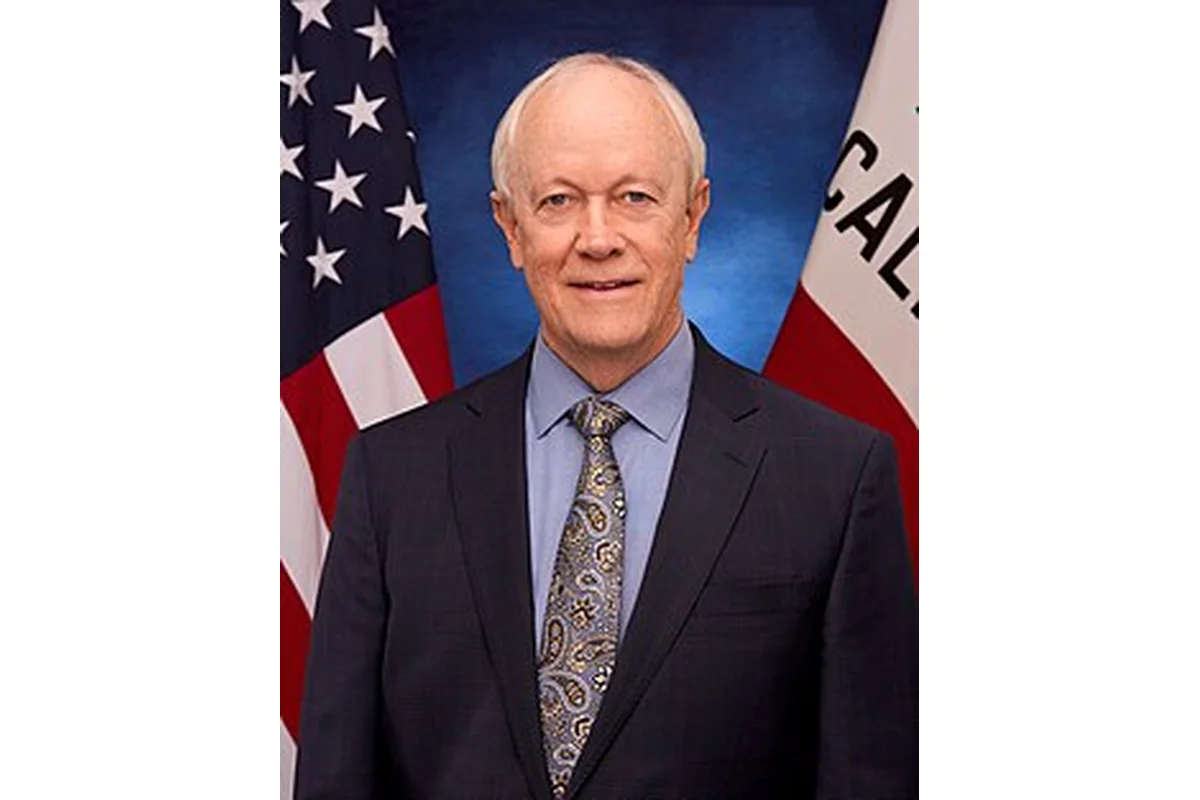
Jerry McNerney Bio
Gerald Mark McNerney, known publicly as Jerry McNerney, is an American businessman, mathematician, and Democratic politician born on June 18, 1951, in Albuquerque, New Mexico. He has served in the California State Senate representing the 5th district since December 2024, and previously represented California in the U.S. House of Representatives from 2007 to 2023. McNerney holds a Ph.D. in mathematics and built a professional career in the energy sector before entering public service.
During his time in Congress and later in the state senate, McNerney has focused on renewable energy, veterans’ affairs, and emerging technology policy. He is known for authoring the AI in Government Act and for co-founding the Congressional Freethought Caucus. McNerney resides in Pleasanton, California, with his wife Mary, and they have three children.
Early Life and Background
Gerald Mark McNerney was born in Albuquerque, New Mexico, to Rosemary McNerney (née Tischhauser) and John E. McNerney. He is of Swiss and Irish descent and grew up in the American Southwest. His early environment and family background shaped his interest in science, math, and public service, interests that would later define his career.
McNerney attended St. Joseph’s Military Academy in Hays, Kansas, where he received a structured secondary education. He then enrolled at the United States Military Academy at West Point, where he studied for two years. In 1971, he left West Point in protest of U.S. involvement in the Vietnam War, a decision that redirected his path toward civilian academia.
Following his departure from West Point, McNerney enrolled at the University of New Mexico in Albuquerque. He earned bachelor’s and master’s degrees there, and in 1981 he completed a Ph.D. in mathematics, with his doctoral dissertation in differential geometry focusing on a generalization of the Laplace–Beltrami operator. His rigorous academic training prepared him for a career in national security and energy research.
Path to US Politics
McNerney’s transition into public life followed a long career in science, engineering, and energy. After completing his doctorate, he worked as a contractor for Sandia National Laboratories at Kirtland Air Force Base, contributing to national security programs. In 1985, he joined U.S. Windpower (Kenetech) in a senior engineering role, gaining firsthand experience in the emerging wind-energy industry.
In 1994, McNerney became an energy consultant for major utilities and research bodies, including PG&E, FloWind, and the Electric Power Research Institute. He later served as chief executive officer of HAWT Power, a startup focused on manufacturing horizontal-axis wind turbines. These positions made him a recognized voice in renewable energy before he entered electoral politics.
Encouraged by his son, McNerney entered the 2004 race for California’s 11th congressional district as a write-in Democratic candidate just two weeks before the primary. Though he lost the general election to Republican incumbent Richard Pombo, the campaign introduced him to voters in the region and laid the groundwork for his later congressional victories.
Jerry McNerney Career
Early Career (2005–2006)
McNerney launched his 2006 congressional campaign in the fall of 2005, returning to challenge Richard Pombo in California’s 11th district. In the June 2006 Democratic primary, he won with 52.8% of the vote, defeating Steve Filson, who had been endorsed by the Democratic Congressional Campaign Committee, along with Stevan Thomas. His primary victory established him as the Democratic nominee for the general election.
During the fall campaign, McNerney attracted bipartisan support, including endorsements from Republican former congressman Pete McCloskey and Republican primary challenger Tom Benigno. Polling later showed him leading Pombo, and on November 7, 2006, McNerney defeated the incumbent 53% to 47%, flipping the seat for the Democrats.
U.S. House Breakthrough (2007–2012)
After his 2006 victory, McNerney represented California’s 11th congressional district and was reelected in 2008 with 55% of the vote against Republican Dean Andal. In 2010, he won a third term, defeating Republican David Harmer by a narrow 48% to 47% margin. His early House years focused on energy, veterans’ affairs, and science-based policy.
McNerney authored legislation signed by President Barack Obama in 2010 that created an evaluation panel to assess Veterans’ Administration treatments for traumatic brain injury. He also wrote a 2013 bill that allowed veterans to continue receiving benefits during the government shutdown, and he was among the first lawmakers to call for the resignation of VA Secretary Eric Shinseki following revelations about delays in care.
In 2013, McNerney introduced the Methamphetamine Education, Treatment and Hope (METH) Act to expand programs combating methamphetamine abuse. He also co-sponsored legislation requiring the Secretary of Energy to study the impact of thermal insulation on energy and water use in federal buildings.
9th District Era (2013–2023)
After California redistricting, McNerney’s district was renumbered as the 9th and redrawn to include Stockton and parts of Sacramento County. He relocated to Stockton and was reelected in 2012 with 56% of the vote against Republican Ricky Gill. The 9th district was a more Central Valley-centered constituency than his earlier Bay Area-leaning seat.
McNerney served on House committees focused on energy and science, continuing his advocacy for renewable energy and technology policy. In April 2018, he co-founded the Congressional Freethought Caucus alongside Representatives Jared Huffman, Jamie Raskin, and Dan Kildee, an organization dedicated to evidence-based policy and the separation of church and state. Huffman and Raskin serve as the caucus’s co-chairs.
In 2019, McNerney authored the AI in Government Act (HR 2575), which was enacted in 2020 to promote the responsible adoption of artificial intelligence across federal agencies. He voted with President Joe Biden’s stated position 100% of the time during the 117th Congress, according to a FiveThirtyEight analysis.
California State Senate (2024–Present)
On December 8, 2023, McNerney filed for an open seat in District 5 of the California State Senate, surprising the field and upending Assemblymember Carlos Villapudua’s expected move into the race. He went on to defeat Republican Jim Shoemaker in the general election and assumed office on December 2, 2024. His senate district includes all of San Joaquin County and the Tri-Valley area of Alameda County.
In 2025, McNerney introduced SB 7, the No Robo Bosses Act, which sought to require human oversight of automated decision-making systems in California workplaces. Governor Gavin Newsom vetoed the bill on October 13, 2025. McNerney continues to focus on energy, artificial intelligence policy, and worker protections in his state senate role.
Notable Events and Milestones
Among McNerney’s signature achievements are the AI in Government Act of 2020, his 2010 traumatic brain injury treatment evaluation law, and his co-founding of the Congressional Freethought Caucus in 2018. After the Supreme Court overturned Roe v. Wade in 2022, he publicly criticized the court as a partisan body pursuing a far-right minority agenda.
Jerry McNerney Career Wins
McNerney has won multiple federal and state elections over nearly two decades in public service. His victories include flipping California’s 11th congressional district in 2006 and winning repeated reelection bids in the U.S. House and California State Senate.
U.S. House Highlights
McNerney first won a congressional seat on November 7, 2006, defeating seven-term Republican incumbent Richard Pombo 53% to 47%. He was reelected in 2008 with 55% over Dean Andal, in 2010 with 48% over David Harmer, and in 2012 with 56% over Ricky Gill, serving continuously in the U.S. House from 2007 until 2023.
Other Wins and Achievements
In 2024, McNerney won election to California’s 5th State Senate district, defeating Republican Jim Shoemaker and taking office on December 2, 2024. He is also recognized for landmark policy achievements, including the AI in Government Act of 2020 and legislation addressing veterans’ traumatic brain injury care.
Jerry McNerney Family
Family Background and Public Service Lineage
Jerry McNerney was raised in Albuquerque, New Mexico, by his parents, John E. McNerney and Rosemary McNerney (née Tischhauser). He is of Swiss and Irish descent. His son encouraged him to enter electoral politics in 2004, helping launch his career as a public servant.
Personal Life
McNerney married Mary Martine in 1977, and the couple has three children. He and his family reside in Pleasanton, California. McNerney is Roman Catholic and has often drawn on his scientific and faith background when discussing public policy and ethics.