

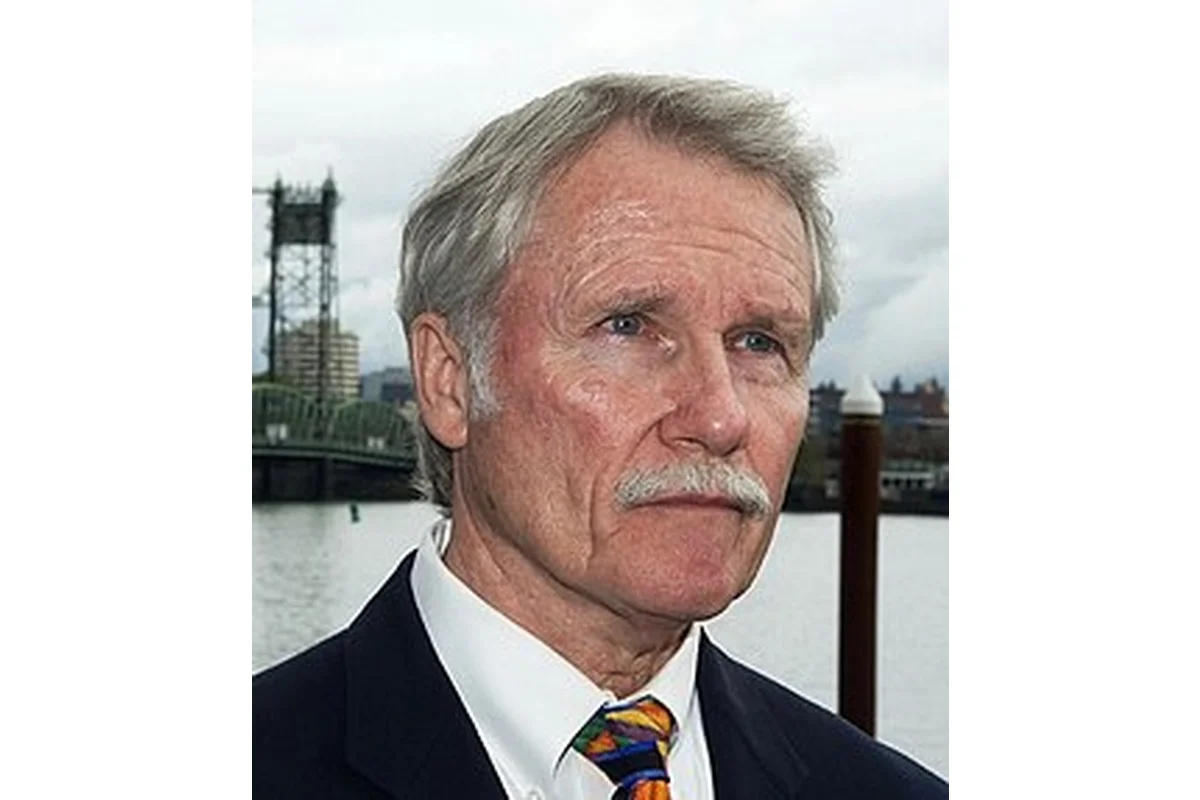
John Kitzhaber Bio
John Albert Kitzhaber (born March 5, 1947) is an American physician and former politician who served as the 35th and 37th governor of Oregon. A member of the Democratic Party, he holds the record as Oregon’s longest-serving governor, having held office across two non-consecutive tenures from 1995 to 2003 and from 2011 to 2015. Trained as an emergency physician, he is best known for designing the Oregon Health Plan and shaping the state’s health, land-use, and natural-resource policies.
Early Life and Background
John Albert Kitzhaber was born on March 5, 1947, in Colfax, Washington, to Albert Raymond Kitzhaber and Annabel Reed (née Wetzel). Of German descent, he grew up in the Pacific Northwest and later graduated from South Eugene High School in 1965. He went on to earn a Bachelor of Arts degree from Dartmouth College in 1969 before completing his medical degree at Oregon Health & Science University in 1973.
After finishing medical school, Kitzhaber practiced emergency medicine in Roseburg, Oregon, from 1973 to 1986. His years treating patients in a rural hospital gave him a firsthand view of the gaps in the American health care system, a perspective that would later shape his political career and his push for statewide health reform.
Path to US Politics
Kitzhaber entered electoral politics in 1978, winning a seat in the Oregon House of Representatives, where he served a single term. In 1980, he moved to the Oregon State Senate, beginning a long legislative career in the upper chamber that would last until 1993.
As Senate President from 1985 to 1993, Kitzhaber became the chief author of the Oregon Health Plan, a government-funded program that expanded coverage to low-income residents. The plan established him as a leading voice on health policy and positioned him for a run for statewide office.
John Kitzhaber Career
Early Career (1978–1993)
During his three terms in the Oregon State Senate, Kitzhaber built a reputation as a health-care reformer. His work on the Oregon Health Plan, which prioritized medical services based on effectiveness and cost, drew national attention and remains one of the most cited experiments in state-level universal coverage.
He combined his legislative duties with his medical practice, an unusual arrangement that gave him credibility on both sides of the policy debate and helped him win the Democratic nomination for governor in 1994 after sitting Governor Barbara Roberts withdrew from the race.
First Term, 1995–1999
Kitzhaber won the 1994 general election with 51 percent of the vote, defeating Republican former U.S. Representative Denny Smith, who received 42 percent. He was sworn into office on January 9, 1995, and quickly introduced the Oregon Children’s Plan to identify and assist at-risk children and their families.
Although personally opposed to the death penalty, he allowed two executions to be carried out during his first term. He later said those decisions were the most agonizing of his governorship and expressed regret over them.
Second Term, 1999–2003
In 1998, Kitzhaber won a landslide reelection over Republican anti-tax activist Bill Sizemore, taking 64 percent of the vote to Sizemore’s 30 percent and carrying 35 of Oregon’s 36 counties. He was the first Democrat to be reelected as governor in Oregon since 1906.
During his second term, he championed The Oregon Plan for Salmon and Watersheds to restore threatened salmon runs and pushed for breaching certain Pacific Northwest dams to aid fish recovery. He also created the Governor’s Growth Task Force and the Willamette Valley Livability Forum to defend Oregon’s land-use system and manage growth in the Willamette Valley. Oregon’s constitution barred him from seeking a third consecutive term in 2002, and he was succeeded by fellow Democrat Ted Kulongoski.
Interregnum, 2003–2011
After leaving office, Kitzhaber returned to health policy work, becoming director of the Center for Evidence Based Policy at Oregon Health & Science University and serving as president of the Estes Park Institute, a continuing-education organization for health-care leaders. In 2006, he founded the Archimedes Movement, an advocacy group promoting universal access to a defined set of effective health services. Although his proposed Oregon Better Health Act failed in 2007, parts of his plan were folded into a separate Senate health-reform bill that passed.
Third Term, 2011–2015
In 2010, Kitzhaber returned to politics and narrowly defeated Republican Chris Dudley, a former NBA player, taking 49.29 percent to Dudley’s 47.77 percent. He was sworn in for his third term on January 10, 2011, and was cross-nominated by the Independent Party of Oregon under Oregon’s new fusion-voting system.
He declared a moratorium on executions in Oregon, calling the death penalty compromised and inequitable, a decision that led the Oregon Supreme Court to uphold his authority in 2013. His third term was also marked by the troubled launch of Cover Oregon, the state’s Affordable Care Act insurance exchange, and the collapse of the Columbia River Crossing megaproject.
Fourth Term, 2015 and Resignation
Kitzhaber won a fourth term in 2014, defeating Republican Dennis Richardson by about 5.6 percent, and was sworn in on January 12, 2015, becoming Oregon’s longest-serving governor. He said the term would be his last.
His fourth term ended after roughly a month. Controversies surrounding the consulting work of his fiancée, Cylvia Hayes, and a previously undisclosed marriage she had entered into drew intense scrutiny. On February 13, 2015, Kitzhaber announced his resignation, effective February 18, 2015, and was succeeded by Secretary of State Kate Brown.
Notable Events and Milestones
Kitzhaber became Oregon’s longest-serving governor in 2015, a record later codified by his 20 years in office across four terms. In 2017, federal prosecutors ended a 28-month investigation without filing charges. In January 2019, he agreed to pay a $20,000 civil penalty to the Oregon Government Ethics Commission for conflicts of interest tied to Hayes’s consulting work.
John Kitzhaber Family
Family Background and Personal Life
Kitzhaber married Rosemary Linehan in 1971; the couple divorced in 1974. He married Sharon LaCroix in 1995, and they had a son, Logan, born in October 1997. The couple sought a divorce in 2003, shortly after the end of his second term as governor. In 2014, Kitzhaber became engaged to Cylvia Hayes, an environmental consultant and founder of 3EStrategies.
Residence and Public Image
Throughout his political career, Kitzhaber was known for his informal style, including his habit of wearing blue jeans at speaking events, a choice that drew attention at his 1995 inauguration. He lived in Portland, Oregon, and chose not to use the official Mahonia Hall gubernatorial residence in Salem during his years in office.