

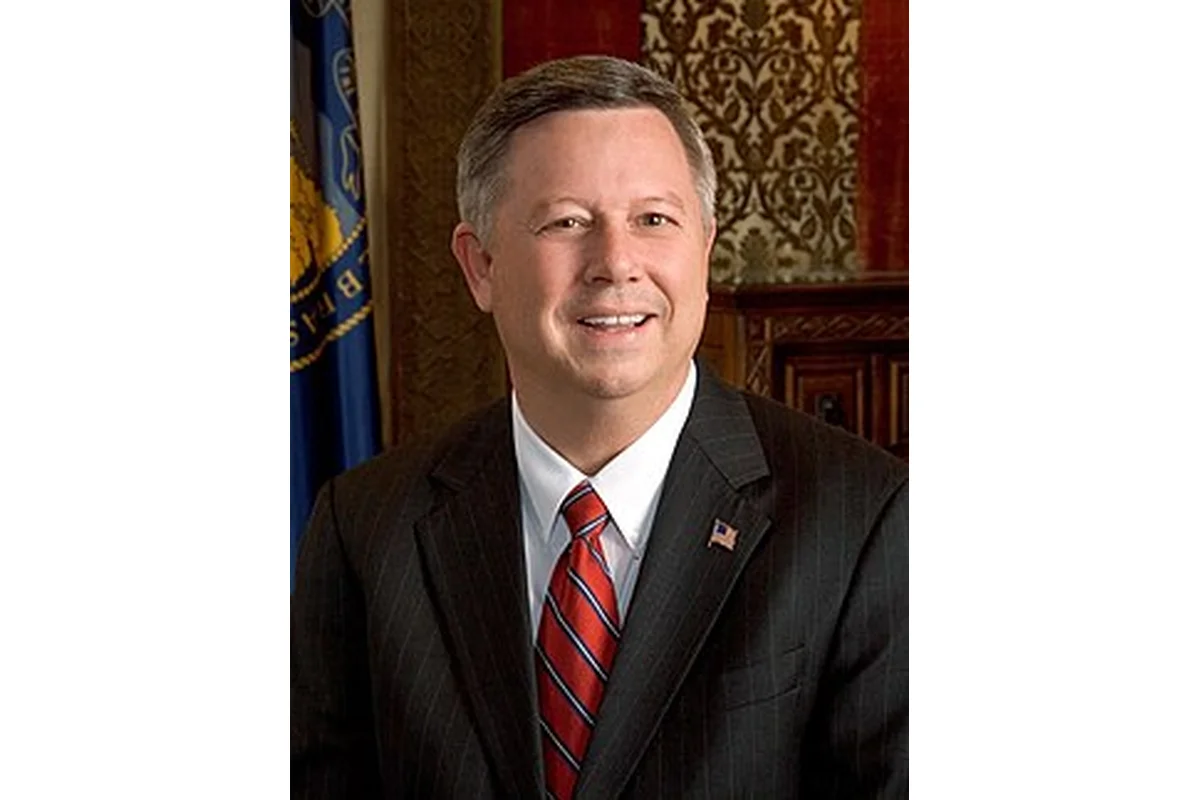
Dave Heineman Bio
David Eugene Heineman (born May 12, 1948) is an American politician and military veteran who served as the 39th governor of Nebraska from 2005 to 2015. A member of the Republican Party, he previously served as Nebraska State Treasurer (1995–2001) and as the 37th lieutenant governor (2001–2005) under Governor Mike Johanns. Heineman assumed the governorship when Johanns resigned to become the United States Secretary of Agriculture in President George W. Bush’s Cabinet. He is Nebraska’s longest-serving governor, with just under ten years in office, and was succeeded by businessman Pete Ricketts.
Before entering state politics, Heineman built a foundation in the U.S. military. A graduate of the United States Military Academy, he served five years in the Army and left with the rank of captain. He later transitioned to local government, serving on the Fremont City Council from 1990 to 1994 before moving into statewide office.
Early Life and Background
Dave Heineman was born in Falls City, Nebraska, the son of Irene (née Larkin) and Jean T. Heineman, a stock manager for J. C. Penney. Growing up in a Midwestern household, he spent his youth moving across several communities in eastern Nebraska, an upbringing that exposed him early to the rural values and small-town concerns that would later shape his political career. He eventually attended high school in Wahoo, Nebraska, where he completed his secondary education.
His path toward public service began with a military education. Heineman graduated from the United States Military Academy at West Point in 1970, earning a Bachelor of Science degree. He went on to complete the rigorous Army Ranger training program, demonstrating the discipline and leadership skills that would later inform his approach to governance. After his Ranger School graduation, he continued his military service on active duty.
Heineman served five years in the United States Army, working his way up to the rank of captain. His time in uniform gave him direct experience with national leadership, organizational management, and the chain of command—lessons that proved valuable when he eventually returned to Nebraska to pursue a career in public office.
Path to US Politics
After completing his Army service, Heineman settled in Nebraska and began engaging in civic life at the local level. In 1990, he won a seat on the Fremont City Council, where he served until 1994. This first taste of elected office allowed him to learn the mechanics of municipal government, constituent service, and budget management—skills that prepared him for the larger stage of statewide politics.
In 1994, Heineman was elected Nebraska State Treasurer, a position he held for two terms from 1995 to 2001. As treasurer, he managed the state’s financial operations, gaining a reputation for fiscal responsibility that would become a hallmark of his later campaigns. His tenure in this office established him as a rising figure in the Nebraska Republican Party.
On October 1, 2001, Governor Mike Johanns appointed Heineman as the 37th Lieutenant Governor of Nebraska after the previous officeholder, David Maurstad, resigned to take a post in the administration of President George W. Bush. Heineman was elected to his first full term as lieutenant governor in 2002 as Johanns’s running mate, solidifying his position as the governor’s chief deputy and heir apparent.
Dave Heineman Career
Early Career (1990–2001)
Dave Heineman’s political career began at the local level when he joined the Fremont City Council in 1990. Serving for four years, he handled the everyday concerns of a mid-sized Nebraska city, building the experience and community connections that would later support his move to statewide office. His council work helped him understand the relationship between local taxation, public services, and economic development.
In 1994, Heineman set his sights on a bigger role and won election as Nebraska State Treasurer, taking office in 1995. He served two consecutive terms in the role, serving through 2001. As the state’s chief financial officer, he oversaw the management of public funds and provided a steady, conservative voice on fiscal matters, helping to position himself as a trusted Republican figure in Nebraska government.
Lieutenant Governor Breakthrough (2001–2005)
Heineman’s appointment as the 37th Lieutenant Governor of Nebraska on October 1, 2001 marked his arrival on the state stage. Selected by Governor Mike Johanns after David Maurstad’s departure, he quickly proved himself an effective second-in-command. In 2002, he won election to his first full term as lieutenant governor, running on the ticket with Johanns and securing the confidence of Nebraska voters.
During his years as lieutenant governor, Heineman worked closely with Johanns on policy development, legislative strategy, and state-wide outreach. When Johanns resigned in early 2005 to become United States Secretary of Agriculture, Heineman was positioned to step into the top job. On January 20, 2005, he was sworn in as the 39th governor of Nebraska, beginning a tenure that would become the longest in the state’s history.
Governorship of Nebraska (2005–2015)
As governor, Heineman moved quickly to establish his own political identity. On April 11, 2005, he announced that he would seek election to a full four-year term. He had the backing of Nebraska Senator Chuck Hagel and faced a competitive Republican primary against former Nebraska Cornhuskers football coach and U.S. Representative Tom Osborne. In that primary, Heineman took 49 percent of more than 197,000 votes cast, while Osborne received 45 percent, securing the nomination.
In the November 7, 2006 general election, Heineman defeated Democratic nominee David Hahn, capturing 73.4 percent of the vote to Hahn’s 24.5 percent. Analysts at the Lincoln Journal Star credited his victory to his strong opposition to rural school consolidation and to granting resident college tuition rates to the children of undocumented immigrants, positions that resonated across the state’s many rural communities.
Heineman was reelected in 2010 with an even larger margin, taking 73.9 percent of the vote against Democratic nominee Mike Meister’s 26.1 percent. In June 2011, he became the first sitting governor to endorse Mitt Romney’s presidential campaign. He also worked with the Nebraska Legislature to pass what his office described as the largest tax relief package in Nebraska history and promoted himself as a leader for the state’s agricultural industry, securing trade deals for the export of wheat, soybeans, and other commodities.
Throughout his tenure, Heineman took decisive action on a range of policy fronts. In 2010, he signed two bills restricting abortion, including a ban on abortions at and after 20 weeks of pregnancy and a requirement that women seeking abortions be screened for mental-health problems. In January 2013, he approved a revised route for the Keystone Pipeline that avoided the environmentally sensitive Sandhills region but cut through the High Plains Aquifer, using authority granted by a 2012 state law. In March 2014, he joined a multistate lawsuit challenging California’s egg production standards, arguing that the rules placed unfair regulatory burdens on Nebraska farmers and ranchers. In April 2014, he signed a bill striking the word “firearms” from the list of items a governor may suspend during a state of emergency. In January 2015, he relinquished the governorship due to term limits and was succeeded by fellow Republican Pete Ricketts.
Notable Events and Milestones
Dave Heineman’s defining political milestone was becoming Nebraska’s longest-serving governor, completing just under ten years in office across his initial ascension and two full four-year terms. His 2006 primary victory over Tom Osborne and his dominant 73-percent wins in both general elections cemented his reputation as one of the most popular governors in the state’s modern history. He is also remembered for the Keystone Pipeline decision and for his early endorsement of Mitt Romney, the first sitting governor to do so.
Dave Heineman Family
Family Background and Personal Lineage
Dave Heineman was born to Irene (née Larkin) and Jean T. Heineman, a stock manager for J. C. Penney. His father’s career required the family to move across eastern Nebraska during his youth, exposing him to a variety of small communities and rural life. These formative experiences in towns such as Falls City and Wahoo helped shape his strong identification with the values of rural Nebraska, a connection that would later define his political identity.
Personal Life
Dave Heineman is married to Sally Ganem, a former elementary school principal. The couple has one son. Heineman’s family life remained largely outside the spotlight during his time in office, with Sally Ganem and their son offering steady support throughout his career in public service. In 2019, Heineman publicly endorsed Janet Palmtag in her candidacy for the Nebraska Legislature, signaling his continued engagement in the state’s political life after leaving the governorship.