

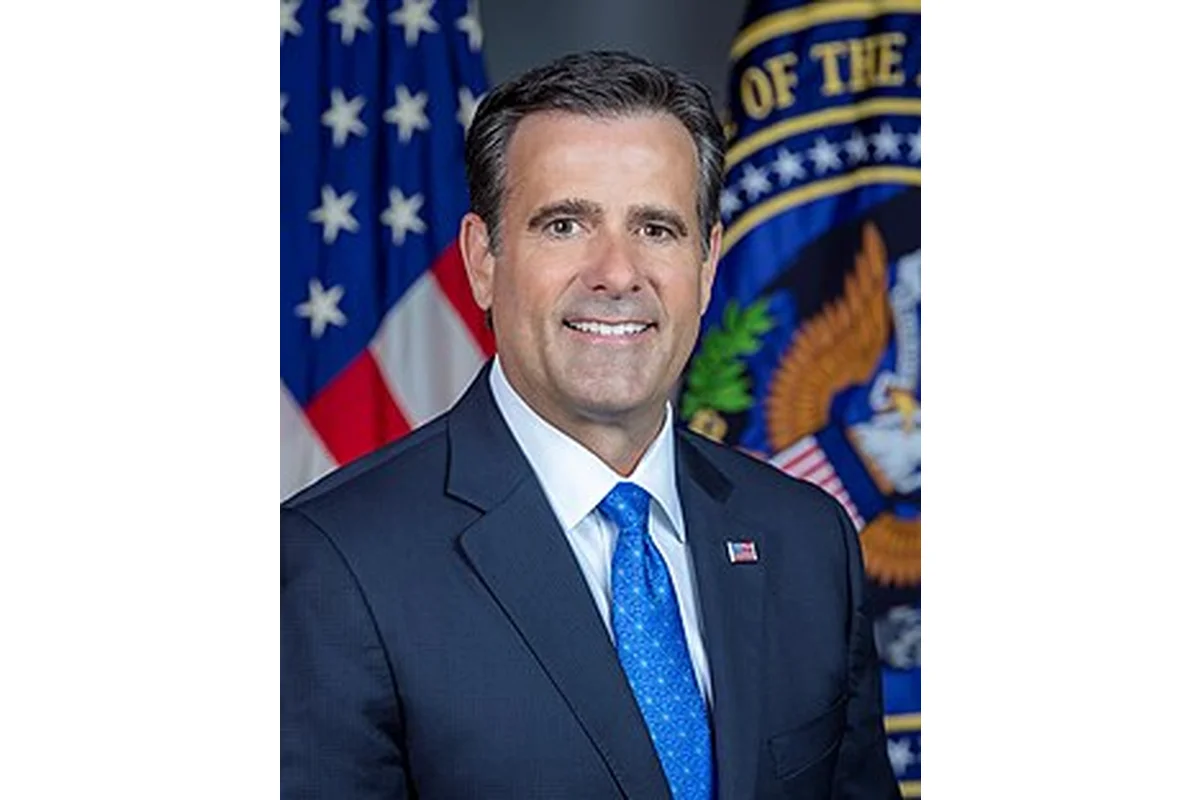
John Ratcliffe Bio
John Lee Ratcliffe (born October 20, 1965) is an American politician and attorney who has served as the ninth Director of the Central Intelligence Agency since 2025. A member of the Republican Party, he previously served as the sixth Director of National Intelligence from 2020 to 2021 and represented Texas’s 4th congressional district in the U.S. House of Representatives from 2015 to 2020. Known for strongly conservative positions on national security and China, Ratcliffe has been a prominent figure in Republican politics for more than a decade.
Earlier in his career, Ratcliffe served as mayor of Heath, Texas, from 2004 to 2012, and as interim U.S. Attorney for the Eastern District of Texas from 2007 to 2008. He later joined President Donald Trump’s national security team before being nominated to lead the Central Intelligence Agency in 2025.
Early Life and Background
John Lee Ratcliffe was born in Mount Prospect, Illinois, a suburb northwest of Chicago, and was the youngest of six children. Both of his parents were teachers, which helped shape his early interest in public service and civic matters. He grew up in Illinois before moving on to higher education in other parts of the country.
Ratcliffe graduated from Carbondale Community High School in Carbondale, Illinois. He went on to attend the University of Notre Dame, where he earned a Bachelor of Arts in government and international studies in 1986. He later received his Juris Doctor from the Southern Methodist University School of Law in 1989, preparing him for a legal career that would eventually lead into politics.
Path to US Politics
After finishing law school, Ratcliffe worked as a lawyer in private practice for several years. In 2004, he left his law firm to join the U.S. Attorney’s Office for the Eastern District of Texas, where he was appointed by President George W. Bush as chief of anti-terrorism and national security. His prosecutorial background in national security and terrorism cases helped him build a reputation as a tough-on-crime conservative voice.
Ratcliffe’s first major step into elected office came in 2004, when he was elected mayor of Heath, Texas, a small city of about 7,000 located 25 miles east of downtown Dallas. He went on to serve four consecutive two-year terms, holding the position until 2012. In 2007, he was named interim U.S. Attorney for the Eastern District of Texas, a role he held until 2008, further raising his profile in Texas Republican politics before running for Congress.
John Ratcliffe Career
Early Career (2004–2013)
After joining the U.S. Attorney’s Office in 2004, Ratcliffe quickly became a key figure in the Eastern District of Texas, leading efforts on anti-terrorism and national security matters. In 2007, he was named interim U.S. Attorney for the district, a position he held for nearly a year before returning to private law practice in 2008. His campaign materials later highlighted his work managing dozens of international and domestic terrorism investigations.
In 2009, Ratcliffe became a partner with former Attorney General John Ashcroft at the law firm Ashcroft, Sutton, Ratcliffe. In 2012, he joined a transition team established by Republican presidential candidate Mitt Romney to vet potential appointees. These activities kept him closely connected to Republican politics and set the stage for his run for Congress.
U.S. House of Representatives (2015–2020)
In late 2013, Ratcliffe announced a Republican primary challenge against 17-term incumbent Ralph Hall in Texas’s 4th congressional district. After finishing second in the March 2014 primary, Ratcliffe won the May runoff with 53 percent of the vote, becoming the first sitting Republican congressman in Texas to be ousted in a primary in twenty years. He then ran unopposed in the November 2014 general election.
Ratcliffe was re-elected three more times. In 2016, he won his primary with 68 percent of the vote and the general election with 88 percent. In 2018, he won a third term with nearly 76 percent of the vote. During his time in Congress, he served on the Judiciary, Homeland Security, Ethics, and Intelligence Committees, and chaired the House Homeland Security Subcommittee on Cybersecurity and during the 115th Congress.
Director of National Intelligence (2020–2021)
President Donald Trump first nominated Ratcliffe as Director of National Intelligence in July 2019, but Ratcliffe withdrew his name days later amid concerns from Republican senators and questions about his qualifications. Trump renominated him in February 2020, and after Senate hearings and approval by the Senate Intelligence Committee, Ratcliffe was confirmed on May 21, 2020, by a vote of 49 to 44. He resigned from the House the next day and was sworn in on May 26, 2020.
As DNI, Ratcliffe was regarded by some as using the position to score political points for Trump, and he made public assertions that contradicted intelligence community assessments. Shortly before the November 2020 election, he declassified and released Russian disinformation alleging a Clinton-approved scheme to link Trump to Russia, a move the intelligence community had opposed. He left office in January 2021.
Director of the Central Intelligence Agency (2025–Present)
After leaving government, Ratcliffe became a visiting fellow at the Heritage Foundation and served as Co-Chair for the Center for American Security at the America First Policy Institute from April 2021 until December 2024. In November 2024, President-elect Trump announced he would nominate Ratcliffe to be Director of the Central Intelligence Agency. He was confirmed by the Senate on January 23, 2025, by a vote of 74 to 25, and was sworn in by Vice President JD Vance the same day.
As CIA Director, Ratcliffe has overseen significant changes, including a revised agency estimate on the origins of COVID-19 favoring a laboratory leak theory and the offering of employee buyouts. In April 2025, he made his first official trip to Israel, meeting with Prime Minister Benjamin Netanyahu and Mossad chief David Barnea. He has continued to emphasize China as the top national security threat to the United States.
Notable Events and Milestones
One of the most discussed moments of Ratcliffe’s time in Congress came in 2019, when he aggressively questioned former Special Counsel Robert Mueller during congressional testimony, a performance that drew Trump’s attention and helped lead to his DNI nomination. His 2020 decision to declassify Russian intelligence alleging a Clinton-linked scheme was another defining moment, drawing praise from supporters and sharp criticism from across the intelligence community.
John Ratcliffe Career Wins
John Lee Ratcliffe has built a record of electoral success in Texas, winning every congressional race he entered from 2014 to 2018, often by wide margins. His ability to defeat a long-serving incumbent and then hold the seat comfortably cemented his standing in Republican politics.
Congressional Election Highlights
Ratcliffe’s most notable victory came in the 2014 Republican primary runoff, when he defeated 17-term incumbent Ralph Hall with 53 percent of the vote. He then ran unopposed in the general election that year. He won his 2016 general election with 88 percent of the vote and his 2018 race with nearly 76 percent, demonstrating consistent strength in one of the most Republican districts in Texas.
Other Wins and Achievements
Before his time in Congress, Ratcliffe won four consecutive two-year terms as mayor of Heath, Texas, between 2004 and 2012. He was also confirmed by the U.S. Senate to two of the most senior intelligence positions in the federal government, serving as Director of National Intelligence and later as Director of the Central Intelligence Agency.
John Ratcliffe Family
Family Background and Personal Life
John Lee Ratcliffe was the youngest of six children, and both of his parents worked as teachers. He is a Roman Catholic and has been married to his wife, Michele Addington. The couple has two daughters.
The family resides in Heath, Texas, where Ratcliffe served as mayor for eight years. Despite his career taking him to Washington, D.C., and into senior intelligence roles, he and his family have remained closely tied to the small Texas community they have long called home.