

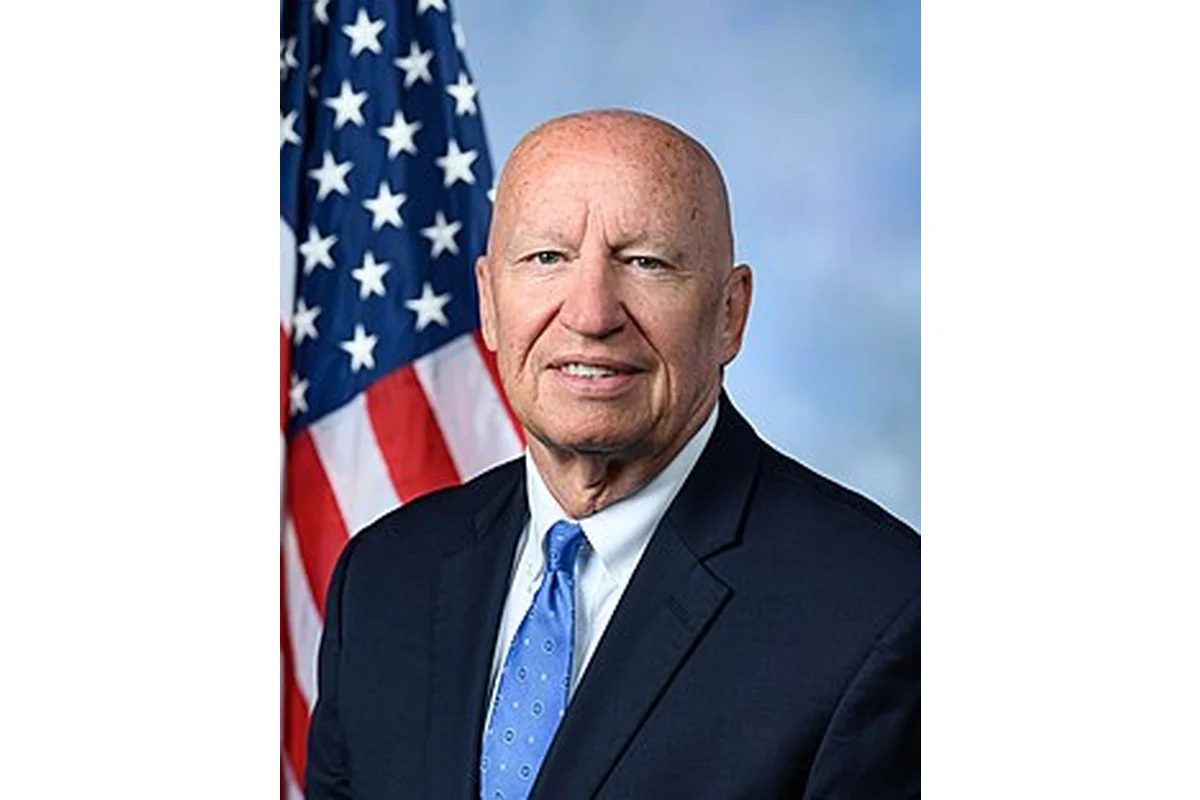
Kevin Brady Bio
Kevin Patrick Brady, born on April 11, 1955, is an American politician who served as the U.S. representative for Texas’s 8th congressional district from 1997 to 2023. A Republican, he represented northern Houston and surrounding suburbs, including The Woodlands. He is widely recognized for his leadership on tax and retirement policy during more than two decades in Congress.
From 2015 to 2019, Brady chaired the House Committee on Ways and Means, one of the most powerful panels in Congress. He sponsored and helped negotiate major legislation, including the Tax Cuts and Jobs Act of 2017 and the SECURE Act of 2019. After deciding not to seek a 14th House term, he retired following the 2022 election cycle and continues to live in The Woodlands.
Early Life and Background
Kevin Patrick Brady was born in Vermillion, South Dakota, the son of William F. Brady, a lawyer, and Nancy A. Brady. He was one of five children in the family. In 1967, when Brady was 12 years old, his father was killed in a courtroom shooting in Rapid City. His mother was left to raise the children in her early thirties, a tragedy that shaped Brady’s early years.
Brady graduated from Central High School in 1973, completing his secondary education in Vermillion. He then attended the University of South Dakota, also located in Vermillion, where he earned a Bachelor of Arts degree in mass communications. His college years gave him a foundation in communication and public messaging that would later support a career in elected office.
After college, Brady worked for the Rapid City area Chamber of Commerce, gaining experience in economic development and community affairs. He was elected to the Rapid City common council at age 26, an early sign of his interest in public service. These formative experiences in South Dakota helped him develop the organizational and political skills that would shape his later career.
Path to US Politics
In 1982, Brady moved to Texas to work for the Beaumont Chamber of Commerce, expanding his professional network beyond South Dakota. Three years later, in 1985, he joined the South Montgomery County Woodlands Chamber of Commerce, settling in the region that would later form the heart of his congressional district. His work in local chambers helped him build relationships with business leaders and community figures across southeast Texas.
In 1990, Brady won election to the Texas House of Representatives, representing district 15, which included The Woodlands, parts of Montgomery County, and five other counties west and north of Houston. He succeeded Mike McKinney and took office on January 10, 1991. His three terms in the state legislature gave him direct experience in drafting legislation, managing a district office, and serving constituents.
When longtime U.S. Representative Jack Fields decided to retire from Texas’s 8th congressional district, Brady entered the 1996 Republican primary. He finished second in a six-candidate field with 22 percent of the vote and then defeated Gene Fontenot, 53 percent to 47 percent, in the runoff. After redistricting and a court-ordered jungle primary, Brady won the December runoff with 59 percent, earning his first seat in Congress.
Kevin Brady Career
Early Career (1997–2006)
Brady took office in the U.S. House of Representatives in January 1997 and quickly established himself as a reliable conservative voice on economic and trade issues. In his early terms, he never received less than 67 percent of the vote in his general elections, reflecting strong support in his district. He developed a reputation for focusing on tax policy, small business concerns, and international trade.
During this period, Brady supported major trade agreements, including the Dominican Republic-Central America Free Trade Agreement in 2005. He worked closely with the Bush administration to help secure passage of the agreement. He also voted for the Authorization for Use of Military Force Against Iraq in 2002, while later breaking with the president in 2008 by voting to impeach George W. Bush over the Iraq war.
Tax Policy and Trade Focus (2007–2014)
As Brady moved into his second decade in Congress, he became a leading voice on tax reform and economic policy. He authored a federal “sunset law” proposal that would require every federal program not specifically written into the Constitution to justify its existence to taxpayers within 12 years or face elimination. The idea helped position him as an advocate for limited government and fiscal discipline.
In March 2012, Brady proposed the Sound Dollar Act, which would have required the Federal Reserve to monitor gold and the foreign-exchange value of the U.S. dollar. The bill also sought to replace the Fed’s dual mandate with a single focus on price stability. He continued building his profile on monetary and tax issues, setting the stage for his later leadership of the Ways and Means Committee.
Brady supported free-trade agreements with South Korea, Colombia, and Panama in 2011, and he championed a border adjustment tax in 2017 to promote fair trade. In 2014, he faced his first competitive Republican primary challenge since 1998 and won with 79 percent of the vote, before being reelected with 80 percent in the general election. These results cemented his hold on the 8th district.
House Ways and Means Committee Era (2015–2019)
In November 2015, Brady was elected the 65th chair of the House Committee on Ways and Means, a position he held until 2019. The committee has jurisdiction over tax, trade, and Social Security, making it one of the most powerful panels in Congress. He also chaired the Joint Economic Committee and the Joint Committee on Taxation during his career.
As chair, Brady led negotiations on the Tax Cuts and Jobs Act of 2017, one of the most significant tax overhauls in decades. He argued that the law would provide “tax relief at every level,” though independent analyses later found that a portion of households would pay more in taxes over time. He also introduced the SECURE Act of 2019 with Representative Richard Neal, expanding access to retirement planning and encouraging employers to set up retirement plans for workers. The bill was signed into law in December 2019.
Final Congressional Years (2020–2023)
Brady continued to represent the 8th district through his final term, focusing on economic recovery from the COVID-19 pandemic. He supported additional Paycheck Protection Program funds to help small businesses and helped negotiate provisions of the Coronavirus Aid, Relief, and Economic Security Act. In the 2020 election, he won 72.5 percent of the vote in his last congressional race.
On April 14, 2021, Brady announced that he would not run for a 14th House term and would retire at the end of 2022. He left office in January 2023 after more than 25 years of service. Throughout his career, he was known for his work on tax policy, trade, and retirement security, and for his steady representation of northern Houston and the surrounding suburbs.
Notable Events and Milestones
One of the defining moments of Brady’s career was his role in negotiating and shepherding the Tax Cuts and Jobs Act of 2017 through Congress. Another milestone was the passage of the SECURE Act of 2019, which reshaped retirement planning rules for millions of Americans. His election as chair of the House Ways and Means Committee in 2015 marked the peak of his influence in the House, capping a long climb through the congressional ranks.
Kevin Brady Family
Family Background and Political Lineage
Brady was born into a family of five children, raised by his mother Nancy A. Brady after the death of his father, William F. Brady, in 1967. His father had been a lawyer in South Dakota, and the family was rooted in the Vermillion community. The early loss of his father became a defining experience that shaped Brady’s character and work ethic.
Personal Life
Brady married Cathy Patronella in 1991, and the couple has two sons together. The family has lived in The Woodlands, a suburb of Houston, for many years. In October 2005, Brady was arrested and charged with driving under the influence of alcohol in South Dakota. He pleaded no contest, was convicted of a misdemeanor, fined $350, and issued a public apology for the incident.