
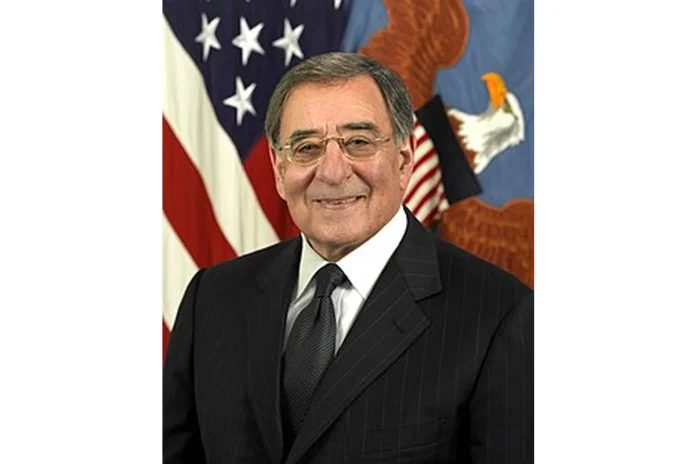
Leon Panetta Bio
Leon Edward Panetta, born on June 28, 1938, in Monterey, California, is an American retired politician, lawyer, and government official whose career has spanned more than five decades in federal public service. Over the course of his career, Panetta represented California in the United States House of Representatives, led the Office of Management and Budget, served as White House Chief of Staff under President Bill Clinton, directed the Central Intelligence Agency, and served as United States Secretary of Defense under President Barack Obama. He is widely recognized for his work on budget policy, national security, and ocean conservation, and for overseeing the 2011 operation that killed Osama bin Laden. After leaving government in 2013, he co-founded and has chaired the Panetta Institute for Public Policy.
Early Life and Background
Leon Edward Panetta was born in Monterey, California, the son of Italian immigrants Carmelina Maria Prochilo and Carmelo Frank Panetta, whose families came from Gerace in Calabria, Italy. In the 1940s, his family owned and operated a restaurant in the Monterey area, giving him an early grounding in both his Italian-American heritage and the local community. He was raised in the Monterey area and attended two Catholic grammar schools, San Carlos School in Monterey and Junípero Serra School in Carmel, before enrolling at Monterey High School.
At Monterey High School, Panetta became deeply involved in student politics. He was a member of the Junior Statesmen of America, served as vice president of the student body during his junior year, and was elected student body president in his senior year. These early leadership experiences helped shape his lifelong interest in public service. In 1956, he entered Santa Clara University, where he graduated magna cum laude in 1960 with a Bachelor of Arts in political science, and he went on to earn a Juris Doctor from the Santa Clara University School of Law in 1963.
Path to US Politics
After completing his education, Panetta served his country in the United States Army, joining in 1964 as a second lieutenant and serving as an officer in the Army Military Intelligence Corps. He was discharged in 1966 as a first lieutenant and received the Army Commendation Medal for his service. His military background gave him early exposure to intelligence work that would later inform his approach to national security policy.
Panetta began his political career in 1966 as a legislative assistant to Republican Senator Thomas Kuchel of California, whom Panetta has called a tremendous role model. In 1969, he moved to the Nixon administration as an assistant to Secretary of Health, Education, and Welfare Robert H. Finch, and was later appointed director of the Office for Civil Rights. In 1971, citing his belief that the Republican Party was moving away from the political center, Panetta switched to the Democratic Party, a decision that launched the next chapter of his public service.
Leon Panetta Career
Early Career (1971–1993)
After leaving Washington, Panetta returned to Monterey, where he practiced law at the firm of Panetta, Thompson & Panetta from 1971 to 1976. During this period, he also wrote about his civil rights work in his 1971 book Bring Us Together. In 1976, he won election to the United States Congress, unseating Republican incumbent Burt Talcott in California’s 16th congressional district with 53 percent of the vote. He was reelected eight times, never again facing a contest nearly that close, and served continuously in the House until 1993.
During his time in Congress, Panetta focused on budget issues, civil rights, education, healthcare, agriculture, immigration, and environmental protection, particularly efforts to prevent oil drilling off the California coast. He authored the Hunger Prevention Act of 1988, the Fair Employment Practices Resolution, and legislation establishing the Monterey Bay National Marine Sanctuary. He was a member of the House Committee on the Budget from 1979 to 1989 and served as its chairman from 1989 to 1993, playing a key role in the 1990 budget summit.
Clinton Administration Breakthrough (1993–1997)
Though elected to a ninth term in 1992, Panetta left the House in early 1993 when President-elect Bill Clinton selected him to serve as director of the United States Office of Management and Budget. In that role, he developed the budget package that eventually produced the balanced federal budget of 1998. On July 17, 1994, he was appointed White House Chief of Staff, a position he held until January 20, 1997. He was a key negotiator of the 1996 budget, which represented another important step toward bringing the federal budget into balance.
CIA Director Era (2009–2011)
In January 2009, President-elect Barack Obama announced his intention to nominate Panetta as director of the Central Intelligence Agency. After Senate confirmation by voice vote on February 12, 2009, Panetta was sworn in on February 19, 2009, by Vice President Joe Biden before an audience of CIA employees. As CIA director, he traveled extensively to intelligence outposts around the world and worked with international leaders to confront the threats of Islamic extremism and the Taliban.
Panetta’s tenure at the CIA was marked by several significant initiatives. He supported the Obama administration’s campaign of U.S. drone strikes in Pakistan and conducted a secret 2010 review of the CIA’s use of enhanced interrogation techniques during the administration of George W. Bush, a review that came to be known as the Panetta Review. Most notably, Panetta oversaw the hunt for terrorist leader Osama bin Laden and played a key role in the operation in which bin Laden was killed on May 1, 2011.
Secretary of Defense Era (2011–2013)
On April 28, 2011, President Obama announced the nomination of Panetta as United States Secretary of Defense to replace the retiring Robert Gates. On June 21, 2011, the Senate confirmed Panetta in an unusual 100–0 vote, and he assumed office on July 1, 2011. One of his first major acts was to jointly certify with the chairman of the Joint Chiefs of Staff that the military was prepared to repeal the “Don’t Ask, Don’t Tell” policy, triggering its final repeal after 60 days.
Panetta’s tenure as Secretary of Defense focused on managing tightening defense budgets while addressing rising global threats. In January 2012, he stated that nuclear weapons development by Iran was a red line that would not be allowed to be crossed. Shortly before his departure in January 2013, he announced that women would be allowed to enter all combat jobs in the military, launching an assessment phase across the armed services.
Notable Events and Milestones
Among the defining moments of Panetta’s career are his role in the 1990 budget summit as House Budget Committee chairman, the successful repeal of “Don’t Ask, Don’t Tell,” and his oversight of the 2011 operation that killed Osama bin Laden. He is also recognized for his 1971 book Bring Us Together and his 2014 memoir Worthy Fights, in which he reflected on his long career in public service.
Leon Panetta Family
Family Background and Political Lineage
Panetta is the son of Italian immigrants Carmelina Maria Prochilo and Carmelo Frank Panetta, whose families came from Gerace in Calabria. Their son’s career reflected a family tradition of public service and civic engagement, and he has continued to emphasize the values of community involvement and public policy throughout his life.
Personal Life
Panetta is married to Sylvia Marie Varni, who administered his home district offices during his terms in Congress. They live on a 12-acre walnut farm in Carmel Valley, California. The couple has three sons and six grandchildren, and their son Jimmy Panetta, a former Monterey County Deputy District Attorney, won election in 2016 to his father’s old congressional seat, now numbered as the 19th District.