

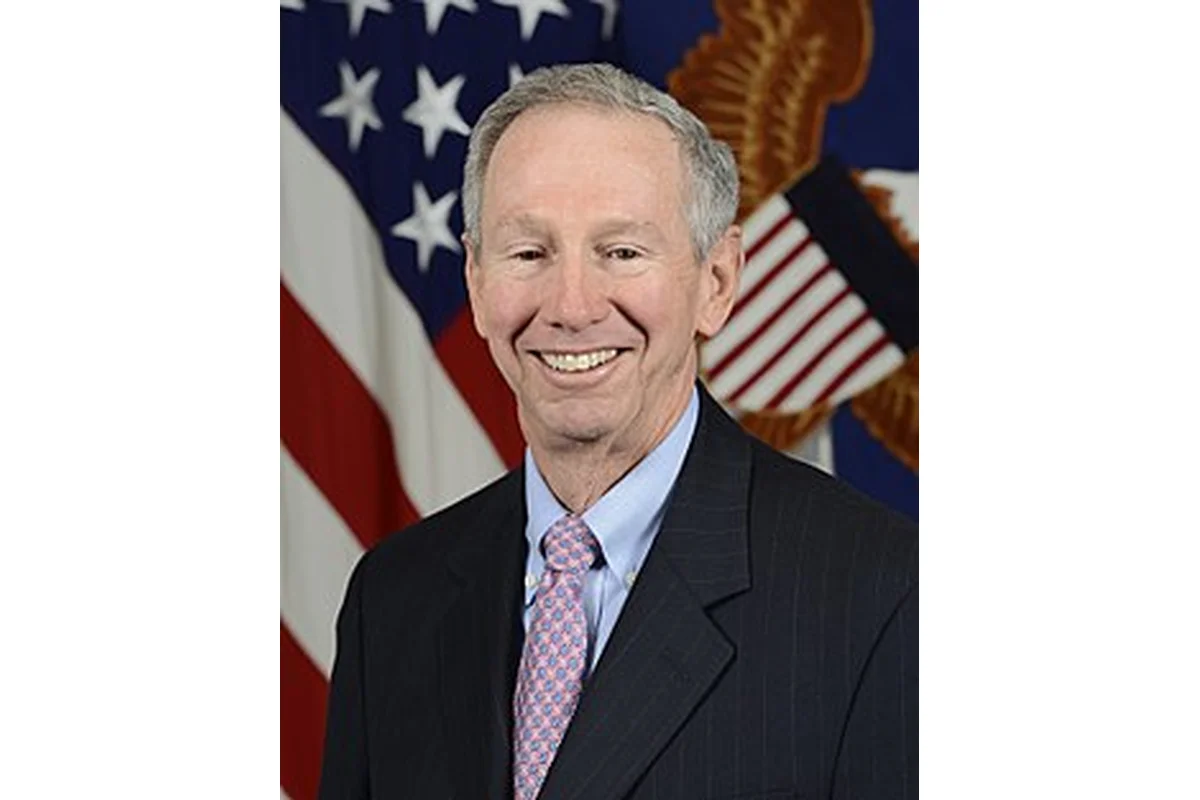
Michael D. Griffin Bio
Michael Douglas Griffin (born November 1, 1949) is an American physicist, aerospace engineer, academic, and government official whose career has spanned decades in aerospace research, national security, and senior federal leadership. He is best known for serving as the 11th Administrator of NASA from 2005 to 2009 and later as Under Secretary of Defense for Research and Engineering from 2018 to 2020. Throughout his career, Griffin has influenced policy on commercial space transportation, missile defense, and advanced weapons development.
Beyond his federal service, Griffin has held leadership roles in industry and academia, including positions at the Johns Hopkins University Applied Physics Laboratory, the University of Alabama in Huntsville, and the Schafer Corporation. He has been a vocal advocate for human exploration of the Solar System, heavy-lift launch capabilities, and the use of space-based technologies for national defense.
Early Life and Background
Michael Douglas Griffin was born on November 1, 1949, in Aberdeen, Maryland, a small town that has shaped his self-description as a “simple aerospace engineer from a small town.” Growing up in the years following the dawn of the space age, Griffin developed an early fascination with astronomy and space exploration. He has recalled that the first book he ever received was on astronomy, given to him at age five, and that from that moment he never considered any career other than science, engineering, or mathematics.
His upbringing in Maryland placed him near major aerospace institutions, including the Johns Hopkins University Applied Physics Laboratory and the Goddard Space Flight Center, which would later play significant roles in his professional life. Griffin’s academic talent led him to pursue higher education across multiple institutions, ultimately earning seven academic degrees throughout his career.
Path to US Politics
Griffin’s path toward senior government service began in the technical community, where he established himself as an expert in missile defense and space systems. His early work at the Johns Hopkins University Applied Physics Laboratory on the Delta 180 series of missile defense satellites for the Strategic Defense Initiative Organization brought him into close contact with national security policy. This technical foundation gave him credibility in Washington policy circles.
Griffin transitioned into industry leadership as president and chief technology officer of Orbital Sciences in 1991, where he worked on low-cost rocket launchers and contributed to a 1995 Heritage Foundation report on missile defense policy. His subsequent role as president and chief operating officer of In-Q-Tel, the Central Intelligence Agency’s venture investment arm, deepened his engagement with national security technology strategy. These experiences positioned him for his appointment as NASA Administrator in 2005.
Michael D. Griffin Career
Early Career (1980s–1990s)
Griffin’s early career began at the Johns Hopkins University Applied Physics Laboratory in the 1980s, where he helped design the Delta 180 series of missile defense technology satellites for the Strategic Defense Initiative Organization. He rose quickly to the position of deputy for technology, where he conceived and directed the first space-to-space interception of a ballistic missile in powered flight, as well as the first space-borne reconnaissance of ballistic missile targets in boost phase and mid-course flight.
In 1991, Griffin became president and chief technology officer of Orbital Sciences, then a small entrepreneurial space launch company. Despite early launch failures, the company successfully sent a test probe to Mars in September 1992. In 1995, he authored a Heritage Foundation report titled “Ending America’s Vulnerability to Ballistic Missiles,” advocating for a proliferated low Earth orbit constellation of sensors and space-based interceptor weapons.
NASA Administrator Era (2005–2009)
On March 11, 2005, President George W. Bush announced his intention to nominate Griffin to serve as the 11th Administrator of NASA. He was confirmed by the Senate on April 13, 2005, and was sworn in by Vice President Dick Cheney, a rare honor that underscored the importance of the space agency to the Bush Administration. As NASA Administrator, Griffin pushed for commercial cargo and crew transportation services, leading a reorganization of launch contracts into the Commercial Orbital Transportation Services program. Twenty aerospace companies applied, and SpaceX and Orbital Sciences were ultimately selected.
In December 2008, NASA awarded SpaceX and Orbital Sciences additional contracts with a combined value of 3.5 billion dollars as part of the Commercial Resupply Services program. Elon Musk later credited these follow-on contracts with saving his company as it neared bankruptcy. Griffin also advanced long-term goals for human spaceflight, stating in 2004 congressional testimony that “the single overarching goal of human space flight is the human settlement of the Solar System.” He was included in the TIME 100 list of the most influential people in 2007.
Under Secretary of Defense Era (2018–2020)
On December 4, 2017, President Donald Trump nominated Griffin to be Under Secretary of Defense for Research and Engineering, and the Senate confirmed him by voice vote on February 15, 2018. In this role, he established technology modernization priorities for the Department of Defense and created the Space Development Agency, an organization tasked with procuring a proliferated constellation of low Earth orbit satellites to detect Chinese and Russian hypersonic weapons. Commercial contracts for the constellation were awarded to L3Harris and SpaceX, prompting CIA Director Mike Pompeo to call the project a “Strategic Defense Initiative for our time.”
Griffin encouraged the development of boost-glide hypersonic weapons such as the AGM-183 ARRW and signaled in 2020 that the United States would make a major investment in the production of hypersonic weaponry at scale. On June 23, 2020, he announced that he was leaving his position to pursue a private sector opportunity.
Michael D. Griffin Family
Family Background and Personal Life
Griffin has been described as a family-oriented figure, though specific details about his immediate family, parents, and siblings are not widely documented in public sources. He is a general aviation flight instructor, pilot, and owner of a small airplane, a Beech Bonanza, reflecting his lifelong passion for aviation and engineering. His personal interests have consistently aligned with his professional pursuits in aerospace and exploration.
Griffin has held academic appointments at multiple universities, teaching courses in spacecraft design, applied mathematics, guidance and navigation, compressible flow, computational fluid dynamics, spacecraft attitude control, aerodynamics, and introductory aerospace engineering. He is the lead author of more than two dozen technical papers and co-author of the astronautical engineering textbook “Space Vehicle Design” with James R. French.