

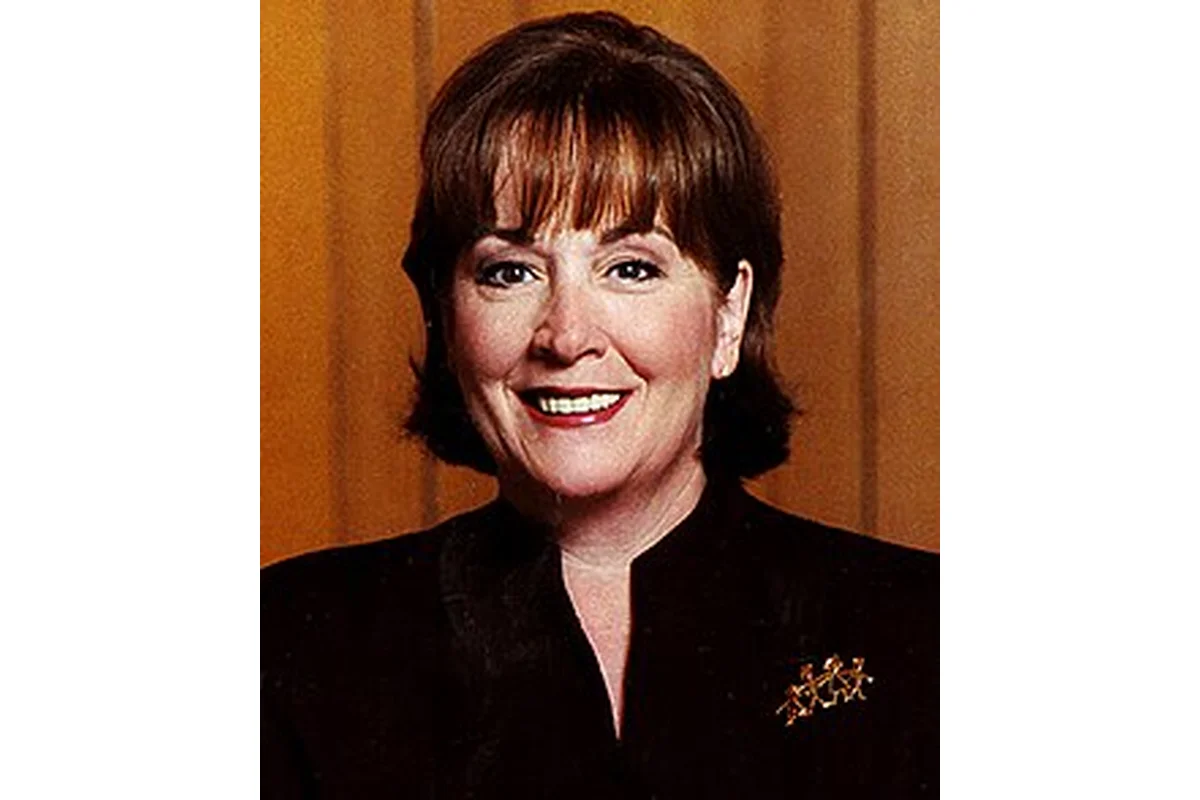
Nancy Hollister Bio
Nancy Elizabeth Hollister is an American politician from Ohio and a member of the Republican Party. She is best known for serving as the first — and to date only — female governor of Ohio, an office she held for eleven days at the end of 1998. Before that, she served as lieutenant governor under George Voinovich and was the first woman elected to that position in Ohio. Earlier in her career, Hollister served on the Marietta City Council and as mayor of Marietta, beginning a public-service path that carried her from local government to the statehouse.
Early Life and Background
Nancy Elizabeth Hollister was born on May 22, 1949, in Terre Haute, Indiana. She is the daughter of Benjamin Hay Putnam Jr. and Mary Elizabeth White. Her parents had married in 1945 in West Virginia and moved briefly back to Terre Haute, her mother’s hometown, before settling in Marietta, Ohio, where her father’s family was rooted. Hollister grew up in Marietta alongside her five siblings, including Emily, Esther, Sarah, and Benjamin Hay Putnam III.
Hollister’s family background includes notable colonial American roots. Her sixth great-grandfather was Revolutionary War General Israel Putnam, and her eighth great-grandmother was Bathsheba Folger Pope, an accuser of witches during the Salem Witch Trials. She attended Kent State University, where she majored in communications. While on campus, she joined protests against curfews placed on women students, a policy that was later abolished. She left Kent State in 1970 to marry her high-school sweetheart, Jeffrey Lynn Hollister, just two months before the Kent State shootings.
Path to US Politics
Hollister’s entry into public life began at the local level in Marietta, Ohio, a small city on the Ohio River. Her work in community organizations and local civic groups led her to seek elected office, and she was elected to the Marietta City Council in 1980. As a council member, she focused on issues facing the city and the surrounding region, building a record that helped her move into higher office.
In 1984, Hollister was elected mayor of Marietta, becoming one of the few women to lead an Ohio city at that time. As mayor, she worked to attract new businesses, promote tourism, and secure funding for a new bridge across the Ohio River. Governor George Voinovich later appointed her as director of the Governor’s Office of Appalachia, where she coordinated federal and state efforts for the twenty-nine counties in the Appalachian region. This work in regional development and state government positioned her for a wider role in Ohio politics.
Nancy Hollister Career
Early Career (1980–1994)
Hollister’s first notable political role came when she was elected to the Marietta City Council in 1980. She served on the council for four years, working on local issues ranging from public safety to economic development. In 1984, she was elected mayor of Marietta, a position she used to push for infrastructure improvements and business growth in southeastern Ohio.
After her time as mayor, Hollister was appointed by Governor George Voinovich to lead the Governor’s Office of Appalachia. In that role, she managed programs that supported twenty-nine Appalachian counties in Ohio, working with federal, state, and local partners. Her experience in regional policy and state administration helped her earn a place on the statewide ticket in 1994.
Lieutenant Governor Breakthrough (1995–1998)
In 1994, George Voinovich selected Hollister as his running mate to replace the incumbent lieutenant governor, Mike DeWine. Her selection was seen as a way to broaden the ticket’s appeal, especially among women voters, after Voinovich had lost support in some downstate counties in 1990. In November 1994, Hollister was elected lieutenant governor, becoming the first woman to win that office in Ohio.
As lieutenant governor, Hollister oversaw several state and local government commissions, including the Governor’s Office of Appalachia, the Governor’s Workforce Development Board, the Ohio Department of Agriculture, the Ohio Bureau of Employment Services, the Ohio School-to-Work Initiative, the Office of Housing and Community Partnership, the Ohio Coal Development Office, and the Ohio Farmland Preservation Task Force. In 1998, she was inducted into the Ohio Women’s Hall of Fame in recognition of her contributions to Ohio government and her role as the state’s highest-ranking elected woman.
Governor of Ohio (December 1998 – January 1999)
On the same day Hollister lost her bid for the 6th congressional district seat in November 1998, Governor Voinovich was elected to the United States Senate, and Bob Taft was elected to succeed him as governor. Voinovich resigned as governor on December 31, 1998, so he could be sworn into the Senate three days later. With that resignation, Hollister automatically became governor of Ohio, making her the first and to date only woman to hold the office.
Hollister’s tenure as governor lasted only eleven days, making her the shortest-serving governor in Ohio history. During that brief period, she signed legislation allowing farmers to sell land to local governments to keep it as farmland, with payments tied to land value. She was succeeded by Bob Taft, whose term officially began on January 11, 1999.
Ohio House of Representatives Era (1999–2004)
Almost immediately after leaving the governorship, Hollister was appointed to a seat in the Ohio House of Representatives for the 96th district, replacing outgoing Representative Tom Johnson. She won election to a full term in 2000 and was re-elected in 2002 after redistricting placed her in the 93rd district. During her time in the House, she introduced a bill allowing nurses to prescribe certain prescription drugs, which went into effect in 2002.
In her final run for office, Hollister was defeated by Democrat Jennifer Garrison in 2004. A key issue in that campaign was Hollister’s opposition to a constitutional amendment banning same-sex marriage, which her opponent used to position herself to the ideological right of Hollister on that issue. After leaving the House, Hollister continued public service through appointments to state boards.
Notable Events and Milestones
Hollister’s signature moment came in December 1998, when she became the first and to date only female governor of Ohio. She also made history in 1994 as the first woman elected lieutenant governor of Ohio. Her 1998 induction into the Ohio Women’s Hall of Fame recognized her place in the history of women in Ohio politics.
Nancy Hollister Family
Family Background and Political Lineage
Nancy Elizabeth Hollister was born into the Putnam family, with deep roots in American colonial history. Her father, Benjamin Hay Putnam Jr., came from a line that included Revolutionary War General Israel Putnam as her sixth great-grandfather. Her mother, Mary Elizabeth White, was from West Virginia, and her family had moved between Indiana and Ohio before settling in Marietta, where Nancy grew up. She is one of six children, with siblings named Emily, Esther, Sarah, and Benjamin Hay Putnam III.
Personal Life
Nancy Hollister married Jeffrey Lynn Hollister, her boyfriend since high school, on March 21, 1970. They have made their home in Marietta, Ohio, where they raised five children: Jonathan Dunham Hollister, born in 1970; Jeremy Douglas Hollister, born in 1973; Justin Harrington Hollister, born in 1976; Emily Elizabeth Hollister, born in 1979; and Sarah Katherine Hollister, born in 1982. Beyond her time in elected office, Hollister served on the board of trustees of the Ohio History Connection between 2011 and 2016 and was appointed by Governor John Kasich in May 2016 to fill a vacancy on the state Board of Education. As of October 2020, she also served as an ad-hoc board member of the Friends of the Museums, which manages the Campus Martius Museum and Ohio River Museum in Marietta.