

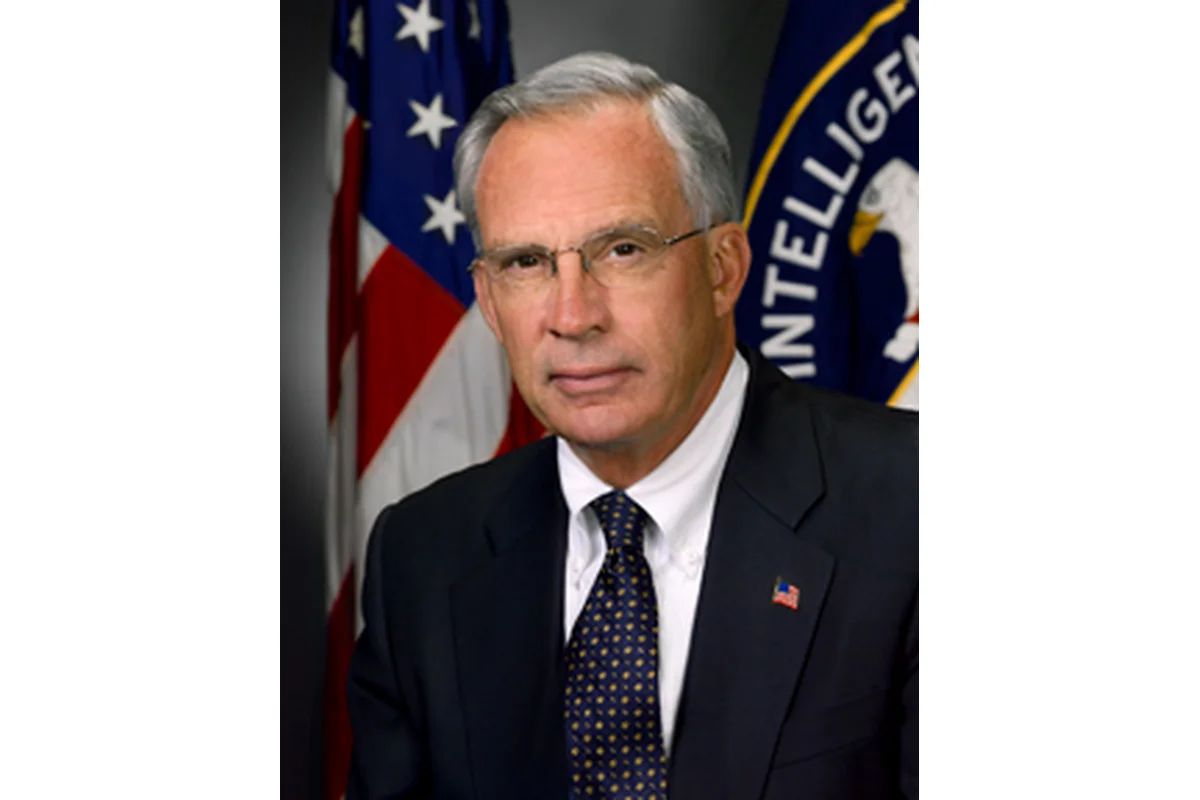
Porter Johnston Goss Bio
Porter Johnston Goss (born November 26, 1938) is an American politician and former intelligence officer who served as Director of the Central Intelligence Agency from 2004 to 2006. He was the last Director of Central Intelligence (DCI) in 2004 and 2005, and became the first Director of the Central Intelligence Agency (DCIA) after the 2004 intelligence reform created the Director of National Intelligence role. A Republican from southwest Florida, he served in the U.S. House of Representatives from 1989 to 2004 and chaired the House Permanent Select Committee on Intelligence from 1997 to 2004.
Early Life and Background
Porter Johnston Goss was born in Waterbury, Connecticut, the son of Virginia Holland Johnston and Richard Wayne Goss, an executive of the Scovill Manufacturing Company. He grew up in a New England environment shaped by family business ties and attended Camp Timanous in Raymond, Maine, before enrolling at the Fessenden School. In 1956, he graduated from the Hotchkiss School in Lakeville, Connecticut.
Goss went on to Yale University, where he earned a Bachelor of Arts in ancient Greek in 1960. He lived in Timothy Dwight College and was a member of Book and Snake, a secret society, and of the Psi Upsilon fraternity, where his peers included William H. T. Bush and John Negroponte. In addition to his classical studies, Goss speaks Spanish and French.
Path to US Politics
Goss began his professional life in the Central Intelligence Agency after being recruited during his junior year at Yale. He spent roughly 1960 to 1971 in the Directorate of Operations, the clandestine service, working first in Latin America and the Caribbean and later in Europe, with postings connected to Haiti, the Dominican Republic, and Mexico. He was involved in the Cuban Missile Crisis in 1962, and his career ended early when a blood infection in London in 1970 forced his retirement in 1971.
After settling in Sanibel, Florida, Goss entered local government. He was elected to the Sanibel City Council in 1974 and later chosen mayor by the council. In 1983, Florida Governor Bob Graham appointed him to the Lee County Board of Commissioners. These roles prepared him for a successful 1988 run for Congress in the 13th congressional district of Florida, where he won the Republican primary and the general election in decisive fashion.
Porter Johnston Goss Career
Early Career (1989–1996)
Porter Johnston Goss took office in 1989 as the U.S. Representative for Florida’s 13th congressional district, a Gulf Coast seat that was renumbered as the 14th District after the 1990 census. He won his first general election with 71 percent of the vote against Jack T. Conway and went on to win easy re-election seven times, facing a Democratic opponent only once more in 1996, when he took 73 percent. In several cycles, including 1990, 1994, 1998, and 2002, he was unopposed.
During his early House years, Goss built a mostly conservative voting record while standing out for his support of environmental measures, including the Kyoto Protocol and a stronger Environmental Protection Agency. He worked on local constituent-services bills and intelligence authorization measures, and he sponsored a constitutional amendment to limit House members to three consecutive terms of four years.
House Intelligence Chair (1997–2004)
In 1997, Goss became Chairman of the House Permanent Select Committee on Intelligence, a position he held until 2004. He also served as vice chairman of the House Rules Committee and helped establish the House Homeland Security Committee. From this platform, he became a leading congressional voice on intelligence matters and a defender of the Central Intelligence Agency and its budget.
He was a co-sponsor of the USA PATRIOT Act and pushed intelligence reform legislation while in the chair. In August 2001, he joined Senator Bob Graham of Florida and Senator Jon Kyl of Arizona on a trip to Pakistan, meeting President Pervez Musharraf, intelligence chief General Mahmud Ahmed, and Taliban representatives. On the morning of September 11, 2001, Goss and Graham were having breakfast with General Ahmad.
After September 11, Goss initially resisted calls for a wide-ranging inquiry. He later co-chaired the Joint Inquiry into Intelligence Community Activities before and after the Terrorist Attacks of September 11, 2001, alongside Senator Graham. The December 2002 final report focused on the CIA and FBI and avoided identifying specific wrongdoing, drawing both praise and criticism. Goss also opposed the creation of an independent 9-11 Commission.
CIA Director (2004–2006)
Following the June 2004 resignation of CIA Director George Tenet, President George W. Bush nominated Goss on August 10, 2004. The Senate Intelligence Committee endorsed him 12–4 on September 20, 2004, and the full Senate confirmed him 77–17 two days later. He took office as the last Director of Central Intelligence in 2004 and then became the first Director of the Central Intelligence Agency on December 17, 2004, after the Intelligence Reform and Terrorism Prevention Act created the Director of National Intelligence role.
As CIA Director, Goss sought to reverse what he saw as excessive risk aversion inside the agency and pushed for stronger clandestine and analytic capabilities. His tenure ended on May 5, 2006, when he announced his resignation in the Oval Office with President Bush. Reports pointed to clashes with Director of National Intelligence John Negroponte over management style and the transfer of CIA personnel and resources to new counterterrorism organizations. Air Force General Michael Hayden was nominated to replace him on May 8, 2006.
Notable Events and Milestones
Goss’s career includes a rare distinction shared by few Americans: he served both as a CIA clandestine officer and as the civilian head of the Central Intelligence Agency. He co-sponsored the USA PATRIOT Act, co-chaired the Joint 9/11 Intelligence Inquiry, and presided over the formal transition from the DCI position to the new DCIA role on December 17, 2004.
Porter Johnston Goss Career Wins
Porter Johnston Goss compiled a long record of electoral success in southwest Florida and rose to chair one of the most powerful committees in Congress. His career is defined by eight House election wins, the chairmanship of the House Intelligence Committee, and his service as Director of the Central Intelligence Agency.
House Election Highlights
Goss first won his House seat in 1988 with 71 percent of the vote and was re-elected seven times, often without major-party opposition. He was unopposed in 1990, 1994, 1998, and 2002, and faced only third-party challengers in 1992 and 2000. His 1996 rematch with a Democratic opponent ended in a 73 percent victory, underscoring the durable Republican lean of his district.
Other Achievements
Beyond elections, Goss was confirmed by the U.S. Senate as CIA Director by a 77–17 vote in September 2004. He was also appointed in July 2008 as co-chairman of the Board of the Office of Congressional Ethics, a role he held until 2015. He later joined the Council for Responsible Social Media project launched by Issue One in October 2022.
Porter Johnston Goss Family
Family Background and Public Service Lineage
Goss is the son of Richard Wayne Goss, an executive of the Scovill Manufacturing Company, and Virginia Holland Johnston. The Scovill company was controlled by the Goss family, placing Porter Goss within a multigenerational business lineage before he chose a career in intelligence and public service.
Personal Life
Goss is married to Mariel Robinson. He is a longtime resident of Sanibel, Florida, where he first settled after his 1971 retirement from the Central Intelligence Agency. After leaving the CIA in 2006, he has remained active on the lecture circuit, registered in 2015 as a lobbyist representing Turkey, joined the ReFormers Caucus of Issue One, and worked as an organic farmer.