

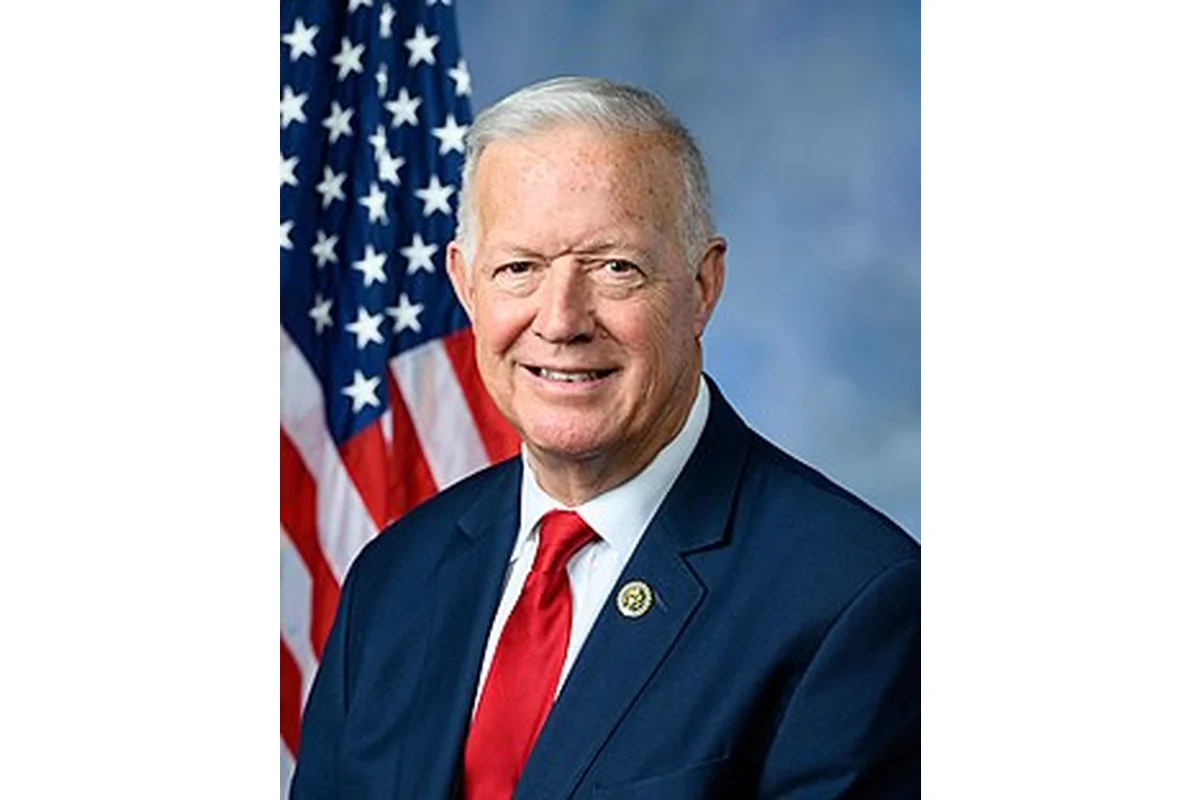
Randy Weber Bio
Randall Keith Weber, known professionally as Randy Weber, is an American businessman and Republican politician who has represented Texas’s 14th congressional district in the United States House of Representatives since 2013. Born on July 2, 1953, in Pearland, Texas, Weber built a career in the heating and air-conditioning industry before entering public service at the local and state levels. He previously served in the Texas House of Representatives for the 29th district and is recognized for his consistently conservative voting record in Congress.
Early Life and Background
Randall Keith Weber was born on July 2, 1953, in Pearland, Texas, a growing community south of Houston in Brazoria County. He grew up in the same region where he would later build his business and political career, developing early ties to the local community that shaped his path into public service.
Weber pursued his higher education close to home, first attending Alvin Community College. He went on to earn a Bachelor of Science degree in public affairs from the University of Houston–Clear Lake in 1977. His college years laid the groundwork for both his later business leadership and his interest in civic affairs.
Path to US Politics
Before entering electoral politics, Randy Weber spent years serving his community in various civic roles. He served as a city councilman in Pearland, Texas, for six years, giving him direct experience with local government. During the same period, he also worked as a Brazoria County grand jury commissioner, a member of the Brazoria County Redistricting Committee, a Texas Republican Party Convention delegate, president of the Brazoria County Cities Association, a Brazoria County Republican Party member, and chair of the Pearland Area Republican Party Headquarters.
In 1981, Weber founded Weber’s Air & Heat Air-Conditioning Company, establishing himself as a small-business owner in the region. The combination of local civic involvement and business leadership helped him transition into electoral politics when the opportunity arose in the Texas House of Representatives.
Randy Weber Career
Early Career (2006–2010)
Randy Weber’s first run for public office came after Texas state representative Glenda Dawson died on September 12, 2006, triggering a special election for the 29th district. In the December 19 special election, businessman Mike P. O’Day earned 48% of the vote, falling just short of the 50% threshold needed to win outright, while Weber earned 28%, qualifying for the runoff. In the January 2007 runoff, O’Day defeated him 57% to 43%.
After O’Day retired, Weber ran again in the March 2008 primary and won with 59% of the vote, then captured the general election with 60%. He was reelected in 2010 with an overwhelming 85% of the vote, establishing himself as a dominant figure in the district and preparing for his next move to the federal level.
US House Breakthrough (2012)
When U.S. Representative Ron Paul of Texas’s 14th congressional district announced his retirement, the newly redrawn district drew nine Republican candidates. Weber received endorsements from Paul and Governor Rick Perry, ranking first in the primary with 28% of the vote. In the runoff, he defeated Pearland city councilwoman Felicia Harris, 62% to 37%.
In the November 6, 2012, general election, Weber faced former Congressman Nick Lampson, who had jumped into the race after redistricting folded much of his old territory into the new 14th district. Weber won the contest 53% to 45%, claiming the seat and beginning his tenure in Congress.
14th Congressional District Era (2013–Present)
Since taking office in 2013, Randy Weber has built a reputation as one of the most conservative voices in the House of Representatives. In 2024, GovTrack identified him as the most conservative member of the House during the 118th Congress. He has earned strong ratings from conservative organizations, including a 92% evaluation from the American Conservative Union, a 94% evaluation from Americans for Prosperity, and 100% evaluations from the Campaign for Working Families, Concerned Women for America, and the Faith and Freedom Coalition.
Weber was reelected on November 8, 2016, polling 160,631 votes (61.9%) to Democratic nominee Michael Cole’s 99,054 votes (38.1%). His legislative work has included cosponsoring a 2015 resolution to amend the Constitution to ban same-sex marriage and a resolution disagreeing with the Supreme Court decision in Obergefell v. Hodges. In February 2023, he joined a bipartisan group of representatives in introducing the Reinvesting in Shoreline Economies and Ecosystems Act, designed to share federal offshore wind power revenue with coastal states. During the 118th and 119th Congresses, he co-sponsored resolutions intended to expunge the impeachments of Donald Trump, and in 2025 he cosponsored legislation that would eliminate birthright citizenship for the children of undocumented immigrants.
Notable Events and Milestones
One of Weber’s most closely watched moments came in December 2020, when he was one of 126 Republican House members to sign an amicus brief supporting Texas v. Pennsylvania, a lawsuit contesting the results of the 2020 presidential election. The Supreme Court declined to hear the case, and House Speaker Nancy Pelosi publicly criticized the signers, stating they had brought dishonor to the House by choosing to subvert the Constitution. Weber also became a vocal advocate for impeaching President Biden, submitting a resolution in September 2021 to impeach Biden over the Afghanistan withdrawal and co-sponsoring separate resolutions to impeach Biden and Department of Homeland Security Secretary Alejandro Mayorkas.
Randy Weber Family
Family Background and Personal Life
Randy Weber has been married to Brenda Weber, a Pearland schoolteacher, for over 30 years. The couple has three children and eight grandchildren, and they make their home in Alvin, Texas. Weber is a Baptist, and his faith continues to inform his public service and his approach to the issues he champions in Congress.