

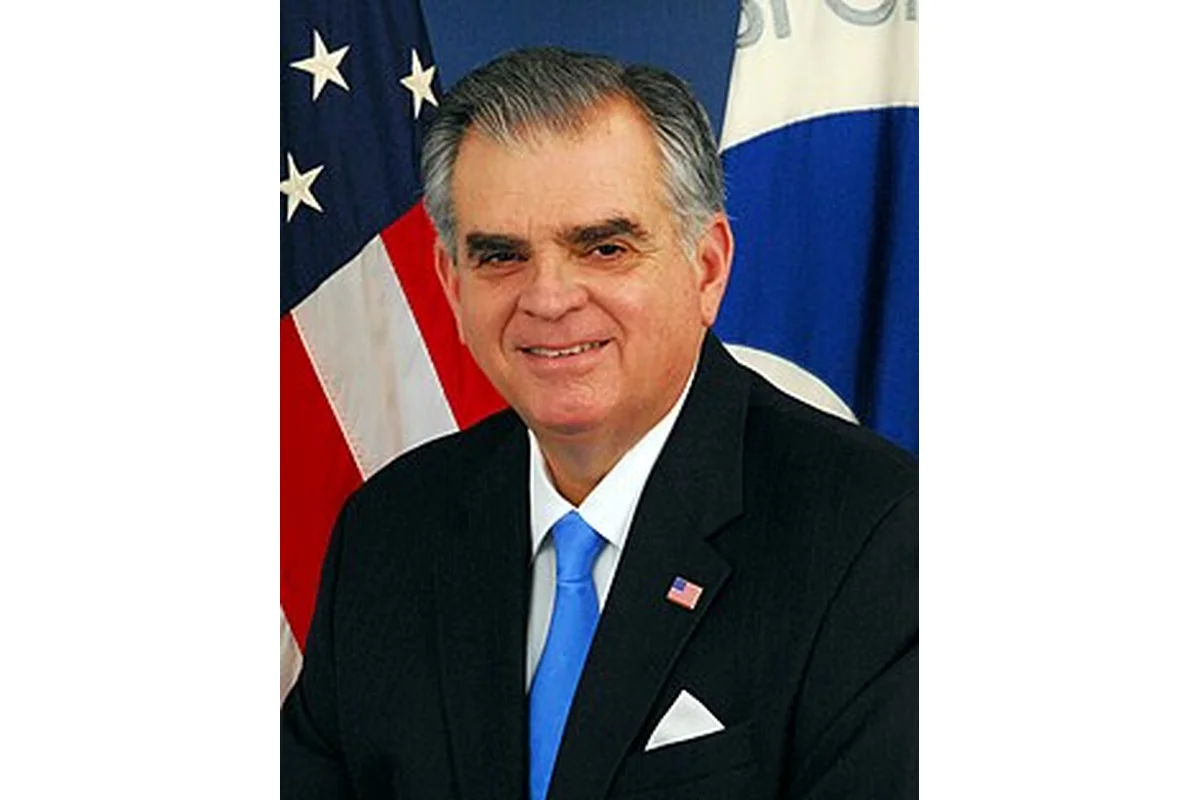
Ray LaHood Bio
Raymond H. LaHood is an American politician who served as the 16th United States Secretary of Transportation from 2009 to 2013 under President Barack Obama. A member of the Republican Party, he represented Illinois in the U.S. House of Representatives from 1995 to 2009 and briefly served in the Illinois House of Representatives in 1982–1983. Known for his bipartisan approach, LaHood chaired transportation-related committees and frequently presided as Speaker Pro Tempore of the House.
Born in Peoria, Illinois, in 1945, LaHood earned a Bachelor of Science from Bradley University and earlier worked as a teacher and congressional staffer before his election to Congress. After leaving the Obama Cabinet, he wrote a book about his career and remained active in civic and cultural life in central Illinois.
Early Life and Background
Raymond H. LaHood was born on December 6, 1945, in Peoria, Illinois. He is the son of Edward M. LaHood, a Lebanese American who managed a restaurant, and Mary A. LaHood (née Vogel), who was of German ancestry. In 2006, he was one of only four Arab American members of Congress.
LaHood graduated from Spalding Institute, a Catholic high school in Peoria now known as Peoria Notre Dame High School. He went on to attend Canton Junior College and later Spoon River College, working his way through school before transferring to Bradley University in Peoria, where he earned a Bachelor of Science in education and sociology in 1971. His coursework and early mentors helped shape a lifelong interest in government and public service.
Path to US Politics
Following graduation, LaHood taught middle school social studies at public and Catholic schools. He has said that teaching kids about the Constitution and government stirred his interest in politics. That classroom experience gave him a practical understanding of civic education that later influenced his policy priorities.
LaHood became the director of the Rock Island County Youth Services Bureau and then served as a district administrative assistant for U.S. Representative Tom Railsback, a Moline, Illinois Republican, from 1977 to 1982. In 1982, he was appointed to fill a vacant seat in the Illinois House of Representatives, serving for nine months before losing a bid for a full term to Democratic candidate Bob DeJaegher. He then became administrative assistant and ultimately chief of staff to U.S. House Minority Leader Robert Michel, serving from 1982 until 1994. These years of staff work in the U.S. House built the relationships and legislative skills that prepared him for elected office.
Ray LaHood Career
Early Career (1982–1994)
LaHood’s early political career combined state-level service with senior staff work in Washington. His brief tenure in the Illinois House of Representatives in 1982–1983 gave him direct experience as a legislator, even though he was unable to hold the seat in a full election.
From 1982 to 1994, LaHood served as chief of staff to U.S. House Minority Leader Robert Michel of Illinois. In that role, he managed operations for the Republican minority in the House, developed relationships across both parties, and built a reputation as a steady, trusted negotiator. When Michel announced his retirement in 1994, LaHood launched his own campaign for the seat.
U.S. House of Representatives Breakthrough (1995–2009)
LaHood ran for and won Illinois’s 18th congressional district in 1994. He was one of only three Republicans elected to the House that year who did not sign on to the Contract with America, and he became a member of the moderate Republican Main Street Partnership. In 1997, he organized bipartisan retreats for members of Congress in an effort to promote cooperation across the aisle.
During his time in the House, LaHood became well known among C-SPAN viewers for frequently serving as Speaker Pro Tempore, presiding over more debates than any other member. Most notably, in 1998 he presided over the contentious debate over the impeachment of President Bill Clinton. He served on the House Transportation and Infrastructure Committee from 1995 to 2000, the House Permanent Select Committee on Intelligence beginning in 1998, and the House Appropriations Committee beginning in 2000. In 2005, he voted against renewing the PATRIOT Act, saying he opposed extending its intrusive police powers.
LaHood was also a strong advocate for preserving the legacy of Abraham Lincoln. His district covered much of the territory that Lincoln represented during his single term in the House. He authored a law that established the Abraham Lincoln Bicentennial Commission and was a lead Capitol Hill supporter for the Lincoln Presidential Library in Springfield, Illinois. In 2006, he won re-election against Steve Waterworth by a margin of 67 percent to 33 percent. On July 26, 2007, LaHood announced he would not seek re-election in 2008.
Secretary of Transportation Era (2009–2013)
On December 19, 2008, President-elect Barack Obama announced that he would nominate LaHood to be the next Secretary of Transportation. The U.S. Senate confirmed his nomination by voice vote on January 21, 2009. LaHood was, with Secretary of Defense Robert Gates, one of two Republican members of the original Obama Cabinet.
As Secretary, LaHood drew on his years of work on the House Transportation and Infrastructure Committee and his skills as an arbiter across partisan divides. He supported airline passenger rights to facilities, food, and water during lengthy on-aircraft delays and was a strong proponent of high-speed rail, arguing, “This is what the American people want. If you build it, they will come.” In February 2013, he lamented the amount of infrastructure spending approved by Congress, telling National Public Radio, “America is one big pothole right now,” and noting that a recent two-year surface transportation bill fell short of the usual five-year measures.
LaHood announced he would resign as Secretary of Transportation upon the confirmation of his successor. President Obama nominated Anthony Foxx, the Mayor of Charlotte, North Carolina, who was confirmed by the U.S. Senate and sworn in on July 2, 2013.
Notable Events and Milestones
One of LaHood’s signature achievements was his work establishing the Abraham Lincoln Bicentennial Commission and supporting the Lincoln Presidential Library, projects that honored the legacy of the 16th President in the district Lincoln once served. His frequent role as Speaker Pro Tempore, including presiding over the 1998 impeachment debate of President Bill Clinton, made him a familiar figure to C-SPAN viewers and underscored his reputation for evenhanded leadership.
Ray LaHood Honors and Recognitions
LaHood’s public service has been recognized through several honors tied to his Illinois roots and his national transportation work.
Honors and Awards
In May 2013, Illinois State Representative Jehan Gordon-Booth introduced legislation in the Illinois House Rules Committee to rename a six-mile stretch of Interstate 74 from the Murray Baker Bridge to the Sterling Avenue exit as the Ray LaHood Highway, honoring his work on the Upgrade 74 project. That same month, a portrait of LaHood by artist Simmie Knox was unveiled and dedicated at the Abraham Lincoln U.S. Department of Transportation Building.
In 2016, LaHood was inducted as a Laureate of The Lincoln Academy of Illinois and awarded the Order of Lincoln, the state’s highest honor, in the area of Government and Law. Also in 2016, the new international terminal at the General Wayne A. Downing Peoria International Airport, featuring full U.S. Customs, TSA, and Port of Entry services, was named in his honor. The terminal opened in late May 2016.
Ray LaHood Family
Family Background and Lineage
LaHood was raised in Peoria, Illinois, by his father, Edward M. LaHood, a Lebanese American who managed a restaurant, and his mother, Mary A. LaHood (née Vogel), who was of German ancestry. His family’s immigrant roots and central Illinois upbringing shaped a political outlook that combined fiscal conservatism with respect for cultural heritage and bipartisan cooperation.
Personal Life
LaHood and his wife, Kathleen (Kathy), make their residence in Peoria, Illinois. The couple has four children: Darin, Amy, Sam, and Sara. Their son Darin LaHood is a member of the U.S. House of Representatives, having represented Illinois’s 18th congressional district since a 2015 special election and having previously served in the Illinois Senate. Another son, Sam LaHood, served as the Egypt director of the International Republican Institute and was involved in a 2012 investigation by the Egyptian government into NGOs monitoring local elections.
In 2015, LaHood coauthored the book Seeking Bipartisanship: My Life in Politics with Frank H. Mackaman of The Dirksen Congressional Center, published by Cambria Press. He continues to live in Peoria and remains engaged in civic and cultural life in Illinois.