
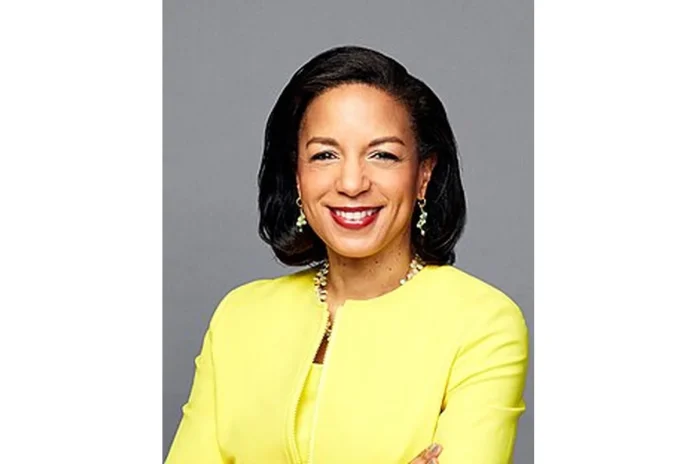
Susan Rice Bio
Susan Elizabeth Rice (born November 17, 1964) is an American diplomat, policy advisor, and public official who has held senior positions in both Democratic and Republican administrations. A member of the Democratic Party, she served as the 22nd director of the White House Domestic Policy Council from 2021 to 2023, the 23rd United States national security advisor from 2013 to 2017, and the 27th United States ambassador to the United Nations from 2009 to 2013. Her career has also included senior roles at the State Department and the National Security Council during the Clinton administration, and senior fellowship and corporate board positions after leaving government service.
Born and raised in Washington, D.C., Rice built a reputation as a foreign-policy specialist with deep experience in African affairs, multilateral diplomacy, and national security strategy. She is a Rhodes Scholar, a former Brookings Institution fellow, and a contributor to national conversations on global affairs.
Early Life and Background
Susan Elizabeth Rice was born on November 17, 1964, in Washington, D.C. She is the daughter of Emmett J. Rice, a Cornell University economics professor and the second Black governor of the Federal Reserve System, and Lois Dickson Rice, an education policy scholar who helped design the federal Pell Grant subsidy system and later joined the Brookings Institution. Her maternal grandparents were Jamaican immigrants to Portland, Maine, and her paternal grandparents were from South Carolina. Her parents divorced when she was ten, and in 1978 her mother married Alfred Bradley Fitt, an attorney who served as general counsel of the U.S. Congressional Budget Office.
Rice has said her parents taught her to never use race as an excuse or advantage. As a young girl, she dreamed of becoming the first U.S. senator from the District of Columbia. She attended the National Cathedral School in Washington, D.C., where she was a three-letter varsity athlete, student government president, and valedictorian. She went on to attend Stanford University on a National Merit Scholarship, graduating with honors in history in 1986. At Stanford, she was elected to Phi Beta Kappa in her junior year and won a Truman Scholarship.
Path to US Politics
Rice’s entry into national political life began during her graduate studies. She earned a Master of Philosophy in 1988 and a Doctor of Philosophy in 1990 in international relations from New College, Oxford, where she studied as a Rhodes Scholar. Chatham House, the Royal Institute of International Affairs, recognized her doctoral dissertation as the United Kingdom’s most distinguished in international relations. Her academic work focused on peacekeeping, African affairs, and transatlantic foreign policy, providing the foundation for her later government service.
During the 1988 presidential election, Rice served as a foreign policy aide to Democratic nominee Michael Dukakis. After graduate school, she worked as a management consultant at McKinsey & Company in its Toronto office from 1990 to early 1992. These early experiences combined academic training, exposure to presidential campaigns, and private-sector experience, positioning her for a rapid rise into senior government positions.
Susan Rice Career
Early Career (1993-2001)
Rice joined the Clinton administration in 1993, serving on the National Security Council staff. She worked as director for international organizations and peacekeeping from 1993 to 1995, and as special assistant to the president and senior director for African affairs from 1995 to 1997. Her tenure coincided with major events, including the 1994 Rwandan genocide, an experience she later described as formative and one that shaped her views on military intervention.
In 1997, Secretary of State Madeleine Albright urged President Bill Clinton to appoint Rice as Assistant Secretary of State for African Affairs, a position she held until 2001. Confirmed at age 32, she was the youngest person ever to serve as a regional assistant secretary of state. Her tenure was marked by the passage of the African Growth and Opportunity Act, support for democratic transitions in South Africa and Nigeria, and an increased U.S. focus on fighting the HIV/AIDS pandemic.
Clinton-Era Africa and Peace Negotiations (1997-2001)
As Assistant Secretary of State for African Affairs, Rice played a central role in several peace processes across the continent. She supported U.S. efforts to reach the Lusaka Ceasefire Agreement in the Democratic Republic of the Congo and the Lomé Peace Accord in Sierra Leone. She also contributed to negotiations between Ethiopia and Eritrea during the Eritrean-Ethiopian War, helping to bring about the Algiers Agreement in 2000. For these efforts, she received the White House’s Samuel Nelson Drew Memorial Award for distinguished contributions to peaceful international relations.
On July 7, 1998, Rice was a member of an American delegation that visited detained Nigerian president-elect Basorun Moshood Kashimawo Olawale Abiola, who suffered a fatal heart attack during the meeting. The incident drew international attention to Rice’s work and underscored the high-stakes nature of her diplomatic responsibilities.
Think Tank and Campaign Years (2001-2008)
After leaving the Clinton administration, Rice served as managing director and principal at Intellibridge from 2001 to 2002, then joined the Brookings Institution as a senior fellow from 2002 to 2009. At Brookings, she focused on U.S. foreign policy, weak and failing states, global poverty, and transnational security threats. She was a vocal critic of the 2003 invasion of Iraq and served as a foreign policy adviser to John Kerry’s 2004 presidential campaign.
In 2007, Rice took a leave of absence from Brookings to serve as a senior foreign policy adviser to Barack Obama’s 2008 presidential campaign, becoming one of the first high-profile foreign policy staffers to join his team. Following Obama’s victory, she was named to the advisory board of the Obama-Biden transition on November 5, 2008.
United Nations Era (2009-2013)
On December 1, 2008, President-elect Obama announced he would nominate Rice to be the United States ambassador to the United Nations, a position he restored to cabinet level. Confirmed by the Senate by unanimous consent on January 22, 2009, she became the second-youngest person and the first Black woman to represent the United States at the UN.
During her tenure, Rice championed a human rights and anti-poverty agenda, elevated climate change and women’s rights as global priorities, and committed the United States to agreements such as the Nuclear Non-Proliferation Treaty and the U.N. Millennium Development Goals. She defended Israel at the Security Council, pushed for sanctions against Iran and North Korea, and advocated for U.S. and NATO intervention in Libya in 2011. In 2012, she withdrew from consideration for secretary of state following controversy related to the 2012 attack on a U.S. diplomatic facility in Benghazi.
National Security Advisor Era (2013-2017)
Rice was chosen to succeed Tom Donilon as national security advisor and was sworn in on July 1, 2013. The position does not require Senate confirmation. During her tenure, she supported the Iran nuclear deal of 2015, the U.S. response to the Ebola epidemic, the reopening of relations with Cuba, the fight against the Islamic State, and the Paris Agreement on climate change. She released the 2015 National Security Strategy, which formed a blueprint for the final two years of the Obama administration’s foreign policy.
Rice negotiated a new memorandum of understanding between the U.S. and Israel in 2016 for $38 billion in military assistance, the largest such package in Israel’s history. She was the lone dissenter in Obama’s national security team on his decision to seek congressional authorization for military strikes against Syria’s chemical weapons facilities in 2013. She also played a central role in shaping U.S. policy toward the Saudi-led intervention in Yemen, opposing a coalition attack on the port city of Al Hudaydah.
Domestic Policy Council Era (2021-2023)
On July 20, 2020, it was widely reported that Rice was under consideration to be Joe Biden’s vice presidential running mate, though Kamala Harris was selected. In November 2020, Rice was named a candidate for secretary of state in the Biden administration. Ultimately, Biden chose Rice to head the Domestic Policy Council, a decision considered surprising given her foreign-policy background. She was also a member of the Biden-Harris Transition Team advisory council.
Rice served as the 22nd director of the Domestic Policy Council from 2021 to 2023. President Biden announced on April 24, 2023, that Rice would depart her position on May 26, 2023. She touted her work in domestic and national security policy initiatives during her tenure at the White House.
Notable Events and Milestones
One of the most significant events of Rice’s career was the 2012 attack on a U.S. diplomatic facility in Benghazi, Libya, which led to the deaths of U.S. Ambassador J. Christopher Stevens and three other Americans. Rice’s subsequent television appearances drew persistent accusations of misleading the public, though ten congressional investigations found no evidence she acted in bad faith. Another milestone was her confirmation as the first Black woman to serve as U.S. ambassador to the United Nations in 2009, and her role in the Iran nuclear negotiations and the Paris Agreement on climate change.
Susan Rice Family
Family Background and Political Lineage
Rice comes from a family distinguished by academic achievement, public service, and a commitment to education policy. Her father, Emmett J. Rice, was a Cornell University economics professor and the second Black governor of the Federal Reserve System. Her mother, Lois Dickson Rice, was an education policy scholar who helped design the federal Pell Grant subsidy system and joined the Brookings Institution in 1992. Her maternal grandparents were Jamaican immigrants to Portland, Maine, and her paternal grandparents were from South Carolina.
Personal Life
Rice married former ABC News executive producer Ian Officer Cameron on September 12, 1992, at the St. Albans School chapel in Washington, D.C. The couple met as students at Stanford University and have two children. Despite sharing a surname and once holding the same position, Susan Rice and former Secretary of State Condoleezza Rice are unrelated, a fact that has been the source of frequent media confusion.
Susan Rice Honors and Awards
Rice has received several notable honors during her career in government and public service. In 2002, she was inducted into Stanford’s Black Alumni Hall of Fame. In 2017, French President François Hollande named her a Commander of the Legion of Honour for her contributions to Franco-American relations. She also received the White House’s Samuel Nelson Drew Memorial Award for her role in brokering peace between Ethiopia and Eritrea.