

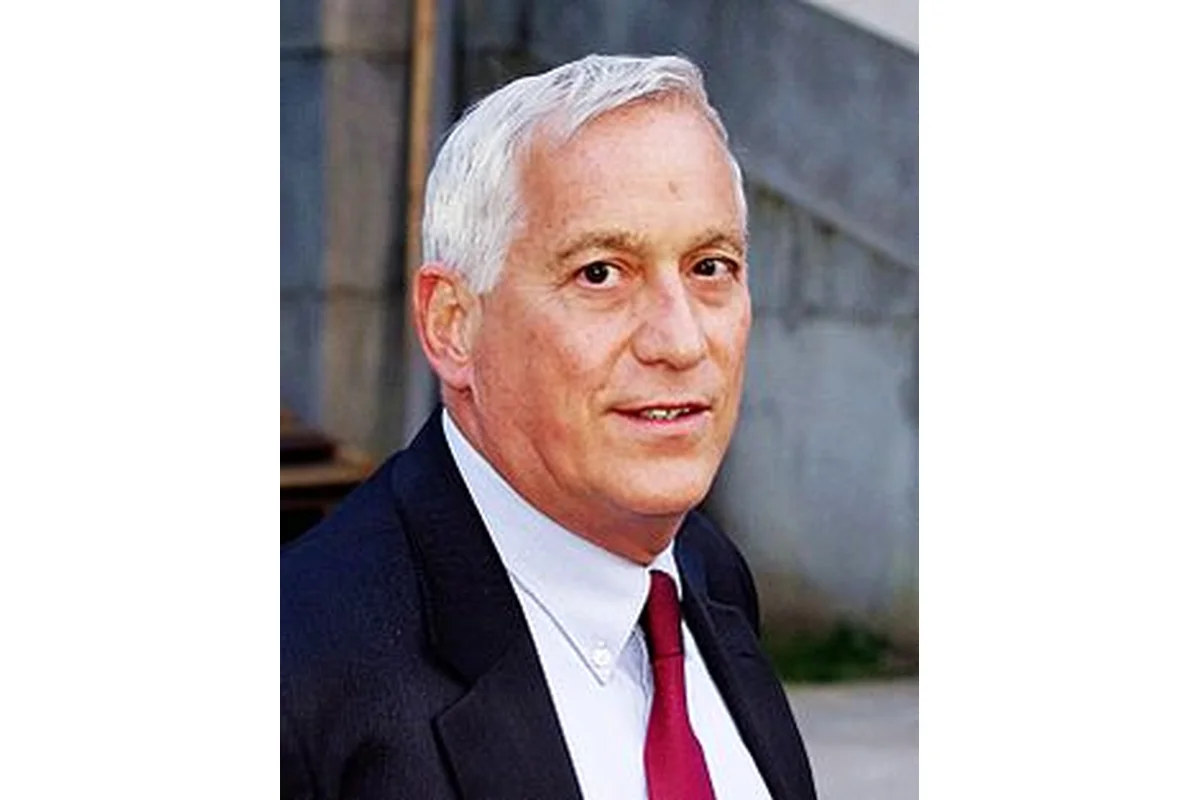
Walter Isaacson Bio
Walter Seff Isaacson (born May 20, 1952) is an American journalist, biographer, and academic who has held several senior roles in media, policy, and education. He is widely recognized for his best-selling biographies of figures such as Albert Einstein, Steve Jobs, Leonardo da Vinci, Jennifer Doudna, and Elon Musk. Over the course of his career, he has served as editor of Time, chairman and CEO of CNN, and president and CEO of the Aspen Institute, while also taking on a range of government and advisory appointments.
Early Life and Background
Walter Seff Isaacson was born on May 20, 1952, in New Orleans, Louisiana, to Betty “Betsy” Lee (née Seff) and Irwin Isaacson. His father worked as an electrical and mechanical engineer, and his mother was a real estate broker, a professional pairing that gave the household a strong practical and entrepreneurial character. Growing up in New Orleans placed Isaacson in a city with deep cultural and civic traditions, an environment that helped shape his later interests in history, policy, and storytelling.
He attended New Orleans’ Isidore Newman School, where he served as student body president, a role that suggested early leadership instincts. He also took part in the Telluride Association Summer Program at Deep Springs College, a program well known for its academic rigor. These formative years combined strong classroom preparation with a developing sense of public responsibility.
Isaacson went on to study at Harvard University, where he majored in history and literature and graduated in 1974. At Harvard, he was president of the Signet Society, a member of the Harvard Lampoon, and a resident of Lowell House. He later attended Pembroke College, Oxford, as a Rhodes scholar, where he studied philosophy, politics, and economics and graduated with first-class honours.
Path to US Politics and Public Service
Walter Isaacson’s entry into public service grew out of his work in journalism and his interest in policy. He began his career at The Sunday Times in London and at the New Orleans Times-Picayune before joining Time in 1978. At Time, he served as political correspondent, national editor, and editor of new media, eventually becoming the magazine’s 14th editor in 1996, a position that sharpened his understanding of national affairs and prepared him for later advisory work.
His first formal government role came in October 2005, when the Governor of Louisiana, Kathleen Blanco, appointed him vice chairman of the Louisiana Recovery Authority, a board that oversaw spending on the rebuilding from Hurricane Katrina. In December 2007, he was appointed by President George W. Bush to chair the U.S.-Palestinian Partnership, an effort focused on economic and educational opportunities in the Palestinian territories. Secretary of State Hillary Clinton later named him vice-chair of Partners for a New Beginning, an initiative encouraging private-sector investment in the Muslim world.
Isaacson has continued to take on bipartisan advisory roles. In 2009, President Barack Obama appointed him chairman of the Broadcasting Board of Governors, which runs Voice of America, Radio Free Europe, and other U.S. international broadcasts, a position he held until January 2012. He has also served on the Advisory Committee of the National Institutes of Health, the U.S. Department of Defense Innovation Advisory Board, and the New Orleans City Planning Commission, reflecting a steady commitment to public service alongside his writing and teaching.
Walter Isaacson Career
Early Career (1970s–1990s)
Walter Isaacson began his journalism career at The Sunday Times in London and at the New Orleans Times-Picayune, gaining early exposure to both international and local reporting. He joined Time magazine in 1978, where he took on a series of increasingly senior roles, including political correspondent, national editor, and editor of new media. These positions gave him a broad view of American politics, culture, and business during a transformative period in the late twentieth century.
In 1996, he was named the 14th editor of Time, leading one of the most influential news magazines in the United States. His tenure as editor cemented his reputation as a thoughtful editorial leader and set the stage for his move into broadcast media and global policy work.
Time and CNN Era (1996–2003)
After leading Time as its editor, Walter Isaacson became chairman and CEO of CNN in July 2001, replacing Tom Johnson. Only two months after his appointment, he guided the network through its coverage of the September 11, 2001 attacks, a defining moment for American journalism. Early in his tenure, he sought the views of Republican Party leaders on Capitol Hill regarding coverage concerns, a step that drew public attention and mixed reactions from media watchdogs.
In January 2003, he announced that he would step down as president of CNN to become president of the Aspen Institute. Jim Walton replaced him as president of CNN, closing a brief but eventful chapter in Isaacson’s media leadership.
Aspen Institute Era (2003–2018)
Walter Isaacson served as president and CEO of the Aspen Institute from 2003 until 2018, leading a nonpartisan policy studies organization based in Washington, D.C. Under his leadership, the institute expanded its work on ideas, leadership, and public policy. In November 2017, the institute named Dan Porterfield, the president of Franklin & Marshall College, as Isaacson’s successor.
During this period, Isaacson also launched the podcast Trailblazers with Dell Technologies in March 2017, focusing on technology’s effects on business. In 2018, he was named a contributor for Amanpour & Company, the PBS and CNN news show that replaced The Charlie Rose Show, a role he has continued to hold.
Tulane University Era (2018–Present)
In 2018, Walter Isaacson stepped down from the Aspen Institute to become a professor of history at Tulane University and an advisory partner at the New York City financial services firm Perella Weinberg Partners. At Tulane, he teaches “The Digital Revolution” each spring and “Law and U.S. History” each fall, often featuring prominent guest speakers, and he co-chairs the annual New Orleans Book Festival.
He remains active as an interviewer for Amanpour & Company and as an author. In March 2019, he became editor-at-large and senior adviser for Arcadia Publishing, supporting editing, strategy, and partnerships. He also continues to serve on a wide range of boards, including United Airlines Holdings, the Rockefeller Foundation, the Carnegie Institution for Science, and Bloomberg Philanthropies.
Notable Events and Milestones
Walter Isaacson’s most defining milestones include guiding CNN through the September 11, 2001 attacks, leading the Aspen Institute for fifteen years, and writing a string of best-selling biographies, including the record-breaking Steve Jobs, which became an international best-seller in 2011. His role as chairman of the Broadcasting Board of Governors, his appointment as a Rhodes scholar, and his 2023 National Humanities Medal stand out as signature achievements in a career that bridges journalism, biography, and public service.
Walter Isaacson Career Highlights
Beyond politics, Walter Isaacson has built a parallel career as a writer and institutional leader. He is the author or co-author of more than a dozen books, including Kissinger: A Biography (1992), Benjamin Franklin: An American Life (2003), Einstein: His Life and Universe (2007), American Sketches (2009), The Innovators (2014), Leonardo da Vinci (2017), The Code Breaker (2021), and Elon Musk (2023). Several of these works became New York Times best-sellers, and the Steve Jobs biography remains one of the fastest-selling biographies ever published.
Biographies and Best-Sellers
Walter Isaacson’s biographies have reached wide audiences. The 2011 Steve Jobs biography was based on more than forty interviews with Jobs over two years and broke all prior records for biography sales. The Innovators became a New York Times best-seller, and The Code Breaker debuted at number one on the New York Times nonfiction best-seller list for the week ending March 13, 2021. His Elon Musk biography was published on September 12, 2023, and was shortlisted for the 2023 Financial Times Business Book of the Year Award.
Upcoming Projects
Walter Isaacson’s next book, The Greatest Sentence Ever Written, is scheduled for release in November 2025. The book centers on the “We hold these truths” sentence in the United States Declaration of Independence and is timed to celebrate the United States Semiquincentennial.
Other Achievements
Walter Isaacson has received numerous honors, including the 2012 Gerald Loeb Award for Steve Jobs, selection as one of the Time 100 in 2012, the 2013 Benjamin Franklin Medal from the Royal Society of Arts, the 2014 Jefferson Lecture, the 2015 Nichols-Chancellor’s Medal at Vanderbilt University, and the 2023 National Humanities Medal. He is a member of the American Academy of Arts and Sciences, the American Philosophical Society, and an Honorary Fellow of Pembroke College, Oxford, and holds honorary degrees from institutions including Tufts University, Duke University, and the University of New Orleans.
Walter Isaacson Family
Family Background
Walter Seff Isaacson was born to Betty “Betsy” Lee (née Seff) and Irwin Isaacson. His father was an electrical and mechanical engineer, and his mother was a real estate broker, a combination of technical and entrepreneurial careers that influenced his lifelong interest in innovation and storytelling.
Personal Life
Walter Isaacson has been married to Cathy Wright since 1984. He maintains close ties to New Orleans, where he grew up, and he continues to live a public life that balances his roles as a writer, professor, and adviser across media, education, and government.