

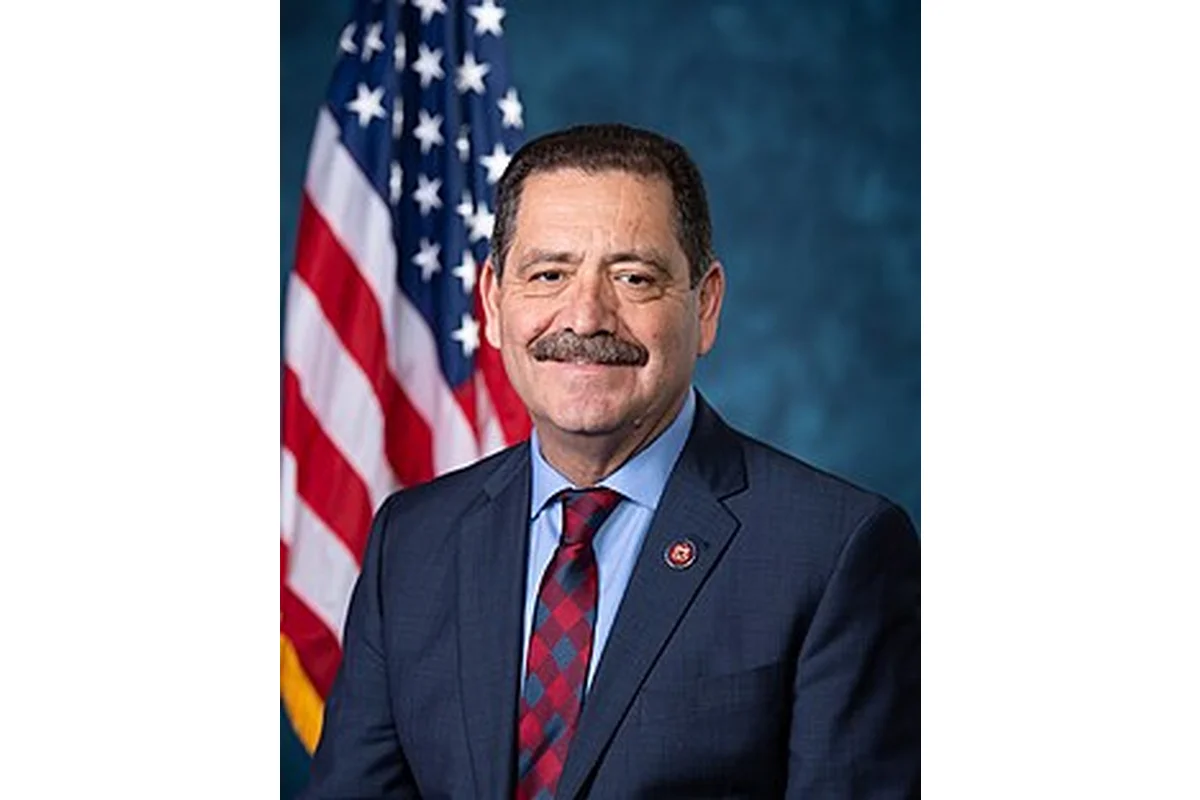
Chuy García Bio
Jesús G. “Chuy” García, born on April 12, 1956, is an American politician who has represented Illinois’s 4th congressional district in the United States House of Representatives since 2019. A member of the Democratic Party, García is widely described as a progressive and has built a long career in public service, from the Chicago City Council to the Illinois State Senate and the Cook County Board of Commissioners. Born in Durango, Mexico, he moved to Chicago as a child, became a United States citizen in 1977, and rose to national attention with his 2015 campaign for mayor of Chicago.
Early Life and Background
García was born in the state of Durango, Mexico, where his father worked as a farm laborer under the bracero program, a United States government initiative established during World War II. In 1965, García moved to the United States with permanent resident status, and the family settled in the Little Village neighborhood on Chicago’s South Lawndale, where he has continued to live for most of his life. Growing up in a predominantly Latino community shaped his lifelong commitment to immigrant rights, working-class issues, and neighborhood-level organizing.
García attended St. Rita High School in Chicago, graduating in 1974. He went on to earn a Bachelor of Arts in political science from the University of Illinois Chicago, where he also completed a Master of Urban Public Planning and Policy. During his college years, he worked at the Legal Assistance Foundation from 1977 to 1980, gaining early exposure to legal aid and community advocacy work.
Path to US Politics
After completing his master’s degree, García became assistant director of the Little Village Neighborhood Housing Service, a post he held until 1984. In that role, he focused on housing access and neighborhood improvement in one of Chicago’s most underserved Latino communities. His growing reputation as a community organizer caught the attention of Mayor Harold Washington, who endorsed him in local Democratic committee races and later appointed him deputy commissioner of the Chicago Department of Water from 1984 to 1986.
These formative experiences pushed García toward electoral politics. He managed the 1983 campaign of labor organizer Rudy Lozano and, after Lozano’s murder later that year, became a leading voice in the Lozano-aligned political movement. García’s alliances with Washington’s reform coalition during the so-called Council Wars placed him at the center of Chicago’s progressive political scene and prepared him for his own run for office.
Chuy García Career
Early Career (1986–1998)
In March 1986, García won a special election for the Chicago City Council’s 22nd Ward seat, becoming part of the slate that ended Edward Vrdolyak’s council majority. He was re-elected in 1987 and 1991 and chaired the council’s Aviation Committee while serving on several others, including Budget and Government Operations, Finance, and Education. His effectiveness in constituent services made him one of the most visible Latino politicians in Chicago during this era.
In 1992, García won a seat in the Illinois State Senate for the 1st district, becoming the first Mexican-American state senator in Illinois history. He won re-election in 1996, defeating a challenge from Alderman Juan Soliz, and championed immigrant-friendly health care and education reforms during his tenure. In 1998, however, he lost the Democratic primary to Antonio Munoz, who was backed by Mayor Richard M. Daley’s Hispanic Democratic Organization, ending his time in Springfield.
Breakthrough (2010–2018)
After leaving office, García founded the Little Village Community Development Corporation, now known as Enlace, growing it into a major nonprofit with 27 full-time and 120 part-time employees and a roughly five-million-dollar annual budget. In 2010, he won a seat on the Cook County Board of Commissioners for the 7th district, defeating an HDO-backed challenger, and Board President Toni Preckwinkle appointed him floor leader. He was re-elected unopposed in 2014.
In November 2015, García entered the race for mayor of Chicago after being encouraged by Chicago Teachers Union President Karen Lewis, who had been considering her own progressive candidacy. He won 34 percent of the vote in the February primary, forcing incumbent Rahm Emanuel into a runoff. With the backing of Senator Bernie Sanders and national progressive groups, García’s campaign became a national symbol of movement-driven urban politics, though Emanuel ultimately won the runoff with about 55 percent of the vote.
Democratic Era (2019–Present)
In November 2018, García won the Democratic nomination for Illinois’s 4th congressional district with 60 percent of the primary vote and easily won the general election with 86 percent of the vote, succeeding retiring Representative Luis Gutiérrez. He was sworn into the United States House of Representatives in January 2019 and quickly established himself as an important voice on immigration, labor, and foreign policy matters. In December 2019, he introduced the New Way Forward Act, an immigration reform bill, and he has taken progressive positions on issues ranging from United States military deployments abroad to corporate accountability in utility regulation.
He was re-elected in 2020 with nearly 85 percent of the vote, again in 2022, and once more in 2024, cementing his hold on the heavily Democratic 4th district. In 2023, García made a second run for mayor of Chicago, challenging incumbent Lori Lightfoot and finishing fourth in the first round of the election before endorsing Brandon Johnson, who won the runoff. In November 2025, García announced he would not seek re-election in 2026, a decision that drew both strong criticism and vocal support from fellow Democrats.
Notable Events and Milestones
García’s most defining political moment came in 2015, when his insurgent campaign forced the first mayoral runoff in Chicago in nearly two decades and helped re-energize the city’s progressive movement. His 2023 mayoral bid, launched on the 40th anniversary of Harold Washington’s 1983 announcement, was also symbolic, even though it ended in a fourth-place finish. In November 2025, his decision to retire on the eve of the candidate filing deadline prompted a House resolution condemning the move, while Democratic leaders such as Hakeem Jeffries and Alexandria Ocasio-Cortez rallied to his defense.
Chuy García Career Wins
Over nearly four decades in public life, García has compiled a long record of electoral victories at the city, county, state, and federal levels. He has won multiple Chicago City Council races, two terms in the Illinois State Senate, two terms on the Cook County Board of Commissioners, and four terms in the United States House of Representatives.
Congressional Highlights
García has represented Illinois’s 4th congressional district since 2019, winning four consecutive general elections with margins ranging from roughly 85 to 86 percent of the vote. He succeeded his longtime ally Luis Gutiérrez after winning the 2018 Democratic primary with 60 percent of the vote, a race shaped by Gutiérrez’s late endorsement.
Other Wins and Achievements
Beyond Congress, García has won major Chicago City Council elections in 1986, 1987, and 1991, as well as Illinois State Senate races in 1992 and 1996. He also won two Cook County Board of Commissioners elections in 2010 and 2014 and was a 2016 presidential elector for the Democratic ticket in Illinois.
Chuy García Family
Family Background and Political Lineage
García grew up in a Mexican immigrant family shaped by his father’s experience as a bracero farm laborer. His political lineage runs through Harold Washington, the city’s first African American mayor, who became his mentor and chief political ally during the Council Wars era of the 1980s.
Personal Life
García married his wife, Evelyn, in 1980, and the couple has three children. They have continued to live in the Little Village neighborhood of South Lawndale, Chicago. In April 2023, García’s daughter, Rosa, died at the age of 28 from undisclosed causes.