

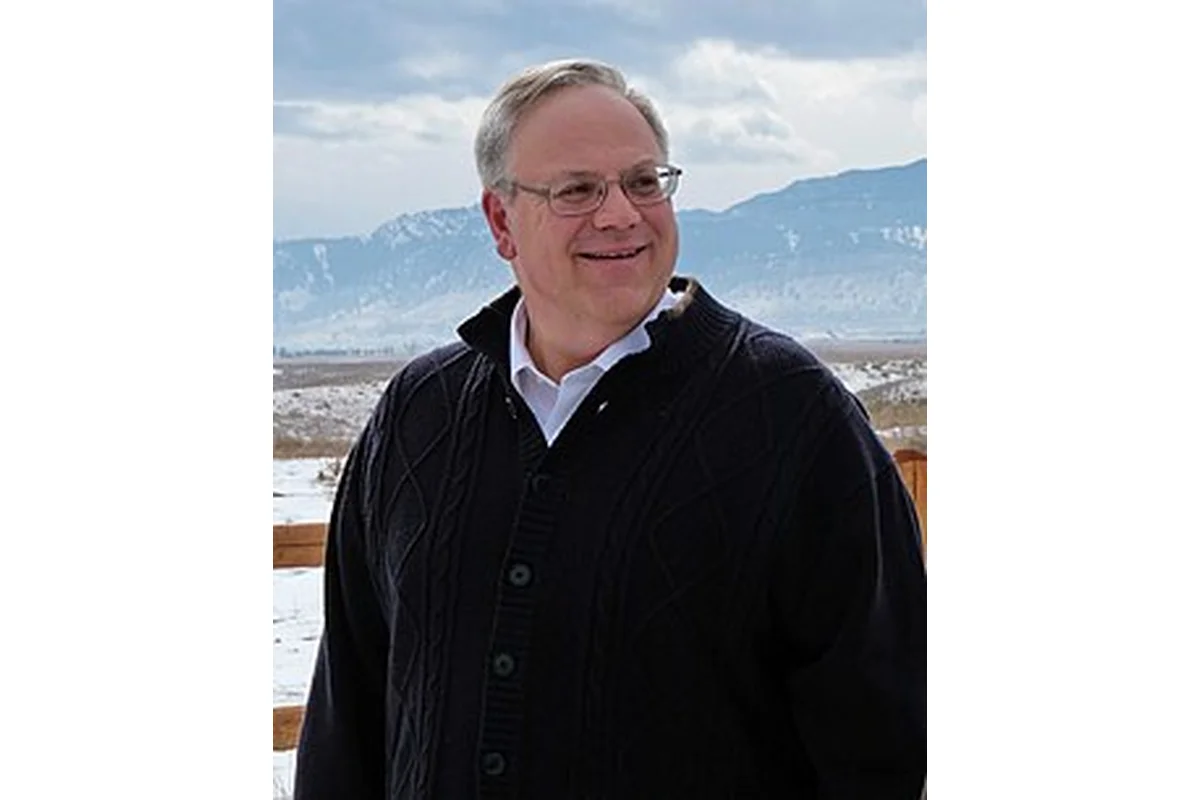
David Longly Bernhardt Bio
David Longly Bernhardt (born August 17, 1969) is an American lawyer and former government official who served as the 53rd United States Secretary of the Interior from April 2019 to January 2021 in the administration of President Donald Trump. A member of the Republican Party, he became one of the most influential voices on federal land, water, and natural resource policy during his career in public service and private law practice. His tenure at the Department of the Interior focused on deregulation and the expansion of fossil fuel leasing on public lands.
Before leading the Interior Department, Bernhardt spent more than fifteen years as a natural resources attorney and lobbyist in Colorado, representing energy, agricultural, and water clients. He returned to government service in 2017 as Deputy Secretary and later became Acting Secretary following the resignation of Ryan Zinke. He is widely recognized for reshaping Interior Department priorities during the first Trump administration.
Early Life and Background
David Longly Bernhardt was born on August 17, 1969, in Rifle, Colorado, a small town on the Western Slope of the Rocky Mountains. He grew up in a working family; his father worked as a county extension agent, and his mother worked in the real estate business. The outdoor landscape of western Colorado, including its rivers, mountains, and public lands, shaped his lifelong interest in hunting, fishing, and conservation policy.
Bernhardt became involved in Colorado politics at the age of sixteen, when he appeared before the Rifle City Council to argue against a proposed tax on arcade games at a teen center he was helping to start in his hometown. He left high school early and earned a General Educational Development credential before continuing his education. He went on to complete a Bachelor of Arts degree at the University of Northern Colorado in 1990, and during that time he secured an internship at the Supreme Court of the United States. He later graduated with honors from the George Washington University Law School in 1994 and was admitted to the Colorado Bar Association later that year.
Path to US Politics
After law school, Bernhardt began his legal career in Colorado during the 1990s. He worked for U.S. Representative Scott McInnis, a Grand Junction Republican, gaining firsthand experience in congressional offices and federal policy. In 1998, he joined the Denver-based law and lobbying firm Brownstein Hyatt Farber Schreck as an associate, where he built a practice focused on natural resources, water, and energy law.
His early work in private practice established his reputation as a skilled advocate for clients involved in western land and water issues. He later joined the Department of the Interior in 2001, beginning a long career in federal service. His path to senior political leadership in US politics accelerated in 2006, when President George W. Bush nominated him to serve as Solicitor of the Interior. The United States Senate unanimously confirmed him, and he was sworn in during November 2006, serving until January 2009.
David Longly Bernhardt Career
Early Career (1990s-2001)
Bernhardt’s early career combined congressional experience, private legal practice, and federal service. After working for Representative Scott McInnis in the 1990s, he joined Brownstein Hyatt Farber Schreck in 1998 as an associate attorney focused on natural resources and lobbying matters. This position allowed him to develop relationships with energy, water, and agricultural clients across the western United States.
In 2001, he moved to Washington, D.C., to work at the Department of the Interior under Secretary Gale Norton. He served as deputy chief of staff and counselor to the Secretary, and also worked as the department’s director of congressional and legislative affairs. He later became the United States Commissioner to the International Boundary Commission between the United States and Canada, expanding his experience in international boundary and resource issues.
George W. Bush Administration Breakthrough (2006-2009)
President George W. Bush nominated Bernhardt in November 2005 to serve as Solicitor of the Department of the Interior. At the time of his nomination, he was serving as the department’s deputy solicitor. The United States Senate unanimously confirmed him, and he was sworn into office in November 2006, becoming the department’s top legal officer.
As Solicitor, Bernhardt served from 2006 to January 2009. In this position, he oversaw the legal work of the Interior Department on issues involving public lands, water rights, Native American affairs, wildlife, and energy development. His tenure as Solicitor established him as a leading figure in federal natural resources law and set the stage for his later return to senior government leadership.
Trump Administration Era (2017-2021)
After years in private practice, Bernhardt returned to the Department of the Interior in 2017. President Donald Trump nominated him to be Deputy Secretary of the Interior in April 2017. The Senate confirmed him on July 24, 2017, by a vote of 53 to 43, and he was sworn in on August 1, 2017. In this role, he served as the top deputy to Interior Secretary Ryan Zinke and helped oversee the operations of the federal lands and energy agency.
When Secretary Zinke resigned, Bernhardt became Acting Secretary of the Interior on January 2, 2019. On February 4, 2019, President Trump formally nominated him to be Secretary of the Interior. The Senate confirmed him on April 11, 2019, by a vote of 56 to 41, making him the 53rd United States Secretary of the Interior. He held the position until January 2021. During his tenure, the Department of the Interior substantially increased fossil fuel sales on public land and pursued a broad program of deregulation. He also signed major initiatives, including the Great American Outdoors Act, signed into law on August 4, 2020, and announced the Arctic National Wildlife Refuge oil and gas leasing program in August 2020. He was chosen as the designated survivor during President Trump’s 2020 State of the Union Address.
Notable Events and Milestones
One of the defining milestones of Bernhardt’s tenure was his role in expanding fossil fuel leasing on public lands, which became a central part of the Trump administration’s energy policy. He also oversaw the relocation of the Bureau of Land Management headquarters from Washington, D.C., to Grand Junction, Colorado, on August 11, 2020. In August 2020, the Office of Inspector General released a report reviewing record-handling related to his confirmation, finding no legal or ethical violations. Earlier, in September 2019, the Government Accountability Office concluded that he had twice violated federal law during the 2018-2019 government shutdown by directing the National Park Service to use park fee money without congressional authorization, a finding the department disputed.
David Longly Bernhardt Family
Family Background and Political Lineage
David Longly Bernhardt was raised in Rifle, Colorado, in a family deeply tied to the local community. His father served as a county extension agent, working with farmers and ranchers in the region, while his mother built a career in the real estate business. Growing up in a rural western Colorado household gave Bernhardt an early appreciation for public lands, water, and the outdoors, themes that shaped his later legal and political career.
Personal Life
Bernhardt is married to his wife, Gena Bernhardt. The couple lives in Arlington, Virginia. He is known as an avid hunter and angler, pursuits that reflect his lifelong connection to the landscapes of the American West. These outdoor interests have also been a recurring theme in his policy work on wildlife management and public land use.