
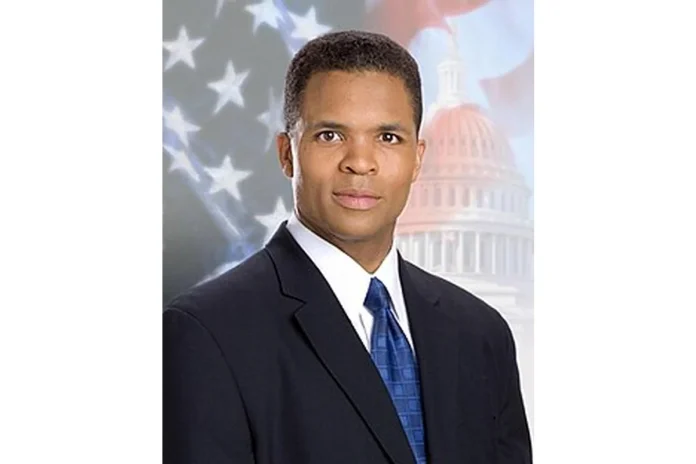
Jesse Jackson Jr. Bio
Jesse Louis Jackson Jr. (born 11 March 1965) is an American former politician who represented Illinois’s 2nd congressional district in the U.S. House of Representatives from 1995 until his resignation in 2012. A member of the Democratic Party and the son of civil-rights leader Jesse Jackson, he was active in progressive causes and served as national co-chairman of Barack Obama’s 2008 presidential campaign. Throughout his tenure, Jackson built a liberal voting record and authored several books on civil rights and personal finance. He pleaded guilty in 2013 to misuse of campaign funds, served time in federal prison, and was released in 2015. More recently, Jackson announced a 2025 candidacy to run again for his former congressional seat in the 2026 election.
Early Life and Background
Jesse Louis Jackson Jr. was born on 11 March 1965 in Greenville, South Carolina, United States. He is the son of civil-rights activist and former presidential candidate Jesse Jackson and Jacqueline Brown. Growing up in a household shaped by activism and public service, young Jesse was exposed early to political organizing, voter-registration drives, and the national campaigns of his father. He attended St. Albans School, a prestigious college-preparatory school in Washington, D.C., where he developed a strong academic record and a sense of civic responsibility.
Jackson went on to earn a Bachelor of Science degree from North Carolina A&T State University, a historically Black university, before continuing his education at the Chicago Theological Seminary, where he received a Master of Divinity. He later obtained a Juris Doctor from the University of Illinois at Urbana-Champaign, equipping him with a combination of theological, political, and legal training that shaped his later public career.
Path to US Politics
Before entering elected office, Jackson worked alongside his father in the elder Jackson’s 1984 presidential campaign and in the civil-rights organization Operation PUSH, gaining hands-on experience in grassroots organizing and coalition-building. These formative years immersed him in the mechanics of political mobilization, fundraising, and national policy advocacy. His growing profile within Democratic and civil-rights circles made him a rising figure in his own right.
When Congressman Mel Reynolds resigned from Illinois’s 2nd congressional district in 1995, Jackson saw an opening and officially declared his candidacy on 10 September 1995. He won the Democratic primary with 48 percent of the vote and captured the general election with 76 percent, taking office on 15 December 1995. His victory marked the start of nearly two decades in the U.S. House of Representatives.
Jesse Jackson Jr. Career
Early Career (1995–2000)
Jackson entered Congress pledging to be a liberal voice in opposition to Speaker of the House Newt Gingrich. He quickly established a reputation for reliability, building a track record of never missing a floor vote, and pursued a seat on the United States House Committee on Transportation and Infrastructure. In 1996, he received 94 percent of the vote in the general election, reflecting the heavily Democratic nature of his district.
During this period, Jackson partnered with Republican Henry Hyde to push for a third Chicago airport, demonstrating a willingness to work across the aisle on regional infrastructure. He was also an early supporter of Barack Obama, endorsing Howard Dean for the 2004 Democratic presidential nomination and remaining closely aligned with the future president throughout his rise.
Congressional Tenure and Liberal Record (2000–2008)
Jackson won re-election in 2000 by a 90–10 margin and continued to build a heavily liberal voting record on both social and fiscal issues. He voted against the impeachment of President Bill Clinton on all four articles, partnered with Republican Henry Hyde on regional projects, and was appointed to the Abraham Lincoln Bicentennial Commission in 2003. In 2005, he sponsored legislation authorizing a life-size statue of Rosa Parks for the United States Capitol’s Statuary Hall, which President George W. Bush signed into law on 1 December 2005.
On the national stage, Jackson emerged as a leading voice for progressive causes. He gave a prime-time speech at the 2008 Democratic National Convention on 25 August 2008, referencing Martin Luther King Jr. and praising Barack Obama’s leadership. The same year, he served as a national co-chairman of Obama’s 2008 presidential campaign, helping to unite the Illinois Democratic Party during a period of internal tension.
Later Years and Resignation (2009–2012)
After Obama’s election, Jackson emerged as a possible candidate to replace him in the U.S. Senate, though the seat was ultimately filled by Roland Burris amid the Rod Blagojevich federal corruption scandal. Jackson was later named one of the 15 most corrupt members of Congress by the Citizens for Responsibility and Ethics in Washington in 2009. On 10 June 2012, he took a medical leave of absence from the House, and on 13 August 2012, the Mayo Clinic confirmed he was being treated for bipolar II disorder.
Sixteen days after being re-elected in November 2012, Jackson resigned from Congress on 21 November 2012, citing health problems and acknowledging the ethics investigations surrounding his campaign finances. His departure ended a congressional career that had spanned nearly two decades.
Jesse Jackson Jr. Career Wins
Across his political career, Jesse Louis Jackson Jr. won multiple congressional elections in Illinois’s 2nd district, consistently securing overwhelming margins in both primaries and general elections. He first won the seat in a December 1995 special election with 76 percent of the vote and went on to win re-election in 1996, 1998, 2000, 2002, 2004, 2006, 2008, 2010, and 2012, often with vote shares above 85 percent. He also won election to serve as a national co-chairman of Barack Obama’s 2008 presidential campaign.
Congressional Election Highlights
Jackson’s most notable electoral victories include his 1995 special-election win that launched his congressional career, his 2000 re-election by a 90–10 margin, and his 1996 general-election win with 94 percent of the vote. He continued to dominate at the ballot box throughout his tenure, winning with 85 percent of the vote in 2006 and securing re-election in 2012 shortly before his resignation.
Other Achievements
Beyond electoral success, Jackson achieved recognition through his sponsorship of legislation authorizing the Rosa Parks statue in the U.S. Capitol and his appointment to the Abraham Lincoln Bicentennial Commission in 2003. He was also named to Newsweek’s 1997 “Century Club” list of 100 people to watch in the new century.
Jesse Jackson Jr. Family
Family Background and Political Lineage
Jesse Louis Jackson Jr. was born into one of the most prominent families in American civil-rights and political history. His father, Jesse Jackson, is a civil-rights leader and former Democratic presidential candidate, while his mother is Jacqueline Brown. His sister, Santita Jackson, and brother, Jonathan Jackson, have also been involved in public and advocacy work, continuing the family’s tradition of civic engagement.
Personal Life
Jackson met his future wife, Sandi Stevens, during the 1988 presidential campaign, where she served as press secretary for Congressman Mickey Leland. The couple married on 1 June 1991, while both were law students at the University of Illinois College of Law. Together they have two children, a son named Jesse III, known as “Tre,” and a daughter named Jessica. Sandi Jackson also served on the Chicago City Council as alderman of the 7th ward. The couple filed for divorce in July 2016 and reached a settlement in April 2018. Jackson has resided in Chicago, Illinois, and Washington, D.C.
Jesse Jackson Jr. Campaign Fraud Case
In October 2012, federal prosecutors and FBI agents in Washington, D.C., investigated Jackson for alleged financial improprieties, including possible misuse of campaign funds. On 20 February 2013, Jackson pleaded guilty to one count of wire and mail fraud in connection with his misuse of approximately $750,000 of campaign funds for personal purchases. On 14 August 2013, he was sentenced to 30 months in federal prison.
Jackson reported to the Federal Correctional Complex in Butner, North Carolina, on 26 October 2013 to begin serving his sentence. He was released on 26 March 2015 to a halfway house in Baltimore, Maryland, and was released fully on 22 June 2015, after which he was required to complete three years of supervised release and 500 hours of community service. In late 2024, Jackson and other Democratic Chicago leaders asked President Joe Biden to pardon him, but he did not receive one.
Jesse Jackson Jr. Published Works
Jesse Louis Jackson Jr. authored and co-authored several books on civil rights, personal finance, and constitutional reform. In December 1999, he co-authored “It’s About the Money: How You Can Get Out of Debt, Build Wealth, and Achieve Your Financial Dreams,” a self-help book focused on personal financial independence. In 2001, he co-authored “Legal Lynching: The Death Penalty and America’s Future,” also known as “Legal Lynching II,” an anti-death-penalty work written with his father and Bruce Shapiro.
Also in 2001, Jackson authored “A More Perfect Union: Advancing New American Rights” with his press secretary, Frank Watkins. The book outlines his moral and political philosophies, includes an autobiographical sketch, and proposes eight constitutional amendments aimed at expanding social and economic opportunity in America.