

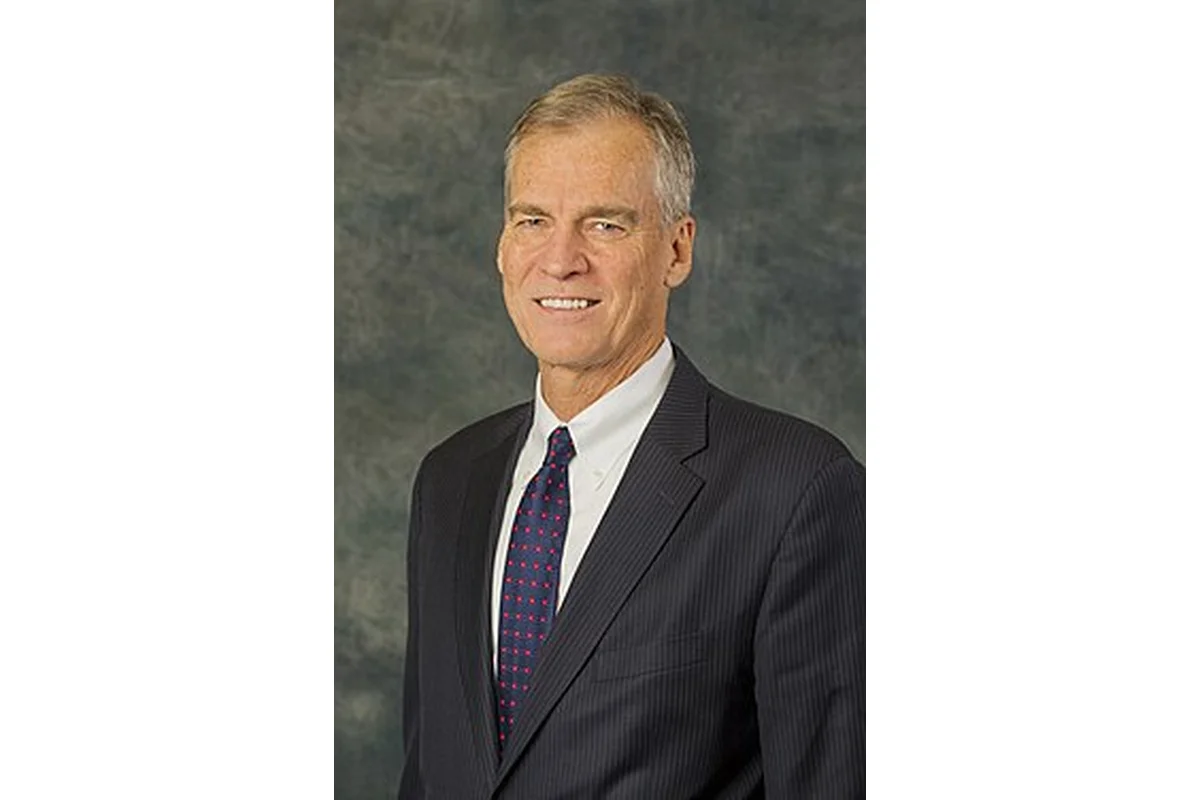
Mark Parkinson Bio
Mark Vincent Parkinson (born June 24, 1957) is an American businessman, attorney, and former politician who serves as president and chief executive officer of the American Health Care Association (AHCA) and the National Center for Assisted Living (NCAL). A lawyer by training, he served in the Kansas Legislature in the 1990s, was the 47th lieutenant governor of Kansas from 2007 to 2009, and became the 45th governor of Kansas from April 2009 to January 2011. He is a former Republican who joined the Democratic Party in 2006 to run on the ticket with Governor Kathleen Sebelius. After leaving elected office, Parkinson turned his focus to long-term care and health policy through his national advocacy role.
Throughout his career, Parkinson has been recognized for bipartisan cooperation, fiscal management, and elder care advocacy. His leadership has spanned state government, political party management, the practice of law, and one of the largest health care trade associations in the country.
Early Life and Background
Mark Vincent Parkinson was born in 1957 in Wichita, Kansas, and raised in a family with deep roots in Scott City, where he continues to own a farm. His father, Hank Parkinson, worked in advertising, public relations, and political consulting, exposing the future governor to politics and public communication from an early age. The family’s business and political ties shaped Parkinson’s interest in law, policy, and civic engagement.
Parkinson graduated from Wichita Heights High School before attending Wichita State University, where he earned his Bachelor of Science degree in 1980, graduating summa cum laude. He then enrolled at the University of Kansas Law School and graduated first in his class in 1984. During law school, he won the national moot court championship, an early signal of the discipline and public-speaking skill that would later define his career.
After law school, Parkinson entered private practice and, in 1986, became a founding partner of the firm Parkinson, Foth and Orrick. He practiced law for a decade before shifting in 1996 to developing elder care facilities in Kansas and Missouri, the beginning of a long professional focus on aging services that continues today.
Path to US Politics
Parkinson’s first entry into public office came in 1991, when he was elected to the Kansas House of Representatives, representing a district that included Olathe, Kansas. He served in the House until 1993, when he moved to the Kansas Senate, where he remained until 1997. During his time in the legislature, he helped write the state’s death penalty law and authored legislation facilitating the consolidation of the Wyandotte County government. He also drew attention for opposing a bill that would have banned flag burning, demonstrating an early independent streak.
After choosing not to seek reelection to the state Senate in 1996, Parkinson remained active in civic life. From 1999 to 2003, he served as chairman of the Kansas Republican Party, a role he secured in part with the support of Governor William Graves. He later chaired the Shawnee Area Chamber of Commerce in 2004 and, in 2005, served as the Chair of the Chairs of the six chambers of commerce in Johnson County.
In May 2006, Governor Kathleen Sebelius announced that Parkinson had switched to the Democratic Party to become her running mate for her reelection campaign. Citing his business experience and history of working with both parties, Sebelius tapped Parkinson to succeed retiring Lieutenant Governor John E. Moore. The ticket won, launching Parkinson’s executive-branch political career.
Mark Parkinson Career
Early Career (1991–2006)
Parkinson’s early career combined law, politics, and business. He practiced as a founding partner at Parkinson, Foth and Orrick from 1986 to 1996 while serving in the Kansas Legislature from 1991 to 1997. After leaving the Senate, he built and operated elder care facilities in Kansas and Missouri, gaining firsthand experience in the long-term care industry.
He also strengthened his profile in party and civic leadership. As chairman of the Kansas Republican Party from 1999 to 2003, he managed statewide political strategy before returning to the private sector. His record of bipartisan deal-making and business management made him an attractive candidate when Sebelius needed a lieutenant governor in 2006.
Lieutenant Governor Breakthrough (2007–2009)
As the 47th lieutenant governor of Kansas, Parkinson devoted significant time to energy policy. He served as co-chairman of the Kansas Energy Council and on the Wind Working Group, helping position Kansas as a leader in wind energy development. In 2008, he joined a delegation of lieutenant governors on a trade mission to China, building international economic ties for the state.
He also chaired the American Recovery and Reinvestment Act Advisory Group, helping shape how federal stimulus funds were spent in Kansas. This blend of energy, trade, and fiscal work prepared him to assume the governorship when Sebelius was nominated as United States Secretary of Health and Human Services.
Governor of Kansas Era (2009–2011)
In March 2009, President Barack Obama nominated Sebelius to lead the United States Department of Health and Human Services. Following her confirmation on April 28, 2009, Sebelius resigned as governor, and Parkinson was sworn in as the 45th governor of Kansas the same day. He announced he would not run in the 2010 election and was succeeded by Republican Sam Brownback in January 2011.
During his tenure, Parkinson managed a budget deficit through spending cuts and tax increases. His administration developed a comprehensive energy policy that included net metering and a 10-year plan for maintaining transportation infrastructure. He also signed a sweeping smoking ban covering public places, taxicabs and limousines, common areas of public and private buildings, condominiums, and most building entries.
Parkinson opposed moving detainees from Guantanamo Bay to Kansas, signed legislation creating a private cause of action for victims of child pornography, and lobbied the governors of Missouri and Nebraska to preserve the Big 12 Conference. He also led trade missions to Taiwan and mainland China to promote Kansas interests abroad.
Notable Events and Milestones
Citing his bipartisan support and ability to move Kansas forward during a tough economy, The Topeka Capital-Journal named Mark Parkinson Kansan of the Year in 2009. His swift rise from lieutenant governor to governor, his handling of a major budget shortfall, and his high-profile efforts to keep the Big 12 Conference intact remain signature moments of his time in office.
Mark Parkinson Career Wins
Mark Parkinson’s career wins span electoral success, policy achievements, and national recognition in health care leadership. From his early legislative victories in Kansas to his awards as a top association executive, his record reflects steady accomplishment across public and private sectors.
Political Highlights
Parkinson won election to the Kansas House of Representatives in 1990, representing Olathe-area districts, and then won a Kansas Senate seat in 1992. He won his 2006 lieutenant governor race on the ticket with Kathleen Sebelius and ascended to the governorship in 2009, becoming the 45th governor of Kansas. He chose not to run in 2010, closing his elected career.
Other Wins and Achievements
In 2009, Parkinson was named Kansan of the Year by The Topeka Capital-Journal, and in 2010, he received the Caring Award from Kansas Advocates for Better Care for his work on behalf of frail elders and persons with disabilities. In 2013, he was recognized as a Top Association CEO by CEO Update and as a Top Lobbyist by The Hill. He was named to Modern Healthcare’s 100 Most Influential People in Healthcare in both 2015 and 2020.
Mark Parkinson Family
Family Background and Political Lineage
Parkinson was raised in Wichita, Kansas, with family ties to Scott City, where he still owns a farm. His father, Hank Parkinson, built a career in advertising, public relations, and political consulting, giving Mark early exposure to political messaging and campaign strategy. Mark married his wife, Stacy Abbott, in 1983, and the couple has three children.
Personal Life
Mark and Stacy Parkinson have been married since 1983 and have been active in civic and charitable campaigns throughout their lives. They led a $4.29 million fundraising campaign for Sunflower House in 2002 and another drive for SAFEHOME in 2005. From 2012 to 2016, the Parkinsons co-chaired University of Kansas fundraising efforts with two other couples, helping raise $1.5 billion for the institution. Stacy Parkinson is an attorney, and in 2006, the couple sold two care facilities in Shawnee. In February 2024, Mark Parkinson announced he would retire from AHCA and NCAL effective January 2025.