

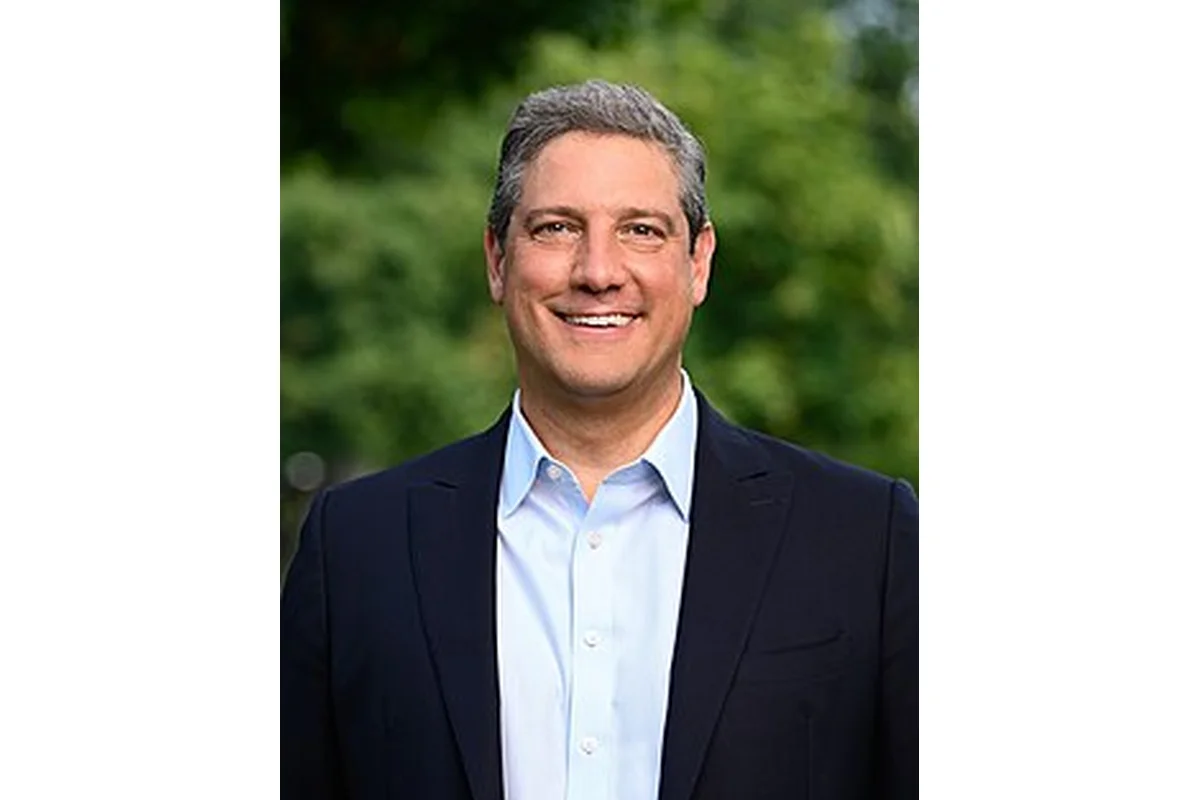
Tim Ryan Bio
Timothy John Ryan (born July 16, 1973) is an American politician, attorney, and author who represented Ohio in the United States House of Representatives for two decades. A member of the Democratic Party, Ryan served the state’s 17th congressional district from 2003 to 2013 and the 13th congressional district from 2013 to 2023, covering a large portion of northeastern Ohio from Youngstown to Akron. He is widely described as a moderate Democrat, and his long career blended blue-collar economic populism with social and foreign-policy positions that shifted over time.
After leaving the House, Ryan became the 2022 Democratic nominee for the United States Senate in Ohio, losing to Republican J.D. Vance in the November 8, 2022 general election. Earlier in his career, he briefly campaigned for the 2020 Democratic presidential nomination before returning to his House seat. Ryan is also the author of two books on mindfulness and food policy and has been a frequent public voice on trade, manufacturing, and workers’ rights.
Early Life and Background
Timothy John Ryan was born in Niles, Ohio, the son of Allen Leroy Ryan and Rochelle Maria Rizzi. His parents divorced when he was seven years old, and he was raised by his mother. Ryan is of Irish and Italian ancestry, a heritage that later shaped his self-description as a Roosevelt-style Catholic Democrat with working-class roots. He grew up in and around the Mahoning Valley, the industrial region of northeastern Ohio that would define much of his political identity.
Ryan attended John F. Kennedy High School in Warren, Ohio, where he played football as a quarterback and coached junior high basketball. A knee injury cut short his college football career after a brief stint at Youngstown State University, and he transferred to Bowling Green State University. There, he earned a Bachelor of Arts degree in political science in 1995 and joined Delta Tau Delta fraternity.
Ryan later earned a Juris Doctor from Franklin Pierce Law Center (now the University of New Hampshire School of Law) in Concord, New Hampshire, in 2000. He spent twelve years in Catholic schools, including John F. Kennedy Catholic School in Warren, and has frequently pointed to Catholic social teaching as a major influence on his political outlook.
Path to US Politics
After college, Ryan joined the staff of Ohio congressman Jim Traficant, a colorful populist Democrat whose district covered much of the Mahoning Valley. Working as a congressional aide in the late 1990s gave Ryan direct exposure to constituent service, legislative drafting, and the rough-and-tumble of northeastern Ohio politics. The experience also placed him in the orbit of a district whose voters, despite economic decline, remained fiercely loyal to organized labor and economic populism.
In 2000, Ryan completed his law degree and quickly moved into state-level politics. He won a seat in the Ohio State Senate, serving half a term from 2000 to 2002. The position allowed him to build a record on economic development and labor issues while preparing for a higher-profile race. When Traficant was convicted on federal corruption charges in 2002 and forced to give up his House seat, Ryan saw an opening to return to the district where he had grown up and worked.
Tim Ryan Career
Early Career (2001-2002)
Ryan’s first significant political office was in the Ohio State Senate, where he served a partial term beginning in 2000. The seat gave him a platform to advocate for the working-class communities of northeastern Ohio during a period of plant closings and manufacturing decline. Although his tenure in the state Senate was brief, it established him as a young Democrat with deep ties to organized labor and the Mahoning Valley.
His early legislative work focused on the same economic issues he would champion throughout his career, including fair trade, manufacturing jobs, and the rights of union workers. Those priorities would become central to his brand once he reached Congress, and they helped him stand out in a crowded Democratic primary for the 17th congressional district in 2002.
17th Congressional District Era (2003-2013)
After Jim Traficant’s legal troubles, Ryan declared his candidacy for Ohio’s 17th congressional district. In the 2002 Democratic primary, he defeated eight-term incumbent Tom Sawyer, who was seen as insufficiently labor-friendly in the newly redrawn district. In the November 2002 general election, Ryan faced Republican insurance commissioner Ann Womer Benjamin and Traficant, who ran as an independent from prison. Ryan won with 51 percent of the vote to Benjamin’s 37 percent, becoming the youngest Democrat in the House at 29 years old.
Ryan was reelected five times in the 17th district, with his closest race coming in 2010, when he won 53 percent of the vote and Traficant, running again as an independent, took 16 percent. During this period, he broke with many in his party on certain high-profile votes, including opposition to the National Do Not Call Registry in 2003 and his 2010 vote for the Stupak Amendment restricting federal funding for abortions. In 2010, he also introduced the Currency Reform for Fair Trade Act, which passed the House overwhelmingly but stalled in the Senate.
On foreign policy, Ryan supported the Iran nuclear deal to prevent Iran from acquiring weapons of mass destruction and spoke out in defense of Israel’s right to self-defense. He also became an active voice on trade and China policy, accusing Beijing of currency manipulation and pushing for tougher measures to protect American manufacturing jobs.
13th Congressional District Era (2013-2023)
Following redistricting in 2012, Ryan’s territory was renumbered as Ohio’s 13th congressional district, and he represented it for five terms. He continued to focus on trade, manufacturing, and labor issues, often siding with workers in industries such as steel and natural gas. Ryan positioned himself as a moderate Democrat, willing to break with his party on issues ranging from energy policy to student loan forgiveness, which he criticized as sending the wrong message.
In November 2016, after the presidential election, Ryan launched an unsuccessful challenge to unseat Nancy Pelosi as House Democratic leader. He argued that the party needed new leadership and a different message heading into the Trump era. Pelosi ultimately defeated him 134 to 63 after agreeing to give more leadership opportunities to junior members, but the bid raised Ryan’s national profile.
Ryan chaired the Subcommittee on the Legislative Branch and in that role was involved in investigating the January 6 United States Capitol attack. In May 2021, he publicly chastised Senate Republicans for blocking the creation of a January 6 commission. He also helped push for a more thorough review of the case of Adi Othman, an undocumented immigrant from Youngstown, Ohio, before Othman was ultimately deported in 2018. Ryan condemned the deportation, calling it heartbreaking for American families.
2020 Presidential Campaign and 2022 Senate Race
After the 2018 midterms, Ryan was widely mentioned as a possible 2020 presidential candidate. He officially launched his campaign on April 4, 2019, appearing on The View to announce his bid for the Democratic nomination. After qualifying for only two debates and consistently polling below 1 percent nationwide, he withdrew from the race on October 24, 2019, and successfully ran for reelection to the House in 2020, winning his tenth term.
On April 26, 2021, Ryan announced his candidacy for the United States Senate seat being vacated by Republican Rob Portman. He defeated Morgan Harper and Traci Johnson in the Democratic primary with about 70 percent of the vote. In the general election, he faced Republican J.D. Vance, an author and venture capitalist. Ryan sought to appeal to center-right voters, often highlighting votes he had cast in line with former President Donald Trump’s policies, and he openly distanced himself from progressive leaders and even suggested that President Joe Biden should not seek reelection in 2024. On November 8, 2022, Ryan lost to Vance by roughly six points.
Notable Events and Milestones
Among Ryan’s most significant moments were his 2002 upset win over Tom Sawyer, his 2010 introduction of the Currency Reform for Fair Trade Act, his 2016 challenge to Nancy Pelosi, and his 2022 Senate nomination. He earned a reputation as one of the most prominent moderate voices in the House Democratic caucus and was a leading congressional advocate for tougher trade action against China.
Tim Ryan Family
Family Background and Personal Life
Ryan is the son of Allen Leroy Ryan and Rochelle Maria Rizzi. His parents divorced when he was young, and he was raised by his mother in the Mahoning Valley. He often credits his Irish and Italian Catholic heritage and his working-class upbringing as central to his political identity, and he has pointed to Catholic social teaching, his devout grandfather, and churchgoing relatives as major influences on his life and public philosophy.
In 2013, Ryan married Andrea Zetts, his second wife. The couple lives in Dublin, Ohio. Ryan is the stepfather of Zetts’s two children from a previous relationship, and together they welcomed a son in 2014. A practicing Catholic, Ryan has described himself as a Roosevelt-style Catholic Democrat and has spoken publicly about his admiration for Pope Francis.
Tim Ryan Career Wins
House of Representatives Highlights
Over his two decades in Congress, Ryan was elected to the House ten times, first representing Ohio’s 17th congressional district from 2002 to 2012 and then Ohio’s 13th congressional district from 2012 to 2022. His first and most competitive win came in 2002, when he defeated Tom Sawyer in the Democratic primary and went on to beat Republican Ann Womer Benjamin in the general election. His most recent victory was his 2020 reelection to the 13th district.
Other Wins & Achievements
In 2022, Ryan won the Democratic nomination for the United States Senate in Ohio with about 70 percent of the primary vote. He has also earned recognition for his two published books, A Mindful Nation (2012) and The Real Food Revolution (2014), both issued by Hay House, and for his long advocacy on behalf of manufacturing workers and trade reform in Congress.