

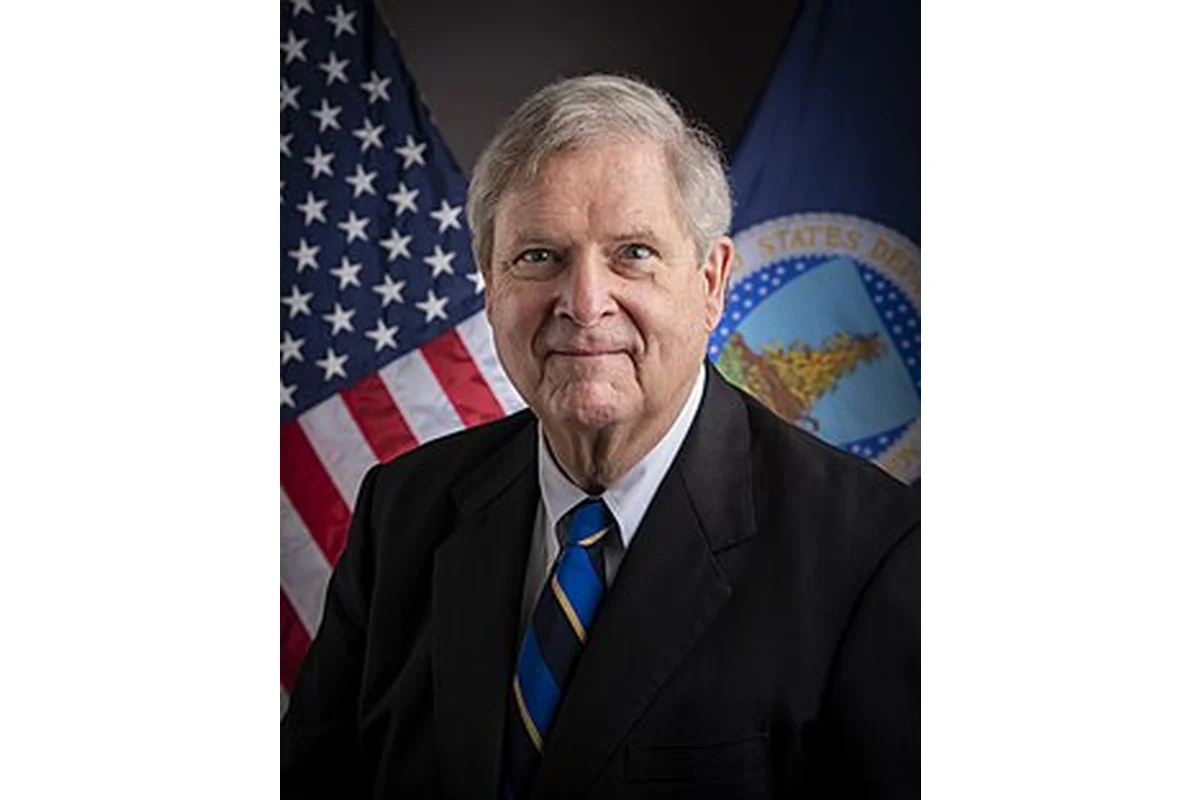
Tom Vilsack Bio
Thomas James Vilsack (born December 13, 1950) is an American politician and lawyer who has built a long career in public service focused on agriculture, rural development, and energy policy. A member of the Democratic Party, he served as the 40th Governor of Iowa from 1999 to 2007 and held the office of United States Secretary of Agriculture twice, from 2009 to 2017 under President Barack Obama and from 2021 to 2025 under President Joe Biden. He is the second longest serving Secretary of Agriculture, surpassed only by fellow Iowan James “Tama Jim” Wilson.
Beyond his two cabinet tenures, Vilsack practiced law, served as mayor of Mount Pleasant, sat in the Iowa State Senate, and briefly campaigned for the 2008 Democratic presidential nomination. In March 2025, he became chief executive officer of the World Food Prize Foundation, continuing his lifelong work on food and farming.
Early Life and Background
Thomas James Vilsack was born on December 13, 1950, in a Catholic orphanage in Pittsburgh, Pennsylvania, where his twenty-three-year-old birth mother had lived since September 1950 under a pseudonym and where he was baptized Kenneth. He was adopted in 1951 by Bud Vilsack, a real-estate agent and insurance salesman, and his wife Dolly Vilsack, who renamed him Thomas James. The couple also had a daughter, Alice, who passed away two years after a heart transplant.
Vilsack grew up in the Pittsburgh area and attended Shady Side Academy, a preparatory high school. He went on to earn a bachelor’s degree from Hamilton College in 1972, where he joined the Delta Upsilon fraternity, before receiving his Juris Doctor from Albany Law School in 1975. The adoption and the values of his adoptive parents shaped an early interest in public service that carried into his later political life.
Path to US Politics
After marrying Ann Christine “Christie” Bell in 1973, Vilsack moved to her hometown of Mount Pleasant, Iowa, in 1975 and joined his father-in-law’s law practice. He became active in civic life, leading a fundraising drive to rebuild a local athletic facility and later chairing a campaign for a memorial fountain after the town’s mayor was killed in 1986. The mayor’s father asked Vilsack to run for the office, and he was elected mayor in 1987.
Encouraged by his early political experience, Vilsack won election to the Iowa State Senate in 1992. In the legislature, he worked on health coverage, workforce development, and mental health funding, gaining a reputation for bipartisan cooperation. These state-level achievements positioned him for a successful run for governor in 1998, when he became the first Democrat to serve as governor of Iowa in thirty years.
Tom Vilsack Career
Early Career (1987–1998)
Vilsack began his political career as mayor of Mount Pleasant, serving from 1987 onward and earning a reputation for hands-on community leadership. During this period, he raised funds to rebuild youth athletic facilities and helped coordinate local charitable work through the United Way and Chamber of Commerce.
His election to the Iowa State Senate in 1992 expanded his reach to statewide policy. He focused on worker benefits, healthcare continuity for job changers, and restructuring the state’s workforce system. These early accomplishments laid the groundwork for his 1998 gubernatorial victory over Republican Jim Ross Lightfoot.
Governorship Breakthrough (1999–2007)
As the 40th Governor of Iowa, Vilsack won election in 1998 by about 55,000 votes and was reelected in 2002 by roughly 83,800 votes, serving the maximum tenure allowed at the time. In 2000, he signed legislation creating Iowa’s first organ donor registry, a milestone in state health policy. He also chaired the Democratic Governors Association in 2004 and served on the National Governors Association Executive Committee.
Vilsack used his second term to launch the Grow Iowa Values Fund, a large economic development initiative designed to attract higher-income jobs. In 2005, he signed an executive order restoring voting rights to roughly 115,000 felons who had completed their sentences. He also signed legislation tightening access to pseudoephedrine to fight methamphetamine use. After declining to seek a third term, he left office in 2007 and was succeeded by fellow Democrat Chet Culver.
2008 Presidential Campaign
On November 30, 2006, Tom Vilsack became the second Democrat to formally announce a presidential campaign for the 2008 election. He made notable use of social media platforms such as MySpace, YouTube, and Facebook to reach voters. Citing limited financial resources, he ended his bid on February 23, 2007.
Shortly after withdrawing, Vilsack endorsed Hillary Clinton and was named national co-chair of her presidential campaign. He later supported Barack Obama and, after the general election, was chosen by President-elect Obama to lead the United States Department of Agriculture.
First Secretary of Agriculture Era (2009–2017)
Confirmed unanimously by the United States Senate on January 20, 2009, Vilsack became the 30th Secretary of Agriculture and the only Obama cabinet member to serve continuously from inauguration day until his resignation on January 13, 2017. He was named designated survivor for President Obama’s 2012 State of the Union address.
During his first tenure, Vilsack championed biotechnology and rural development, work that had earlier earned him the Biotechnology Industry Organization’s Governor of the Year award. He defended processed beef products targeted by critics and pushed climate-smart farming practices, noting that American agriculture contributed only about nine percent of national greenhouse gas emissions. He also considered resigning in 2015 but was asked by President Obama to stay and lead efforts on opioid addiction in rural communities.
Second Secretary of Agriculture Era (2021–2025)
On December 10, 2020, President-elect Joe Biden announced his intention to nominate Vilsack to return to the Department of Agriculture. Confirmed by the Senate on February 23, 2021, by a 92–7 vote and sworn in the next day by Vice President Kamala Harris, he became the 32nd Secretary of Agriculture.
His second tenure emphasized expanded meat processing capacity, school meal nutrition, conservation, and rural broadband. Programs included $100 million in American Rescue Plan funding for meat processing, $7.7 billion in conservation assistance for fiscal year 2025, and a $65 billion push for high-speed internet in rural areas. He also directed major investments in state forestry to plant trees and reduce wildfire risk across the country.
Notable Events and Milestones
Two moments stand out in Vilsack’s career: his 1998 victory that made him the first Democratic governor of Iowa in thirty years, and his historic return to the Department of Agriculture in 2021, making him only the second longest serving Secretary of Agriculture. His 2007 campaign launch for the presidency and his selection as designated survivor in 2012 further underscore his national profile.
Tom Vilsack Career Wins
Tom Vilsack’s career is marked by sustained electoral success and policy achievements. He won two gubernatorial elections, two Senate confirmations as Secretary of Agriculture, and played central roles in shaping federal farm and rural policy for more than fifteen years.
Iowa Governorship Highlights
Vilsack’s 1998 win ended three decades of Republican control of the governor’s office in Iowa, and his 2002 victory by more than 83,000 votes demonstrated broad statewide appeal. He used these mandates to create the organ donor registry, expand voting rights, and launch the Grow Iowa Values Fund.
Other Wins & Achievements
Beyond electoral wins, Vilsack earned the Biotechnology Industry Organization’s Governor of the Year award for his work chairing the Governor’s Biotechnology Partnership. He was also named chief executive officer of the World Food Prize Foundation beginning March 1, 2025, succeeding former Iowa Governor Terry Branstad.
Tom Vilsack Family
Family Background and Adoption
Tom Vilsack was adopted in 1951 by Bud Vilsack and Dolly Vilsack, a Pittsburgh couple who raised him along with their daughter Alice. His adoptive parents’ real-estate and insurance work placed the family in a stable middle-class environment that supported his education at Shady Side Academy and later at Hamilton College and Albany Law School.
Personal Life
Vilsack met his future wife, Ann Christine “Christie” Bell, in a Hamilton College cafeteria in October 1968, and the two married on August 18, 1973, in her hometown of Mount Pleasant, Iowa. The couple has two sons, Jess and Doug, and the family has long resided in Mount Pleasant. In May 2017, Vilsack’s five-year-old granddaughter, Ella, died of complications from influenza, a loss the family has spoken about publicly.