

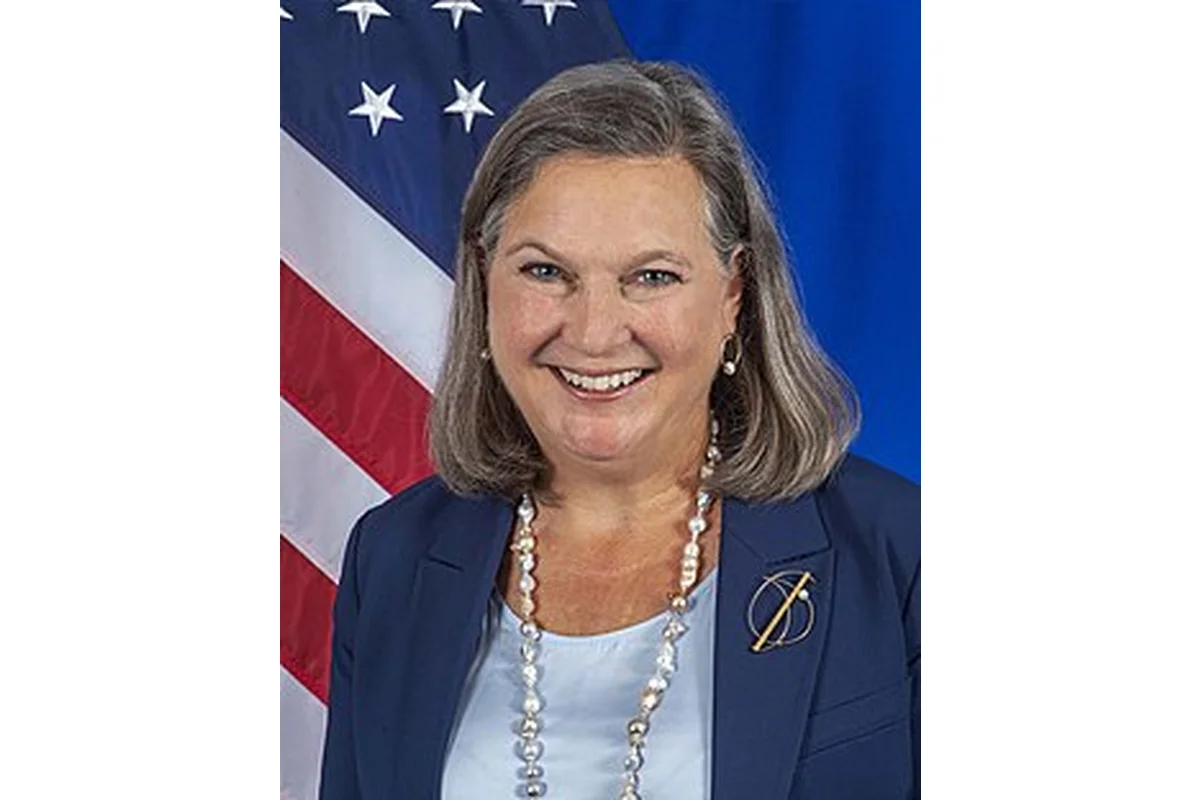
Victoria Nuland Bio
Victoria Jane Nuland (born July 1, 1961) is an American diplomat and career member of the U.S. Foreign Service. She served as Under Secretary of State for Political Affairs from 2021 to 2024 and held the rank of career ambassador, the highest diplomatic rank in the U.S. Foreign Service. Over the course of four decades, she shaped American policy toward Europe, Russia, and Ukraine, and represented the United States at NATO, the State Department podium, and senior levels of the National Security Council.
Before retiring in March 2024, Nuland also led the Center for a New American Security (CNAS) and held distinguished fellowships at Yale University and the Brookings Institution. She is widely recognized for her hands-on role in Washington’s response to the Maidan uprising, the Russia–Ukraine conflict, and broader transatlantic security debates.
Early Life and Background
Victoria Jane Nuland was born on July 1, 1961, in New York City, New York. She is the daughter of Sherwin B. Nuland, a surgeon whose family name was originally Nudelman and whose parents were Jewish immigrants from Bessarabia, and Rhona McKhann (née Goulston), a Christian native of Britain. Nuland has two younger half-siblings, Amelia and William.
She graduated from Choate Rosemary Hall in 1979. She went on to earn a Bachelor of Arts degree from Brown University in 1983, where she studied Russian literature, political science, and history. Her command of Russian and French, and working knowledge of Chinese, would later shape her assignments across Eastern Europe and Asia.
Path to US Politics and Diplomacy
Nuland joined the U.S. State Department’s Foreign Service in 1984. Her early postings took her to Guangzhou, China, from 1985 to 1986 and to the State Department’s Bureau of East Asian and Pacific Affairs in 1987. In 1988 she helped establish the first U.S. embassy in Ulaanbaatar, Mongolia, and served on the Soviet desk until 1990.
From 1991 to 1993 she worked on Russian internal politics at the U.S. embassy in Moscow, focusing on Boris Yeltsin and his government. In 1998, Nuland co-founded the Project for the New American Century (PNAC), a neoconservative lobbying organization. These early assignments and policy networks established her as a specialist in the former Soviet space and laid the groundwork for senior roles in three administrations.
Victoria Nuland Career
Clinton and Bush Administrations (1993–2008)
From 1993 to 1996, during President Bill Clinton’s administration, Nuland served as chief of staff to Deputy Secretary of State Strobe Talbott before becoming deputy director for former Soviet Union affairs. She continued to build expertise on Russia and the newly independent states during this period.
From 2003 to 2005, Nuland served as principal Deputy National Security Adviser to Vice President Dick Cheney, an influential role during the Iraq War. From 2005 to 2008, during President George W. Bush’s second term, she served as the 18th U.S. Ambassador to the North Atlantic Treaty Organization (NATO) in Brussels, where she concentrated on mobilizing European support for the NATO intervention in Afghanistan.
Obama Administration and State Department Spokesperson (2011–2017)
In the summer of 2011, Nuland became special envoy for Conventional Armed Forces in Europe and then served as State Department spokesperson. In May 2013 she was nominated as Assistant Secretary of State for European and Eurasian Affairs and was sworn in on September 18, 2013. In that role she managed diplomatic relations with fifty countries in Europe and Eurasia, as well as with NATO, the European Union, and the Organization for Security and Co-operation in Europe.
During the Maidan Uprising in Ukraine, Nuland made public appearances supporting the Maidan protesters. She became the lead U.S. point person for Ukraine’s Revolution of Dignity, establishing loan guarantees to Ukraine, including a $1 billion loan guarantee in 2014, and arranging non-lethal assistance to the Ukrainian military and border guard. Nuland left the State Department in January 2017, during the transition to the first Trump administration.
Outside Government and CNAS (2018–2019)
On January 24, 2018, The Washington Post published an interview in which Nuland described an exodus of career foreign service officials and dysfunction within the State Department. She warned against American isolationism and called for whole-government responses to international issues. In January 2018 she was also named CEO of the Center for a New American Security (CNAS), a Washington, D.C., think tank specializing in U.S. national security issues. She served in that role until early 2019.
Biden Administration (2021–2024)
On January 5, 2021, President-elect Joe Biden nominated Nuland to serve as Under Secretary of State for Political Affairs under Secretary of State Antony Blinken. Hearings on her nomination were held by the Senate Foreign Relations Committee on April 15, 2021, and the committee favorably reported her nomination on April 21, 2021. The Senate confirmed her unanimously by voice vote on April 29, 2021, and she started her work on May 3, 2021.
In July 2021, Nuland met with Belarusian opposition leader Sviatlana Tsikhanouskaya in Washington. In March 2022 she expressed concern that Russia would gain control of Ukraine’s biological research facilities during its invasion of Ukraine, visited Delhi, and described the war as a major inflection point in the autocratic–democratic struggle. Between July 2023 and February 2024 she served as acting Deputy Secretary of State following the retirement of Wendy Sherman. On March 5, 2024, Secretary of State Antony Blinken announced that Nuland would retire in the coming weeks.
Notable Events and Milestones
In early February 2014, a recording of a phone call between Nuland and U.S. Ambassador to Ukraine Geoffrey Pyatt was published on YouTube, drawing international attention. At a 2016 Senate Foreign Relations Committee hearing, Nuland stated that the 2014 Russian intervention in Ukraine had shattered remaining illusions about the Kremlin’s willingness to abide by international law. In early 2023, at another congressional hearing, she commented on the 2022 Nord Stream pipeline sabotage, and in a February 2024 CNN interview she advocated for congressional approval of a $95.34 billion aid package that included funding for Ukraine.
Victoria Nuland Family
Family Background and Diplomatic Lineage
Nuland was raised in a family shaped by both medicine and migration. Her father, Sherwin B. Nuland, was a surgeon whose parents were Jewish immigrants from Bessarabia. Her mother, Rhona McKhann (née Goulston), was a Christian native of Britain. She has two younger half-siblings, Amelia and William.
Personal Life
Victoria Jane Nuland is married to Robert Kagan, a historian and foreign policy commentator at the Brookings Institution. She is sometimes informally known as Toria Nuland. The couple has two children.