

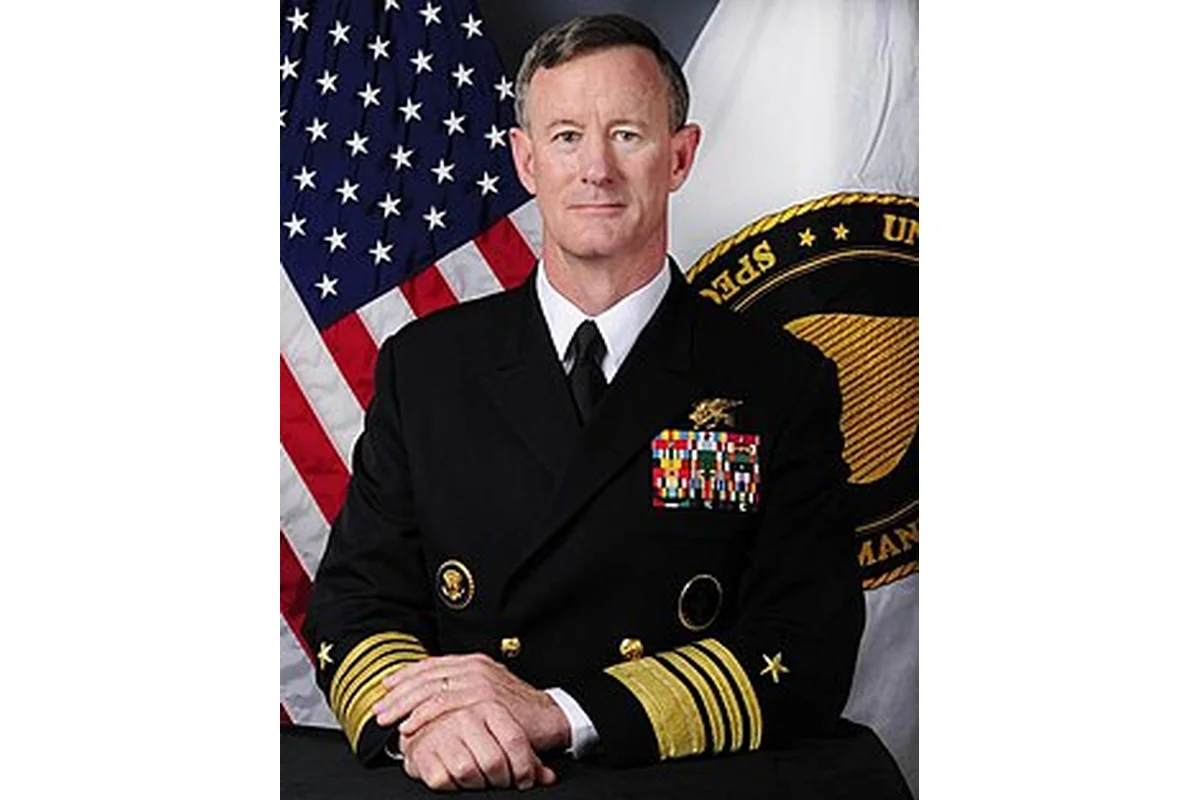
William H. McRaven Bio
William Harry McRaven (born 6 November 1955) is a retired United States Navy four-star admiral, university administrator, and public policy advocate. A former Navy SEAL officer, McRaven is widely recognized for organizing Operation Neptune Spear, the 2011 special operations raid that killed Osama bin Laden in Abbottabad, Pakistan. He served as the ninth commander of United States Special Operations Command from August 2011 to August 2014, and later served as chancellor of The University of Texas System from 2015 to 2018. McRaven has also written on special operations doctrine and remains active in public life, often commenting on veterans’ issues, national security, and civic leadership.
Early Life and Background
William Harry McRaven was born on 6 November 1955 in Pinehurst, North Carolina, United States. He is the son of Col. Claude C. McRaven, a former Spitfire fighter pilot in World War II who later played briefly in the NFL and served as a career Air Force officer, and Anna Elizabeth (Long) McRaven. McRaven grew up with two older sisters, and his father’s Air Force assignments shaped much of his early life. The family was stationed at Pope Air Force Base, now part of Fort Bragg, before relocating to Texas during his elementary school years. The family eventually settled in San Antonio, where McRaven spent much of his formative childhood.
McRaven attended Theodore Roosevelt High School in San Antonio, where he participated in track and field. After high school, he enrolled at the University of Texas at Austin, where he joined the track team as a walk-on athlete and became a member of the Naval Reserve Officers Training Corps. He graduated in 1977 with a bachelor’s degree in journalism and was later named a Distinguished Alumnus of the University of Texas in 2012. McRaven also earned a Master of Arts degree from the Naval Postgraduate School, where he helped establish and was the first graduate of the special operations and low intensity conflict curriculum.
Path to Public Service
McRaven’s entry into the military began shortly after his college graduation, when he was commissioned as an officer in the United States Navy. He volunteered for Basic Underwater Demolition and SEAL training and graduated with BUD/S Class 95 in January 1978, earning the Special Warfare insignia. His early assignments included deployments to the Philippines with Naval Special Warfare Unit One, duty with SEAL Team Six, and a series of command and staff positions across the Navy SEAL community. Over time, McRaven built a reputation for thoughtful leadership and strategic planning, traits that would later define his senior roles in special operations.
As his career progressed, McRaven served in key joint and interagency positions, including duty on the National Security Council Staff and as deputy to General Stanley A. McChrystal during operations in Iraq. These assignments prepared him for larger leadership responsibilities, including command of Joint Special Operations Command and, ultimately, United States Special Operations Command. His growing profile in counterterrorism work eventually led to his central role in planning the raid that killed Osama bin Laden in 2011. In 2014, after 37 years of active service, McRaven retired from the Navy and transitioned to academic and public policy leadership.
William H. McRaven Career
Early Career (1978–2007)
McRaven’s early Navy SEAL career included a range of operational and staff assignments. After completing SEAL training, he served with Naval Special Warfare Unit One in the Philippines and later with SEAL Team Six at Dam Neck, Virginia. He went on to command at multiple levels, including as commanding officer of SEAL Team Three from 1994 to 1996 and as commanding officer of Naval Special Warfare Group One from 1999 to 2001. In 1993, he earned a Master of Arts degree from the Naval Postgraduate School, where his thesis on special operations theory was later republished as the book Spec Ops: Case Studies in Special Operations Warfare: Theory and Practice.
During this period, McRaven also served in joint and interagency roles, including work on the National Security Council Staff and with United States Special Operations Command. He served as a task unit commander during the Persian Gulf War and held command of Special Operations Command Europe from 2006 to 2008. These assignments helped establish his reputation as a strategic thinker in special operations and prepared him for higher command.
Joint Special Operations Command Era (2008–2011)
In June 2008, McRaven took command of Joint Special Operations Command (JSOC), a position he held until August 2011. As JSOC commander, he led the organization’s counterterrorism efforts and played a key role in targeting Al Qaeda networks in Iraq and Afghanistan. He also helped establish Cultural Support Teams to better engage female populations in special operations in Afghanistan. His work at JSOC positioned him at the center of the United States government’s most sensitive counterterrorism operations.
McRaven’s tenure at JSOC culminated in his central role in Operation Neptune Spear. Working closely with CIA Director Leon Panetta, McRaven planned the May 2011 raid that resulted in the death of Osama bin Laden. He developed multiple operational options, ultimately executing a helicopter assault using United States Navy SEALs. In December 2011, he was runner-up for Time Person of the Year for his role in the operation.
United States Special Operations Command (2011–2014)
On April 6, 2011, President Barack Obama nominated McRaven for promotion to four-star admiral and appointment as the ninth commander of United States Special Operations Command. He was confirmed unanimously by the Senate and took command on August 8, 2011, in a ceremony led by Secretary of Defense Leon Panetta in Tampa, Florida. As USSOCOM commander, McRaven oversaw all United States special operations forces and advocated for steady growth in manpower and resources.
McRaven served as USSOCOM commander until August 2014, when his request for retirement was approved after a 37-year Navy career. He retired from the Navy on September 1, 2014, having been the longest serving Navy SEAL on duty at the time of his retirement. His leadership at USSOCOM cemented his reputation as one of the most influential special operations figures of his generation.
University of Texas System Chancellor (2015–2018)
Following his retirement from the Navy, McRaven was selected as chancellor of The University of Texas System in July 2014 and formally took office on January 5, 2015. As chancellor, he oversaw one of the largest public university systems in the United States. His tenure included the controversial $215 million purchase of 300 acres in south Houston for a proposed new campus, a decision that drew criticism from state legislators and competing institutions. In early 2017, McRaven recommended that the Board of Regents sell the land and abandon the expansion plan.
McRaven stepped down from the chancellor position on May 31, 2018, citing chronic health issues and a desire to spend more time with his family. After leaving the University of Texas System, he joined the board of directors of ConocoPhillips in October 2018 and later joined the board of Palantir Technologies in 2022.
Public Commentary and Civic Engagement
Since leaving public office, McRaven has remained an active voice in American public life, particularly on national security, veterans’ affairs, and civic leadership. In August 2018, he wrote an open letter to President Donald Trump in The Washington Post, offering criticism of the president’s decisions and personal conduct and supporting former CIA Director John O. Brennan. He continued to publish commentary in subsequent years, including a 2019 op-ed arguing that the American republic was under attack from the president.
McRaven has also been approached for potential political roles. He was reportedly considered by President Joe Biden for appointment as Secretary of Defense and was approached by the centrist group No Labels as a potential candidate for the 2024 presidential election. In July 2024, he was reportedly considered as a potential running mate for Vice President Kamala Harris before requesting to be taken out of consideration. He has also been a prominent advocate for veterans, serving on the board of the Special Operations Warrior Foundation and, in 2024, receiving the $50 million Courage and Civility Award from Jeff Bezos and Lauren Sánchez.
William H. McRaven Career Awards
McRaven’s distinguished military career has been recognized with several major United States military decorations. His honors include the Defense Distinguished Service Medal, the Defense Superior Service Medal, the Legion of Merit, and the Bronze Star Medal. These awards reflect decades of service in special operations and joint command roles across the United States Navy.
Military Decorations
McRaven’s Defense Distinguished Service Medal recognizes exceptionally distinguished performance of duty contributing to national security or defense of the United States. The Defense Superior Service Medal, the Legion of Merit, and the Bronze Star Medal similarly acknowledge his sustained contributions to special operations and joint military leadership throughout his 37-year Navy career.
William H. McRaven Family
Family Background and Military Lineage
McRaven was raised in a military family shaped by his father, Col. Claude C. McRaven, who served as a Spitfire fighter pilot during World War II, played briefly in the NFL, and went on to have a career as an Air Force officer. His mother, Anna Elizabeth (Long) McRaven, raised the family alongside his father, and McRaven grew up with two older sisters. The family’s military background and frequent relocations influenced his early exposure to armed service and shaped his decision to pursue a career in the United States Navy.
Personal Life
McRaven married Georgeann Brady, a fellow undergraduate at the University of Texas at Austin, in 1978. The couple has three children. After retiring from the Navy, McRaven has continued to balance his public roles with family life, and his decision to leave the University of Texas System in 2018 was partly motivated by a desire to spend more time with his family.