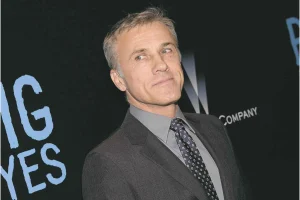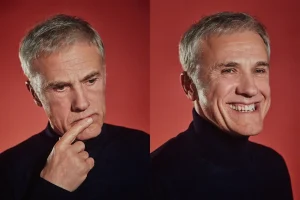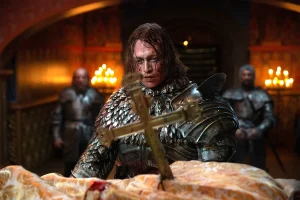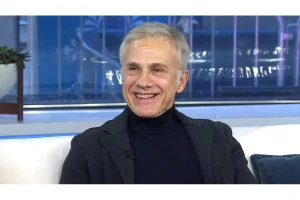
Christoph Waltz Bio
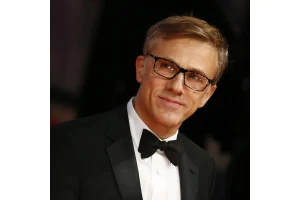
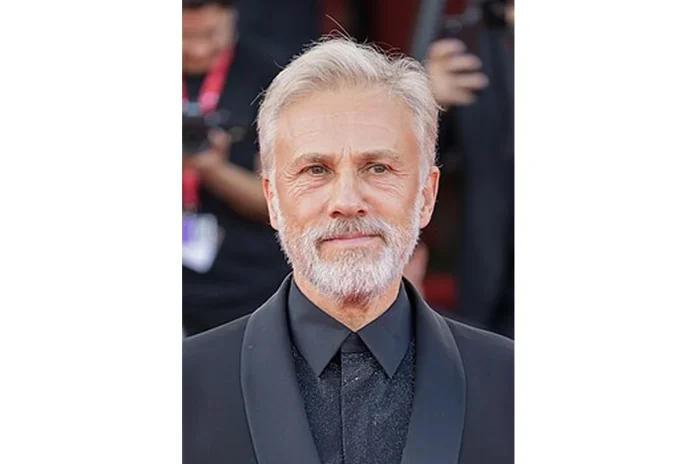
Christoph Waltz (born 4 October 1956) is an Austrian, German, and American actor whose career spans European television, theatre, opera direction, and major Hollywood productions. He first drew global attention for his collaborations with director Quentin Tarantino, winning two Academy Awards for Best Supporting Actor in quick succession. Beyond film, Waltz has maintained a strong presence on the stage and in opera, and he has expanded into directing across both stage and screen. He is regarded as one of the most distinctive character actors of his generation, known for his precision, multilingual fluency, and commanding screen presence.
Early Life and Background
Christoph Waltz was born on 4 October 1956 in Vienna, Austria, to Johannes Waltz, a German set designer, and Elisabeth Urbancic, an Austrian costume designer of Austrian and Slovenian descent. He was raised in a household with deep theatrical roots: his maternal grandmother was Burgtheater and silent film actress Maria Mayen, and several other relatives, including his step-grandfather and great-grandfather, also worked on stage and in early cinema. His maternal grandfather, Rudolf von Urban, was a psychiatrist of Slovene descent and a student of Sigmund Freud. Waltz’s father died when he was seven years old, and his mother later married composer and conductor Alexander Steinbrecher, who had previously been married to the mother of director Michael Haneke, making Haneke and Waltz step-siblings through their shared stepfather.
As a youth, Waltz was captivated by opera rather than theatre, and he attended performances twice a week as a teenager after seeing Puccini’s Turandot with Birgit Nilsson at around the age of ten. He originally hoped to become an opera singer before deciding that his voice was not strong enough for that career. He completed his secondary education at the Theresianum in Vienna and then studied acting at the prestigious Max Reinhardt Seminar. In parallel, he trained in singing and opera at the University of Music and Performing Arts Vienna. In the late 1970s, Waltz also spent time in New York City, where he studied script interpretation with Stella Adler and method acting with Lee Strasberg, an experience he has credited with shaping his analytical approach to performance.
Path to Acting
After returning to Europe, Waltz launched his professional stage career with his debut at the Schauspielhaus Zürich and went on to perform in theatres across Vienna, Salzburg, Cologne, and Hamburg. During the 1980s and 1990s, he became a prolific television actor in the German-speaking world, accumulating a long list of credits in both series and telefilms. In 1990, he expanded into English-language work with a role in the British television series The Gravy Train, which was set within the European Union in Brussels. In 2000, he made his directorial debut with the German television production Wenn man sich traut, marking the beginning of a sideline in directing that would later include opera productions and a feature film.
Throughout the early 2000s, Waltz continued to build a steady résumé in European television and voice work, including narrating the German audiobook of Robert Sapolsky’s A Primate’s Memoir. He remained largely unknown to international audiences until director Quentin Tarantino, who had admired his television work, cast him in a leading role for a World War II film. That decision would change the trajectory of his career and introduce Waltz to a worldwide audience almost overnight.
Christoph Waltz Career
Early Career (1977-2008)
Waltz’s career began in 1977 with stage work in Europe, and over the following three decades he built a substantial reputation as a reliable and versatile performer in German-language television and theatre. His credits during this period spanned crime series, literary adaptations, and family productions, allowing him to develop a broad range of characters. He also branched into voice acting and audiobook narration, further demonstrating his command of language and tone. By the end of the 2000s, he had accumulated enough experience and recognition within the European industry to attract the attention of major international filmmakers.
Although he had not yet achieved widespread fame, Waltz’s body of work in European productions gave him a foundation of craft that prepared him for the demands of larger international projects. His 1990 appearance in the British series The Gravy Train had already shown his ability to perform in English, and his directorial work on Wenn man sich traut in 2000 revealed a deeper interest in storytelling beyond acting. These formative years quietly set the stage for the breakout that would soon follow.
Breakthrough (2009-2012)
Waltz’s international breakthrough arrived with Quentin Tarantino’s 2009 film Inglourious Basterds, in which he portrayed the multilingual SS officer Hans Landa, nicknamed “The Jew Hunter.” Tarantino, who wrote the role with Waltz in mind after seeing his earlier television work, was concerned the part might prove unplayable, but Waltz’s performance was widely celebrated. He won the Best Actor Award at the 2009 Cannes Film Festival and went on to sweep critics’ prizes, including Best Supporting Actor honours from the New York Film Critics Circle, the Boston Society of Film Critics, and the Los Angeles Film Critics Association. He then collected the Golden Globe, the BAFTA, and the Academy Award for Best Supporting Actor, all for the same performance.
He followed that success with a string of high-profile English-language roles, including the gangster Benjamin Chudnofsky in The Green Hornet (2011), a circus owner in Water for Elephants (2011), and a featured part in Roman Polanski’s Carnage (2011). In 2012, Waltz reunited with Tarantino for Django Unchained, playing the German bounty hunter Dr. King Schultz in a part Tarantino wrote specifically for him. Despite a pelvic injury sustained during a training accident before filming, Waltz delivered another acclaimed performance that earned him his second Golden Globe, second BAFTA, and second Academy Award for Best Supporting Actor. These back-to-back honours cemented his status as a leading international actor.
Notable Works and Milestones
Beyond his Tarantino collaborations, Waltz took on a wide range of roles that showcased his range. He starred as Walter Keane in Tim Burton’s Big Eyes (2014) and entered the James Bond franchise as the villain Ernst Stavro Blofeld in Spectre (2015), reprising the role in No Time to Die (2021). Other major credits include The Legend of Tarzan (2016), Downsizing (2017), Alita: Battle Angel (2019), and Wes Anderson’s The French Dispatch (2021). He also directed and starred in the crime film Georgetown (2019), which premiered at the Tribeca Film Festival, and led the Amazon Prime series The Consultant in 2023.
Christoph Waltz Award Nominations
Christoph Waltz has received nominations across major industry awards throughout his career, reflecting consistent recognition from critics, guilds, and festival juries. Among his most prominent nominations is a Primetime Emmy Award nod for his leading role in the 2020 web series Most Dangerous Game. He has also been nominated for Golden Globe and BAFTA honours on multiple occasions in addition to his wins, and he served as a juror at both the 2013 Cannes Film Festival and the 2014 Berlin International Film Festival. These nominations underscore the breadth of his work in film, television, and international festival circuits.
Christoph Waltz Awards Won
Christoph Waltz’s most celebrated honours are his two Academy Awards for Best Supporting Actor, earned for Inglourious Basterds in 2010 and Django Unchained in 2013. He also won two Golden Globe Awards, two BAFTA Awards, and the Best Actor Award at the 2009 Cannes Film Festival, among numerous other critics’ prizes from organisations such as the New York Film Critics Circle, the Boston Society of Film Critics, and the Los Angeles Film Critics Association. In 2024, he received an Icon award at the Newport Beach Film Festival in recognition of his career contributions.
| Award | Wins | Year |
|---|---|---|
| Academy Award for Best Supporting Actor (Inglourious Basterds) | Won | 2010 |
| Academy Award for Best Supporting Actor (Django Unchained) | Won | 2013 |
Christoph Waltz Family
Christoph Waltz comes from a family with deep roots in the performing arts and the broader cultural world of Vienna. His mother, Elisabeth Urbancic, was a costume designer, and his father, Johannes Waltz, worked as a set designer, giving him early exposure to the world of theatre and film. His maternal grandmother, Maria Mayen, was a Burgtheater and silent film actress, and several other relatives on his mother’s side also worked in stage and screen performance. His mother later married composer and conductor Alexander Steinbrecher, whose previous marriage connected Waltz step-sibling-wise to acclaimed Austrian director Michael Haneke. Waltz has four children in total, three sons with his first wife and a daughter with his second wife.
Personal Life
Waltz was first married to Jacqueline Rauch, an American dance therapist originally from New York; the couple lived in London and were married for 17 years before separating. He later married German costume designer Judith Holste, with whom he has a daughter, and the family divides its time between Berlin, Vienna, and Los Angeles. Waltz obtained Austrian citizenship in 2010 and became an American citizen by naturalization in 2020, while also retaining his German citizenship. He has lived and paid taxes in Los Angeles since 2010, a situation he once described by invoking the principle of “no taxation without representation.”