

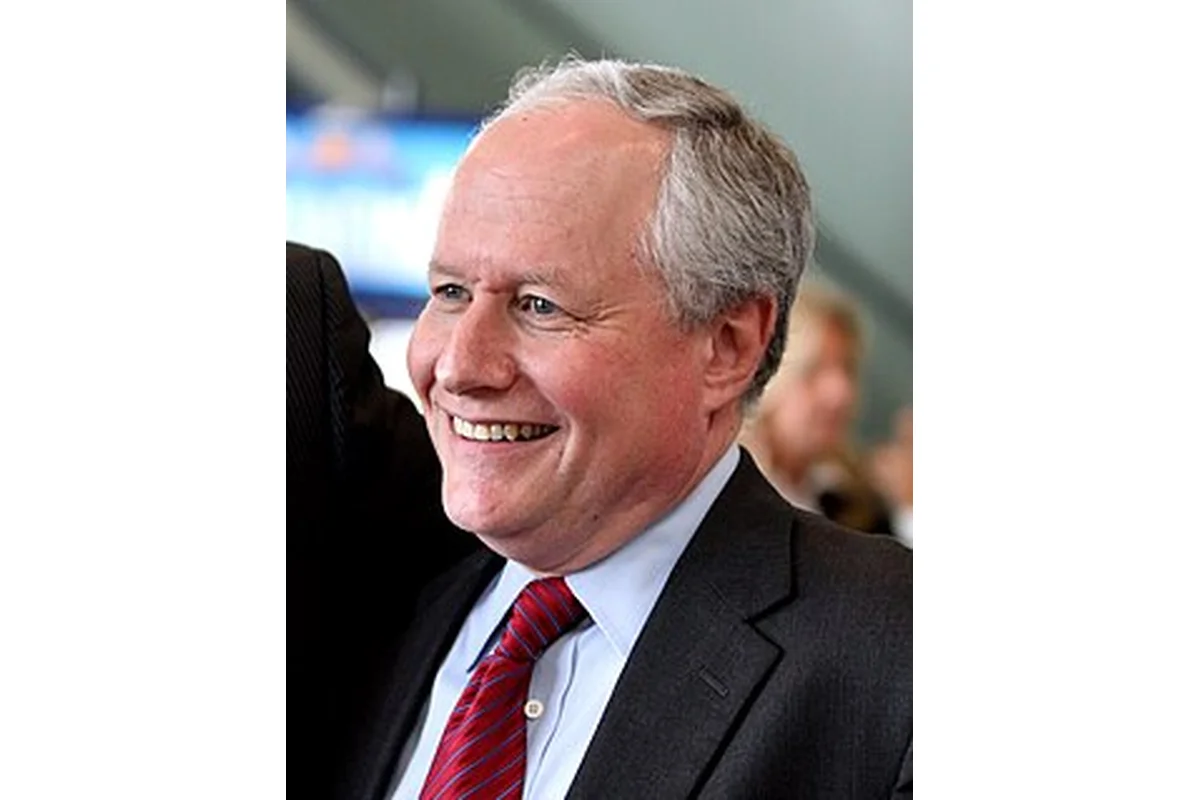
Bill Kristol Bio
William Kristol, born on December 23, 1952, in New York City, is an American neoconservative writer, editor, and political commentator whose career has spanned government service, magazine editing, and televised commentary. He is best known as the co-founder and editor-at-large of The Weekly Standard, the founding editor-at-large of The Bulwark, and the host of the long-running interview program Conversations with Bill Kristol. A frequent presence on cable news networks, he has shaped conservative thought on foreign policy, health care, and the direction of the Republican Party for nearly four decades.
Kristol began his career in Washington as a young intern and rose to serve as chief of staff to two senior Republican officials before launching influential publications. He has been associated with several conservative think tanks, including the Project for the New American Century, which he co-founded in 1997. After decades as a leading voice in the conservative movement, Kristol emerged as one of the most prominent critics of Donald Trump and a key figure in the Never Trump movement.
Early Life and Background
William Kristol was born on December 23, 1952, in New York City, into a Jewish family with deep roots in American intellectual life. His father, Irving Kristol, was a journalist-turned-publisher who served as managing editor of Commentary magazine, founded the journal The Public Interest, and has been widely described as the godfather of American neoconservatism. His mother, Gertrude Himmelfarb, was a distinguished historian of intellectual life in the United States and Great Britain, and a prominent conservative scholar in her own right. Growing up in such a household gave the young Kristol a front-row seat to the debates that would shape postwar American conservatism.
Kristol attended the Collegiate School for Boys in Manhattan, a private institution long associated with New York’s elite. From there he moved to Harvard University, where he earned a bachelor’s degree in government in 1973 and, six years later, a Ph.D. in political science. While at Harvard, he met his future wife, Susan Scheinberg, a fellow student who would go on to earn a doctorate in classics. The Ivy League environment of the early 1970s, combined with the example set by his parents, helped forge his commitment to conservative ideas grounded in scholarship and public service.
Path to U.S. Politics
Kristol’s introduction to political work came early. During the summer of 1970, while still an undergraduate, he served as an intern at the White House, an experience that gave him firsthand exposure to the rhythms of federal government. In 1976, fresh from graduate study, he joined the campaign of United States Senator Daniel Patrick Moynihan, serving as deputy issues director during the Democratic primary. That same period marked the beginning of a long association with the broader world of political strategy, as Kristol moved between academic posts and campaign work.
After teaching political philosophy and U.S. politics at the University of Pennsylvania and at Harvard’s Kennedy School of Government, Kristol returned to Washington in 1985 to serve as chief of staff to United States Secretary of Education William Bennett during the Reagan administration. Three years later, in 1988, he managed Alan Keyes’s unsuccessful Maryland Senate campaign against Paul Sarbanes, a defeat that did little to slow his rise. In 1989, President George H. W. Bush appointed him chief of staff to Vice President Dan Quayle, a role that earned him the nickname “Dan Quayle’s brain” from The New Republic and cemented his reputation inside the Republican establishment.
Bill Kristol Career
Early Career (1985-1994)
Kristol’s early government years coincided with the late Reagan and first Bush administrations. As chief of staff to Education Secretary William Bennett from 1985 onward, he helped shape conservative education policy at the federal level. His move to the vice president’s office in 1989 placed him at the center of executive branch decision-making during a period that included the end of the Cold War and the lead-up to the Gulf War.
After the defeat of President George H. W. Bush in 1992, Kristol helped lay the intellectual groundwork for the resurgent conservative movement of the 1990s. He served as chairman of the Project for the Republican Future from 1993 to 1994 and directed the Bradley Project at the Lynde and Harry Bradley Foundation in Milwaukee in 1993. That same year he emerged as a leading strategist in the campaign against the Clinton administration’s health care reform proposal, famously counseling Republicans in a private memo to “kill” the bill rather than seek to amend it, a strategy that helped define the partisan battles of the decade.
Breakthrough (1994-2003)
The defining moment of Kristol’s post-government career came in 1995, when he and John Podhoretz launched The Weekly Standard, a conservative newsmagazine backed by News Corp chairman Rupert Murdoch. The publication quickly became one of the most influential voices on the American right, mixing sharp reporting on politics with vigorous advocacy of muscular foreign policy. Under Kristol’s editorship, the magazine helped rally opposition to the Clinton White House and shaped the agenda of the Republican Congress.
Kristol’s foreign policy work reached a new intensity in 1997, when he co-founded the Project for the New American Century with the scholar Robert Kagan. The think tank became a leading advocate of a robust American role in the world and a strong defender of U.S. military power. In 1998, Kristol and Kagan wrote in The New York Times that “bombing Iraq isn’t enough” and called on President Clinton to move toward removing Saddam Hussein from power, an early preview of the argument they would make more forcefully after the September 11 attacks.
After the 2001 terrorist attacks, Kristol emerged as one of the most prominent supporters of the Bush Doctrine. In 2003, he and Lawrence F. Kaplan published The War Over Iraq: America’s Mission and Saddam’s Tyranny, a book that laid out their case for the invasion of Iraq. Kristol also served as a foreign policy advisor to Senator John McCain’s presidential campaign, helping him cultivate ties across the Republican foreign policy establishment.
Independent Era (2021-Present)
After decades as a leading figure inside the Republican Party, Kristol left the GOP in 2021, registering as an Independent. He continues to serve as editor-at-large of The Bulwark, a center-right publication founded by his longtime colleague Charlie Sykes, and contributes to its accompanying Substack. He has remained a regular commentator on cable news, including appearances on CNN, ABC, NBC, and MSNBC, and is widely regarded as one of the sharpest critics of the post-Trump conservative movement.
Kristol’s most visible platform remains Conversations with Bill Kristol, the long-form interview program he has hosted since the summer of 2014. Produced with Andy Zwick and released biweekly under the auspices of the Foundation for Constitutional Government, the program features extended conversations with scholars, journalists, and political figures ranging from Garry Kasparov and Anne Applebaum to Harvey Mansfield and Larry Summers. The series has helped keep Kristol connected to a wide network of thinkers and remains a focal point of his public life.
Notable Events and Milestones
Among Kristol’s signature achievements were his role in the defeat of the Clinton health care plan in 1993, the founding of The Weekly Standard in 1995, and the co-founding of the Project for the New American Century in 1997. He was an early advocate of the Iraq War, a prominent supporter of the 2007 troop surge, and an early promoter of Sarah Palin as a potential vice presidential candidate in 2008, a recommendation he later publicly recanted. More recently, he founded Defending Democracy Together and its related projects, including Republicans for the Rule of Law and Republican Voters Against Trump, and he endorsed Joe Biden in 2020 and Kamala Harris in 2024.
Bill Kristol Career Wins
Although Kristol has never held elected office, his career is marked by a series of influential editorial and organizational accomplishments. He helped defeat major pieces of legislation, founded leading political magazines, and built institutions that shaped Republican politics for a generation.
Editorial and Institutional Highlights
Kristol’s most enduring legacy is The Weekly Standard, which he co-founded in 1995 and led for more than two decades as a flagship voice for neoconservative thought. He has also held editorial positions at The New York Times, where he wrote a weekly opinion column from January 2008 to January 2009, and at The Bulwark, where he now serves as editor-at-large. Across these roles, he has helped define the terms of debate on health care, foreign policy, and the future of the Republican Party.
Other Wins and Achievements
Beyond his editorial work, Kristol helped lead the Project for the New American Century, served as chairman of the New Citizenship Project from 1997 to 2005, and sat on the boards of the Manhattan Institute for Policy Research, the Foreign Policy Initiative, Keep America Safe, the Emergency Committee for Israel, and the Susan B. Anthony List. He was a regular panelist on ABC’s This Week from 1996, on Fox News Sunday for ten years, and a frequent contributor to Time.
Bill Kristol Family
Family Background and Political Lineage
Kristol comes from one of the most influential intellectual families in modern American conservatism. His father, Irving Kristol, was the founding editor of The Public Interest and a longtime managing editor of Commentary magazine, widely credited as the godfather of the neoconservative movement. His mother, Gertrude Himmelfarb, was a celebrated historian whose work on Victorian Britain and the Enlightenment shaped a generation of conservative scholarship. The couple’s household was a meeting place for many of the thinkers who defined postwar American conservatism.
Personal Life
Kristol married Susan Scheinberg in 1975. The two met as students at Harvard, and Scheinberg has gone on to earn a Ph.D. in classics. The couple has three children. Their daughter, Anne Kristol, is married to writer Matthew Continetti, editor-in-chief of The Washington Free Beacon. Their son, Joseph Kristol, served in the United States Marine Corps in Afghanistan, worked at the consulting firm McKinsey & Company, and later served as legislative director for Senator Tom Cotton. The family resides in McLean, Virginia.