

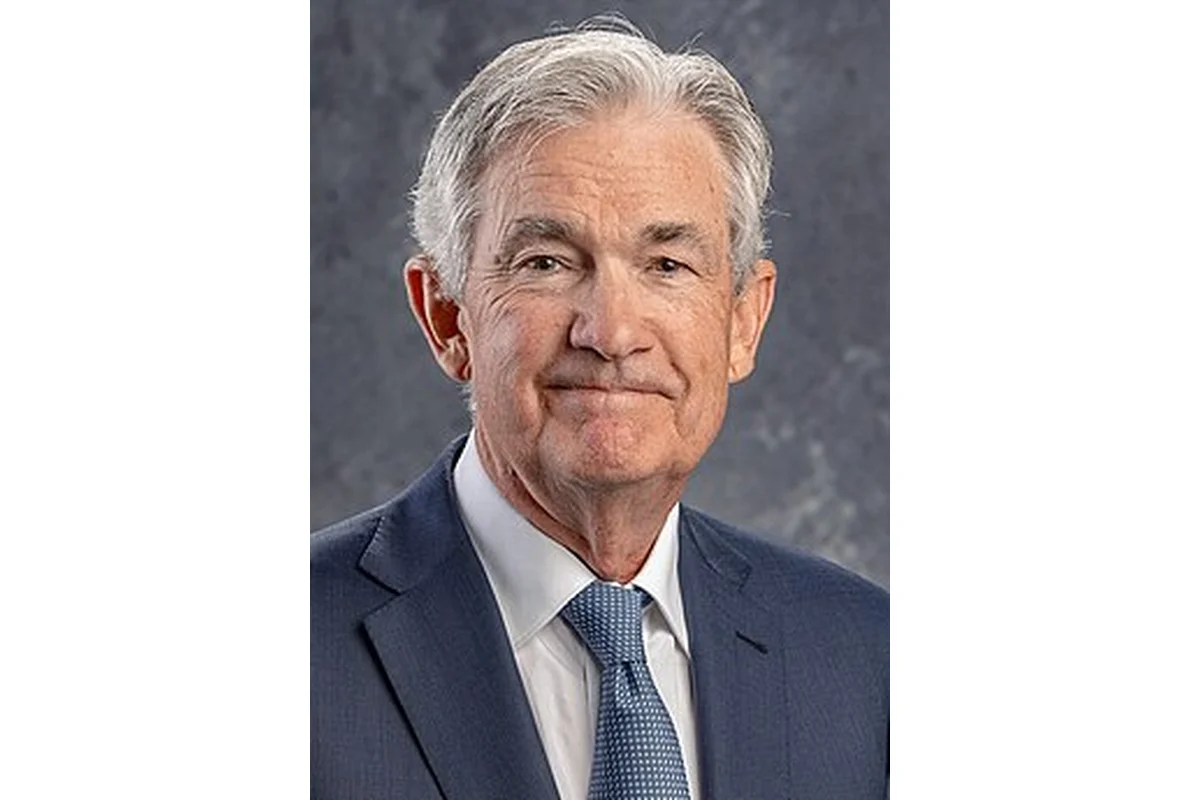
Jerome Powell Bio
Jerome Hayden Powell is an American central banker who has served as the 16th Chair of the Federal Reserve since February 2018. A native of Washington, D.C., he is a registered Republican and a former attorney, investment banker, and private equity executive who transitioned into senior public service roles in the early 1990s. Over more than three decades in law, finance, and government, Powell has built a reputation as a consensus-builder in Washington and as a steady hand at the helm of the nation’s central bank during periods of major economic stress.
Early Life and Background
Jerome Hayden Powell was born on February 4, 1953, in Washington, D.C., to Patricia (née Hayden) and Jerome Powell Sr., a lawyer in private practice. His maternal grandfather, James J. Hayden, was Dean of the Columbus School of Law at Catholic University of America and later a lecturer at Georgetown Law School. Powell grew up in a large family and has five siblings, and his early years in the nation’s capital exposed him to public policy and public service from a young age.
Powell graduated from Georgetown Preparatory School, a Jesuit university-preparatory school, in 1971. He went on to earn a Bachelor of Arts in political science from Princeton University in 1975, where his senior thesis was titled “South Africa: Forces for Change.” After spending a year as a legislative assistant to Republican U.S. Senator Richard Schweiker of Pennsylvania, Powell attended the Georgetown University Law Center, where he served as editor-in-chief of the Georgetown Law Journal and earned his Juris Doctor in 1979.
Path to Public Service
After law school, Powell moved to New York City and spent two years as a law clerk to Judge Ellsworth Van Graafeiland of the U.S. Court of Appeals for the Second Circuit. He then entered private practice at the law firm Davis Polk & Wardwell before moving to Werbel & McMillen in 1983. From 1984 to 1990, he worked at the investment bank Dillon, Read & Co., concentrating on financing, merchant banking, and mergers and acquisitions, and rising to vice president.
Between 1990 and 1993, Powell worked in the United States Department of the Treasury under President George H. W. Bush, eventually becoming Under Secretary of the Treasury for Domestic Finance in 1992. During that period, he oversaw the investigation and sanctioning of Salomon Brothers after a trader submitted false bids for a U.S. Treasury security and was involved in negotiations that brought Warren Buffett in as chairman of the firm. He later held senior roles at Bankers Trust, returned to Dillon, Read & Co., became a partner at the Carlyle Group from 1997 to 2005, and founded the boutique private equity firm Severn Capital Partners.
Jerome Powell Career
Federal Reserve Board of Governors (2012–2018)
In December 2011, President Barack Obama nominated Powell to the Federal Reserve Board of Governors, the first time since 1988 that a president had nominated a member of the opposition party for such a position. He took office on May 25, 2012, filling the unexpired term vacated by Frederic Mishkin, and in June 2014 he was reappointed to a full 14-year term following a 67–24 Senate confirmation vote.
During his tenure as a governor, Powell built a reputation as a consensus-builder in Washington. He expressed skepticism about the third round of quantitative easing launched in September 2012 but ultimately voted for it, endorsed reforms to end the problem of institutions deemed too big to fail, and in April 2017 was assigned to head the bank oversight committee. In speeches in 2017, he called the status quo of Fannie Mae and Freddie Mac unsustainable and urged careful preservation of stronger capital and liquidity rules while recommending the Volcker Rule be re-written to exclude smaller banks.
First Trump Administration (2018–2021)
On November 2, 2017, President Donald Trump nominated Powell to serve as Chair of the Federal Reserve, succeeding Janet Yellen. The Senate Banking Committee approved the nomination 22–1, with Senator Elizabeth Warren as the lone dissenter, and the full Senate confirmed Powell on January 23, 2018, by an 84–13 vote. He was sworn in on February 5, 2018.
Early in his tenure, Powell continued to raise U.S. interest rates and announced a plan to reduce the Fed’s asset portfolio from $4.5 trillion toward a range of $2.5–3 trillion through quantitative tightening, drawing sharp public criticism from President Trump. After financial markets turned volatile in late 2018, the Fed abandoned quantitative tightening in early 2019 and, in October 2019, announced a return to balance sheet expansion, actions some observers labeled “QE4.” Throughout 2018 and 2019, Trump repeatedly questioned Powell’s approach, at one point calling him an “enemy” and privately discussing with White House counsel the possibility of firing him; Powell responded that he would not resign if asked.
In early 2020, Powell launched an unprecedented set of measures to counter the financial-market impact of the COVID-19 pandemic, including a dramatic expansion of the Fed’s balance sheet, direct purchases of corporate bonds, and new direct lending programs. The scale of monetary stimulus was the loosest in the history of the Goldman Sachs U.S. Financial Conditions Index and was credited with both stabilizing markets and contributing to a broad asset-price boom. Powell received bipartisan praise for the response, including from President Trump, and in 2020 was named Forbes Person of the Year in Crypto amid a dramatic rise in cryptocurrency prices.
Biden Administration (2021–2025)
Under President Joe Biden, Powell continued to manage the economic recovery from the pandemic, describing inflation in 2022 as a “severe threat” to the U.S. recovery. In response to widespread high inflation readings, the Federal Reserve began its rate hike cycle on March 17, 2022, raising the benchmark rate by 25 basis points and proceeding to hike rates ten more times through July 2023 for a cumulative increase of 5.25 percent, as U.S. CPI peaked at 9.1 percent year-over-year in July 2022.
Renominated by President Biden on November 22, 2021, after his initial nomination expired and was returned in January 2022, Powell was confirmed by the full U.S. Senate on May 12, 2022, in an 80–19 vote, with the Senate Banking Committee having favorably reported the nomination 22–1. He was sworn in for a second term on May 23, 2022, running through May 2026, and during the period retired his earlier use of the term “transitory” to describe inflation.
Second Trump Administration and Legal Pressure (2025–Present)
With the start of President Trump’s second term in 2025, the administration expressed ongoing disapproval of the Fed’s maintenance of higher interest rates. When asked whether the President has the authority to remove a sitting Fed Chair, Powell stated that doing so is “not permitted under the law.” In April 2025, Trump posted on Truth Social that “Powell’s termination cannot come fast enough,” and on July 16, 2025, the President reportedly penned a letter to dismiss Powell as Fed Chair before later denying those reports to reporters.
In 2025, Powell became the subject of a federal investigation related to his congressional testimony, and in July 2025, Russell Vought, director of the Office of Management and Budget, was reported to be reviewing a $2.5 billion renovation of the Eccles Building as possible grounds for a “for cause” removal. On January 11, 2026, Powell announced that the Department of Justice had served the Federal Reserve with grand jury subpoenas two days earlier, threatening a criminal indictment connected to his June 2025 testimony before the Senate Banking Committee about a multi-year renovation of historic Federal Reserve office buildings. Powell framed the threat as a consequence of the Fed setting interest rates based on its public mandate rather than presidential preferences.
The investigation drew an unusual level of institutional support. Former Fed Chairs Alan Greenspan, Ben Bernanke, and Janet Yellen, former U.S. Treasury Secretaries Henry Paulson, Timothy Geithner, Robert Rubin, and Jacob Lew, and economists including Glenn Hubbard, Kenneth Rogoff, and Jared Bernstein issued a joint statement calling the inquiry “an unprecedented attempt to use prosecutorial attacks to undermine” Fed independence. On January 12, central bank governors from 11 institutions, including the European Central Bank, the Bank of England, and the Bank of Canada, released a statement saying they “stand in full solidarity with the Federal Reserve System and its Chair Jerome H Powell.” Republican Senators Thom Tillis and Lisa Murkowski announced they would oppose any Federal Reserve nominations until the legal matter was resolved, and a Gallup poll from December 2025 ranked Powell the most popular American political official of 13 surveyed.
Notable Events and Milestones
Among Powell’s defining moments are the unprecedented COVID-19 monetary interventions of early 2020, the aggressive rate hike cycle of 2022–2023 that lifted the benchmark rate by 5.25 percent, the bipartisan 80–19 Senate confirmation of his second term in 2022, and the rare joint public defenses issued in January 2026 by former Fed leaders, former Treasury Secretaries, and a coalition of foreign central banks in support of the Fed’s institutional independence.
Jerome Powell Family
Family Background
Powell was born into a Washington, D.C., legal family: his father, Jerome Powell Sr., was a lawyer in private practice, and his maternal grandfather, James J. Hayden, was Dean of the Columbus School of Law at Catholic University of America and later a lecturer at Georgetown Law School. He has five siblings.
Personal Life
Jerome Powell married Elissa Leonard in 1985 at the Episcopal Washington National Cathedral. They have three children and live in Chevy Chase Village, Maryland, where Elissa is chair of the board of managers of the village. Powell is a registered Republican and a longtime fan of the American rock band the Grateful Dead, and he has served on the boards of charitable and educational institutions including DC Prep, the Bendheim Center for Finance at Princeton University, and The Nature Conservancy. Based on public filings, as of 2019, his net worth was estimated to be in a range between $20 and $55 million.