
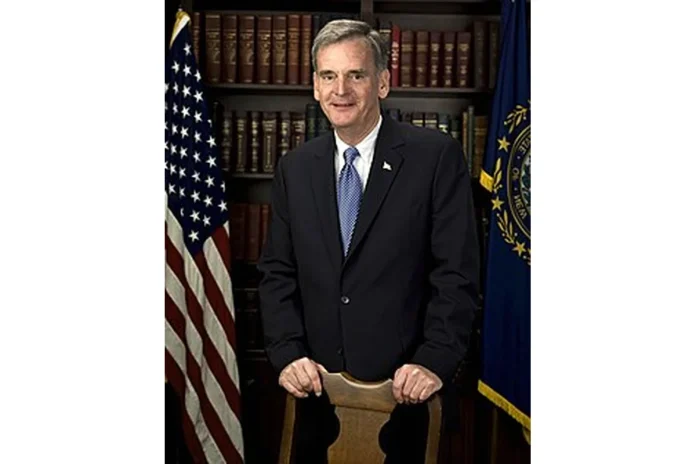
Judd Gregg Bio
Judd Alan Gregg is an American politician and attorney who built a long career in public service in New Hampshire. A member of the Republican Party, he served as the 76th governor of New Hampshire from 1989 to 1993 and then represented the state in the United States Senate for nearly two decades, from 1993 to 2011. During his time in the Senate, he chaired both the Senate Health Committee and the Senate Budget Committee, shaping policy on two of the country’s most pressing issues.
Before entering elective office, Gregg worked as an attorney and businessman in his hometown of Nashua, New Hampshire. After leaving the Senate, he moved into the private sector, serving as an advisor to Goldman Sachs and briefly as chief executive officer of the Securities Industry and Financial Markets Association. He later returned to public engagement as chair of the Public Advisory Board at the New Hampshire Institute of Politics at Saint Anselm College.
Early Life and Background
Judd Alan Gregg was born on February 14, 1947, in Nashua, New Hampshire. He grew up in a family with deep roots in state government, as the son of Hugh Gregg, who served as governor of New Hampshire from 1953 to 1955, and Catherine Gregg, née Warner. His father’s career in public life provided an early window into the workings of state government and politics.
Gregg prepared for college at Phillips Exeter Academy, one of the country’s most respected secondary schools, from which he graduated in 1965. He went on to earn a Bachelor of Arts from Columbia University in 1969. Following his undergraduate studies, he attended Boston University School of Law, where he received a Juris Doctor in 1972 and a Master of Laws in 1975, training that prepared him for a career in law and public policy.
Path to US Politics
After completing his legal education, Gregg returned to Nashua and built a career as an attorney and businessman, establishing himself in the local community. His interest in public service drew him into state-level politics, and in 1979 he won his first elective office, a seat on the Executive Council of New Hampshire, where he served until 1981. The Executive Council, which reviews state contracts and pardons, gave him direct experience with state budgeting and oversight.
In 1980, Gregg won election to the United States House of Representatives, beginning his career in federal office. He was reelected three times, in 1982, 1984, and 1986, building a record of conservative fiscal stewardship and a reputation for working across party lines on regional issues. By the late 1980s, he was ready to seek a larger office, setting the stage for his run for governor.
Judd Gregg Career
Early Career (1979–1988)
Gregg’s first notable election came in 1979, when he joined the Executive Council of New Hampshire. Two years later, in 1980, he won a seat in the U.S. House of Representatives. He served four terms in Congress, representing his New Hampshire district and focusing on budget, defense, and economic issues that shaped his later Senate work.
During his years in the House, Gregg developed the fiscal conservative profile that would define his career. He built relationships with colleagues on both sides of the aisle and earned a reputation for thoughtful deliberation. In 1988, he chose not to seek another term in the House and instead set his sights on the governorship of New Hampshire.
Governor of New Hampshire (1989–1993)
Gregg won the 1988 gubernatorial election and took office in 1989, becoming the 76th governor of New Hampshire. New Hampshire was, and remains, one of only two states that elect their governors to two-year terms rather than four-year terms. Gregg won reelection in 1990, giving him a clear mandate to pursue his policy priorities.
As governor, he emphasized fiscal discipline and worked to balance the state budget. By the end of his tenure in 1993, the state recorded a $21 million surplus, an achievement he often highlighted in his later campaigns. His time in the statehouse established him as a leading New Hampshire Republican and prepared him for a successful run for federal office.
U.S. Senate Tenure (1993–2011)
In 1992, Gregg launched his first campaign for the U.S. Senate, seeking the seat being vacated by two-term Republican Warren Rudman. He won the election, defeating Democrat John Rauh, and was sworn in as a United States senator in 1993. The seat gave him a national platform to advance his views on health, budget, and economic policy.
Gregg won reelection in 1998, defeating George Condodemetraky, and again in 2004, when he faced 94-year-old Democratic campaign finance activist Doris “Granny D” Haddock and won by a 66% to 34% margin. In January 2005, his Senate Republican colleagues elected him to chair the U.S. Senate Committee on Budget, a position he used to advocate for lower federal spending. He also chaired the Senate Health Committee, shaping legislation on health care and biomedical research.
Beyond his committee work, Gregg engaged in broader Senate activities, including service on the Congressional Oversight Panel created to oversee the implementation of the Emergency Economic Stabilization Act, or TARP. He later stepped aside from that role, citing his heavy Senate workload. He was the leading Republican negotiator and author of the TARP program, which bailed out major financial institutions during the 2008 financial crisis.
Commerce Secretary Nomination and Withdrawal (2009)
On February 2, 2009, news outlets reported that President Barack Obama had selected Gregg to serve as the next United States Secretary of Commerce. The nomination would have required him to resign his Senate seat, and political attention quickly turned to who would replace him. On February 12, 2009, Gregg withdrew his name from consideration, citing disagreements over the 2010 census and the economic stimulus package then moving through Congress.
White House officials suggested that Gregg had not followed through on commitments to support the administration’s economic priorities, while Gregg publicly accepted responsibility for the outcome. In remarks to the press, he reflected that he had spent thirty years operating as his own independent voice and had underestimated the difficulty of representing another administration’s agenda.
Post-Senate Career (2011–Present)
After deciding not to seek reelection in 2010, Gregg transitioned to the private sector. On May 27, 2011, Goldman Sachs announced that he had been named an international advisor to the firm. In May 2013, he was named chief executive officer of the Securities Industry and Financial Markets Association, a leading Wall Street lobbying group, though he stepped down from that role in December 2013 and became a senior adviser.
He also returned to public engagement by chairing the Public Advisory Board at the New Hampshire Institute of Politics at Saint Anselm College, an institution he helped establish in 1999. Throughout his post-Senate years, he has remained an active voice in Republican politics, endorsing Mitt Romney in 2008, Jeb Bush and then John Kasich in 2016, and Nikki Haley in the 2024 Republican presidential primary.
Notable Events and Milestones
Among Gregg’s signature achievements were his chairmanships of the Senate Budget Committee and the Senate Health Committee, his role in shaping the TARP program, and his help in securing federal funds for New Hampshire institutions, including the University of New Hampshire and Plymouth State University. He also played a memorable role in presidential politics, standing in for John Kerry and Al Gore during debate preparation for George W. Bush in 2000 and 2004. In 2005, he won more than $850,000 from the D.C. Lottery after buying $20 worth of Powerball tickets.
Judd Gregg Career Wins
Judd Gregg compiled a long record of electoral victories in New Hampshire, from the Executive Council to the U.S. House, the governorship, and three U.S. Senate races. His wins reflected broad support across the state and helped him rise from local office to a senior role in national Republican leadership.
US Politics Highlights
Gregg’s first political victory came in 1979, when he won a seat on the Executive Council of New Hampshire. He went on to win election to the U.S. House in 1980 and secured reelection in 1982, 1984, and 1986. In 1988, he won the governorship of New Hampshire, and he won reelection in 1990 in a state that, with Vermont, continued to elect governors to two-year terms.
He then won three U.S. Senate races, in 1992, 1998, and 2004. His 2004 victory over Doris “Granny D” Haddock was his most decisive Senate win, with a 66% to 34% margin. After 2010, he did not seek further political office, focusing instead on advisory and advocacy roles.
Other Wins & Achievements
Beyond elections, Gregg earned recognition for his policy work, including praise from Republicans for Environmental Protection, alongside Senator John E. Sununu, for helping pass the New England Wilderness Act, which designated nearly 100,000 acres in New Hampshire and Vermont as wilderness. He also received an environmental harm demerit from the same group for a 2006 budget resolution related to Arctic National Wildlife Refuge drilling.
| Position | Wins | Years |
|---|---|---|
| Executive Council of New Hampshire | 1 | 1979 |
| U.S. House of Representatives | 4 | 1980, 1982, 1984, 1986 |
| Governor of New Hampshire | 2 | 1988, 1990 |
| United States Senate | 3 | 1992, 1998, 2004 |
Judd Gregg Family
Family Background and Political Lineage
Gregg is the son of Hugh Gregg, who served as governor of New Hampshire from 1953 to 1955, and Catherine Gregg, née Warner. Growing up in a household shaped by state politics gave him an early understanding of public service and helped shape his own path into New Hampshire government.
Personal Life
Gregg married Kathleen MacLellan Gregg in 1973, and the couple has three children: daughters Molly and Sarah, and a son, Joshua. He is a member of the Congregationalist Church. After leaving the Senate, he continued his involvement in policy and civic life through advisory and advocacy roles, while maintaining ties to his New Hampshire roots.