
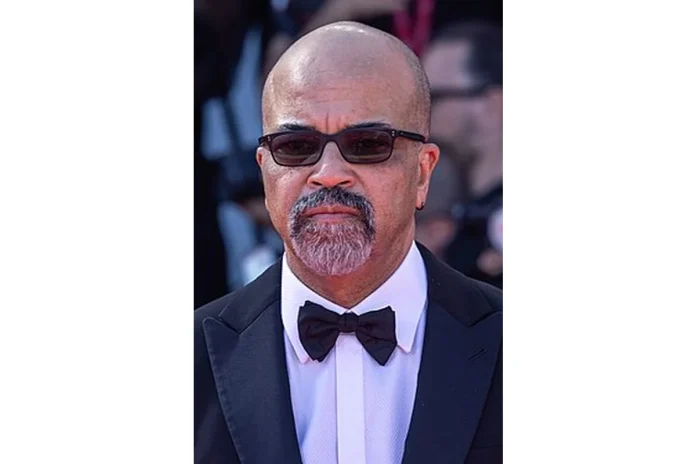
Jeffrey Wright Bio
Jeffrey Charles Wright (born December 7, 1965) is an American actor recognized for his range across stage, film, and television. Over a career that began in the early 1990s, he has built a reputation for thoughtful, carefully layered performances in independent and major studio projects alike. His accolades include a Primetime Emmy Award, a Tony Award, and a Golden Globe Award, along with a nomination for the Academy Award for Best Actor. Wright is widely regarded as one of the most versatile character actors of his generation, with roles that span historical biopics, comic book films, and prestige television.
Beyond his on-screen work, Wright has maintained an active presence in theater and in social-impact projects. He is based in Brooklyn, New York, and continues to take on roles that challenge conventional leading-man expectations. His later career has been marked by steady critical acclaim and a willingness to support new voices in film and documentary work.
Early Life and Background
Jeffrey Charles Wright was born on December 7, 1965, in Washington, D.C. His mother worked as a customs lawyer, and his father died when Jeffrey was still a child. Growing up in the nation’s capital, he was raised in a family that valued education and public service, a backdrop that shaped his early worldview and his interest in storytelling.
Wright graduated from St. Albans School, a well-known college-preparatory school in Washington, D.C. He went on to attend Amherst College, where he earned a bachelor’s degree in political science. During his junior year, a friend’s performance in an acting class inspired him to enroll in the same elective. That experience redirected his ambitions away from law school and toward a career on the stage. He also played lacrosse while at Amherst.
After college, Wright briefly enrolled in the MFA acting program at New York University Tisch School of the Arts, attending for two months in 1988. He left the program to appear in Les Blancs at Arena Stage in Washington, D.C., and continued with the production when it transferred to the Huntington Theatre Company. The experience confirmed his decision to pursue acting full time.
Path to Acting
Wright began his professional career in theater, appearing off-Broadway and in regional productions in New York City and Washington, D.C. In 1991, he joined John Houseman’s national touring repertory company, The Acting Company, performing in productions of A Midsummer Night’s Dream and Athol Fugard’s Blood Knot. These early stage roles helped him develop the discipline and craft that would define his later work.
His first major screen appearance came in 1990, when he played an attorney in Alan J. Pakula’s legal drama Presumed Innocent. He also guest-starred in George Lucas’s The Young Indiana Jones Chronicles as a fictionalized Sidney Bechet, and appeared in the television series Homicide: Life on the Street. These roles introduced him to a wider audience and opened the door to larger film and television projects.
In 1993 and 1994, Wright took on the role of Norman “Belize” Arriaga in Tony Kushner’s Broadway production of Angels in America. His portrayal of a gay nurse caring for Roy Cohn as he dies of AIDS earned him the Tony Award for Best Featured Actor in a Play. The role established him as a serious dramatic actor capable of carrying complex, politically charged material.
Jeffrey Wright Career
Early Career (1990–2003)
Wright’s first leading film role came in 1996, when he portrayed painter Jean-Michel Basquiat in the biographical film Basquiat. The performance drew strong reviews, with critic Roger Ebert praising what he called a “performance of almost mystical opacity.” Wright earned an Independent Spirit Award nomination for Best Debut Performance for the role, signaling his arrival as a film actor of note.
Throughout the late 1990s and early 2000s, he continued to build his filmography with roles in Woody Allen’s Celebrity (1998), Ang Lee’s Ride with the Devil (1999), Shaft (2000), and Hamlet (2000). In 2001, he starred as Martin Luther King Jr. in the HBO television film Boycott, a performance that brought him an AFI Award. He also portrayed Howard Bingham in Michael Mann’s Ali (2001), appearing alongside Will Smith, Jamie Foxx, and Jon Voight.
In 2003, Wright reprised his role as Belize in HBO’s acclaimed miniseries adaptation of Angels in America. The performance earned him a Primetime Emmy Award for Outstanding Supporting Actor in a Limited or Anthology Series or Movie, and a Golden Globe Award for Best Supporting Actor in a Series, Miniseries, or Television Film.
Breakthrough (2004–2015)
Wright’s career expanded significantly in the mid-2000s with a series of high-profile supporting roles. He appeared in Jonathan Demme’s The Manchurian Candidate (2004), Stephen Gaghan’s Syriana (2005), and Jim Jarmusch’s Broken Flowers (2005), the latter earning him an Independent Spirit Award nomination for Best Supporting Male. In 2006, he began a long-running association with the James Bond franchise when he played Felix Leiter in Casino Royale, a role he would reprise in Quantum of Solace (2008) and No Time to Die (2021).
In 2008, Wright portrayed Colin Powell in Oliver Stone’s biographical drama W. and took on the role of blues musician Muddy Waters in Cadillac Records, a biopic loosely based on the rise and fall of Chess Records. He returned to Broadway in 2002 for Suzan-Lori Parks’s Topdog/Underdog, earning a Tony Award nomination for Best Actor in a Play for his performance as Lincoln opposite Mos Def.
The early 2010s brought a string of varied film roles, including Source Code (2011), Extremely Loud & Incredibly Close (2011), and The Ides of March (2011) with George Clooney. In 2013, he joined The Hunger Games film series as Beetee Latier, beginning with The Hunger Games: Catching Fire. That same year, he took on the role of Dr. Valentin Narcisse in the fourth season of HBO’s Boardwalk Empire, earning further critical attention.
Notable Works and Milestones
Wright’s signature work includes his portrayal of Bernard Lowe in HBO’s Westworld (2016–2022), a role that earned him three Primetime Emmy Award nominations. He also distinguished himself as Jim Gordon in Matt Reeves’s The Batman (2022), a performance that introduced his interpretation of the character to a new generation of audiences. His collaboration with director Wes Anderson produced memorable roles in The French Dispatch (2021) and Asteroid City (2023), further cementing his reputation for thoughtful, character-driven performances.
Jeffrey Wright Award Nominations
Jeffrey Wright has received numerous award nominations across theater, film, and television, reflecting his sustained presence in major productions over more than three decades. His nominations include a Tony Award for Best Actor in a Play for Topdog/Underdog (2002), Independent Spirit Award nominations for Basquiat and Broken Flowers, and three Primetime Emmy Award nominations for Westworld. In 2024, his performance in American Fiction brought him a Golden Globe Award nomination for Best Actor in a Motion Picture Musical or Comedy and a nomination for the Academy Award for Best Actor.
Jeffrey Wright Awards Won
Wright’s major award wins include the Tony Award for Best Featured Actor in a Play for Angels in America (1993), the Primetime Emmy Award for Outstanding Supporting Actor in a Limited or Anthology Series or Movie for the HBO adaptation of Angels in America (2003), and the Golden Globe Award for Best Supporting Actor in a Series, Miniseries, or Television Film for the same role. He also received an AFI Award for his portrayal of Martin Luther King Jr. in the HBO film Boycott (2001). In 2025, he won the British Academy Games Award for Performer in a Supporting Role for his voice work in the video game Dispatch.
Jeffrey Wright Family
Jeffrey Wright was born in Washington, D.C., to a mother who worked as a customs lawyer and a father who died when Jeffrey was a child. He was raised in the city and attended St. Albans School before heading to Amherst College. In 2004, Wright returned to his alma mater to receive an honorary degree in recognition of his contributions to the arts.
Personal Life
Wright married actress Carmen Ejogo in August 2000. The couple had two children, a son named Elijah and a daughter named Juno, and lived in Brooklyn, New York City. They later divorced. Wright is a known fan of the Washington Commanders, the professional football team based in the region where he grew up.