

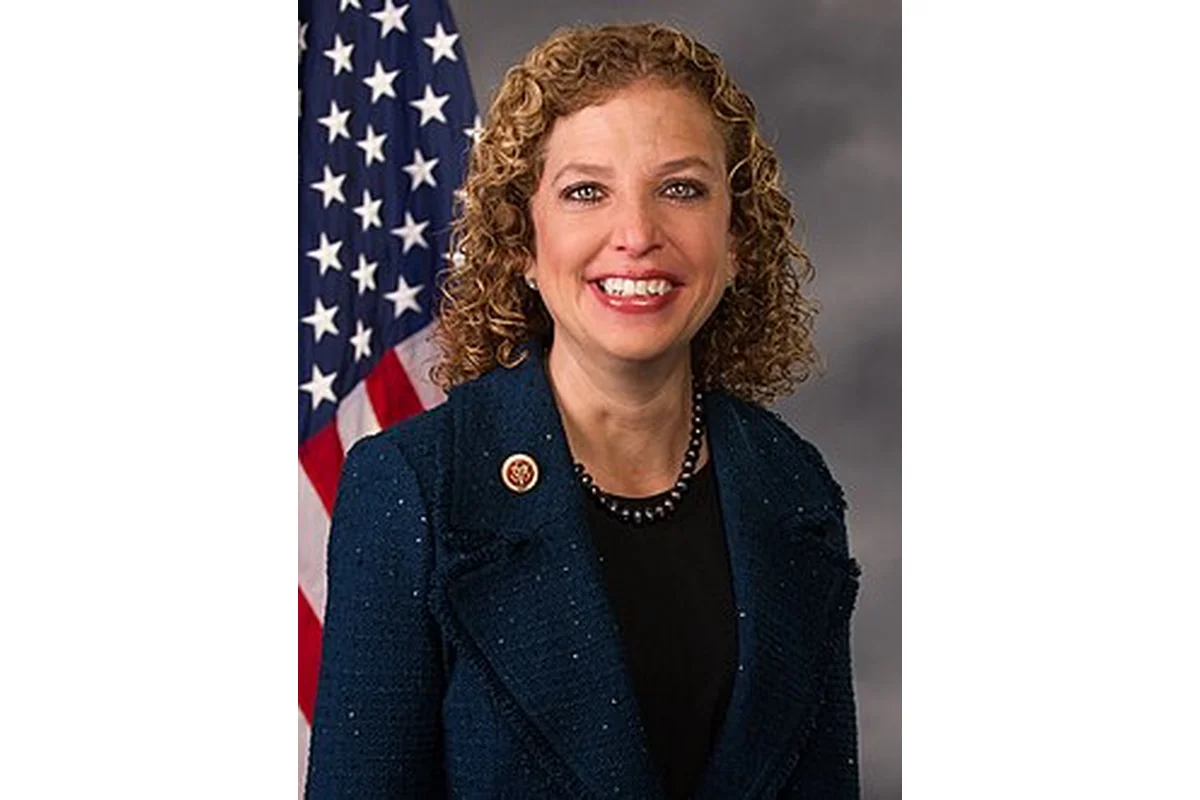
Debbie Wasserman Schultz Bio
Deborah Wasserman Schultz is an American politician and longtime Democratic Party figure who has represented Florida in the U.S. House of Representatives since 2004. She currently serves the 25th congressional district, which covers much of southern Broward County, including a large portion of Fort Lauderdale. Beyond her legislative work, she is widely known for chairing the Democratic National Committee from 2011 until her resignation in 2016.
Over more than two decades in public office, Wasserman Schultz has built a reputation as a prolific fundraiser, a party spokesperson, and an advocate for causes including gun control, breast cancer awareness, and a strong U.S.-Israel relationship. She lives in Weston, Florida, and continues to hold senior roles in the House Democratic caucus.
Early Life and Background
Wasserman Schultz was born on September 27, 1966, in Forest Hills, Queens, New York, and raised in a Jewish family. She is the daughter of Ann Wasserman and Larry Wasserman, a certified public accountant. Her brother, Steven Wasserman, later became an assistant United States attorney for the District of Columbia. The family moved to Lido Beach on Long Island in 1968 and later settled in Melville, New York, in 1978, where she attended local schools.
She graduated from Half Hollow Hills High School East in 1984 before enrolling at the University of Florida. There, she earned a Bachelor of Arts in political science in 1988 and a Master of Arts in political science with a certificate in political campaigning in 1990. She was active in student government, serving as president of the Student Senate and of the Graduate Student Council, an experience she has credited with shaping her political ambitions.
Path to US Politics
Wasserman Schultz’s political career began in Florida in the late 1980s. In 1988, she became an aide to state legislator Peter Deutsch, a mentor who would shape her early career. When Deutsch won a U.S. House seat in 1992, he encouraged her to run for his vacated Florida House district. She won a competitive Democratic primary with 53 percent of the vote and went on to win the general election.
At 26, she became the youngest female legislator in Florida state history. She served four terms in the Florida House of Representatives, leaving only because of state term limits, and later served in the Florida Senate beginning in 2000. During her time in Tallahassee, she championed legislation including the Florida Residential Swimming Pool Safety Act and a Children’s Services Council for Broward County, earning recognition from environmental groups for her work on manatee protection.
Debbie Wasserman Schultz Career
Early Career (1992-2004)
Wasserman Schultz built her early career in the Florida legislature, where she served eight years in the state House and a term in the state Senate. She also worked in academia as an adjunct instructor of political science at Broward Community College and as a public policy curriculum specialist at Nova Southeastern University. These roles helped her establish a network across South Florida politics and sharpened her legislative skills.
By 2004, her mentor Peter Deutsch was leaving his U.S. House seat to run for the Senate, and Wasserman Schultz positioned herself as his natural successor. She entered the race as the Democratic nominee for Florida’s 20th congressional district, setting the stage for her rapid rise to Congress.
U.S. House Breakthrough (2004-2010)
In 2004, Wasserman Schultz ran unopposed in the Democratic primary and won the general election against Republican Margaret Hostetter with 70.2 percent of the vote. She was sworn in as the first Jewish woman elected to Congress from Florida. In her first term, she was appointed to the Democratic Steering and Policy Committee, an unusually fast assignment for a freshman lawmaker.
During the 2006 election cycle, she raised more than $17 million for her Democratic colleagues, placing her third in the party behind Nancy Pelosi and Rahm Emanuel. Her fundraising success earned her the role of Chief Deputy Whip and a seat on the powerful Appropriations Committee. She later added a position on the Committee on Oversight and Reform, giving her influence over federal spending and government accountability.
She was reelected three times without serious challenge, including another win over Hostetter in 2008. Her early House career was also marked by a national co-chair role on Hillary Clinton’s 2008 presidential campaign and a high-profile appearance on CBS’s Face the Nation, where she drew attention for her sharp criticism of Republican vice-presidential nominee Sarah Palin.
Democratic National Committee Chair Era (2011-2016)
On April 5, 2011, President Barack Obama selected Wasserman Schultz to succeed Tim Kaine as the 52nd chair of the Democratic National Committee, and she was confirmed at a DNC meeting in Washington on May 4, 2011. She took on a prominent public role, appearing frequently on television to defend the party’s agenda and serve as a key surrogate for the Obama White House.
Her tenure drew both praise and criticism. She oversaw record fundraising and worked to expand the party’s voter outreach, but her management of the 2016 presidential primary schedule became a major point of contention. She faced accusations of bias after WikiLeaks released internal DNC emails showing staff members had favored Hillary Clinton over Bernie Sanders. On July 28, 2016, she resigned as DNC chair, with the resignation taking effect at the close of the Democratic National Convention in Philadelphia.
25th District Era (2017-Present)
After redistricting reshaped her South Florida seat, Wasserman Schultz has continued to represent her constituents in what is now numbered the 25th congressional district. She chairs the Appropriations Subcommittee on Military Construction, Veterans Affairs, and Related Agencies, and remains a senior voice on the Oversight and Reform Committee. She has also been an active member of the LGBT Equality Caucus and the bipartisan Congressional Cuba Democracy Caucus.
In December 2019, she voted to impeach President Donald Trump. She has continued to advocate for gun control legislation, including co-sponsoring the STOP School Violence Act of 2018, which passed the House 407-10. In the 117th Congress, a FiveThirtyEight analysis found she voted with President Joe Biden’s stated position 100 percent of the time. Heading into 2025, she remains a senior figure in the House Democratic caucus and a strong voice on issues ranging from consumer protection to U.S.-Israel relations.
Notable Events and Milestones
Wasserman Schultz’s career includes a number of signature moments, from her work on the Terri Schiavo case to her advocacy for the family of Daniel Wultz, a South Florida teenager killed in a 2006 terrorist attack. In 2008, she revealed she had undergone seven surgeries for breast cancer while continuing her congressional duties, becoming a leading voice for early cancer screening. In October 2018, pipe bomb devices linked to right-wing conspiracist Cesar Sayoc were mailed to her Florida offices, an incident that placed her at the center of a national conversation about political violence.
Debbie Wasserman Schultz Career Wins
Wasserman Schultz has won every election she has contested since first running for the Florida House of Representatives in 1992, beginning with a primary victory in a six-way Democratic field. She has built a record of decisive wins in both state and federal races, frequently winning more than 60 percent of the general election vote. Her ability to raise and distribute large sums of money has also made her a repeated winner in competitive Democratic primaries.
U.S. House Election Highlights
Wasserman Schultz’s House career began with a 70.2 percent win in 2004, and she went on to win reelection in 2006, 2008, 2010, 2012, 2014, 2016, 2018, and 2020, often against familiar opponents such as Margaret Hostetter and Karen Harrington. In 2012, she became the first white Democrat to represent a significant portion of Miami since 1993. She has also fended off well-funded primary challengers, defeating Tim Canova in 2016 and Jen Perelman in 2020, demonstrating durable support among South Florida Democratic voters.
Other Wins & Achievements
Beyond electoral victories, Wasserman Schultz has won recognition for her legislative work, including an award from the Save the Manatee Club for her commitment to manatee protection during the 2002 Florida legislative session. She is widely regarded as one of the most effective Democratic fundraisers in Congress, and her co-chair role on Hillary Clinton’s 2008 campaign cemented her status as a party insider. Her advocacy led to the establishment of Jewish American Heritage Month, signed into law by President George W. Bush.
Debbie Wasserman Schultz Family
Family Background and Political Lineage
Wasserman Schultz was raised in a close-knit Jewish family that moved from Queens to Long Island during her childhood. Her father, Larry Wasserman, is a certified public accountant, and her mother, Ann Wasserman, helped shape a household that valued education and civic engagement. Her brother, Steven Wasserman, went on to serve as an assistant U.S. attorney in Washington, D.C., continuing the family’s tradition of public service. Her early political mentor, Peter Deutsch, also played a major role in guiding her path from Tallahassee to Capitol Hill.
Personal Life
Wasserman Schultz married Steve Schultz in 1991, and the couple has three children. They make their home in Weston, Florida, near Fort Lauderdale. She is an active member of the National Jewish Democratic Council, Planned Parenthood, and Hadassah, reflecting her longstanding commitment to Jewish community organizations, women’s health, and progressive causes. In March 2009, she publicly shared her battle with breast cancer the previous year, using her platform to encourage early screening and awareness.